


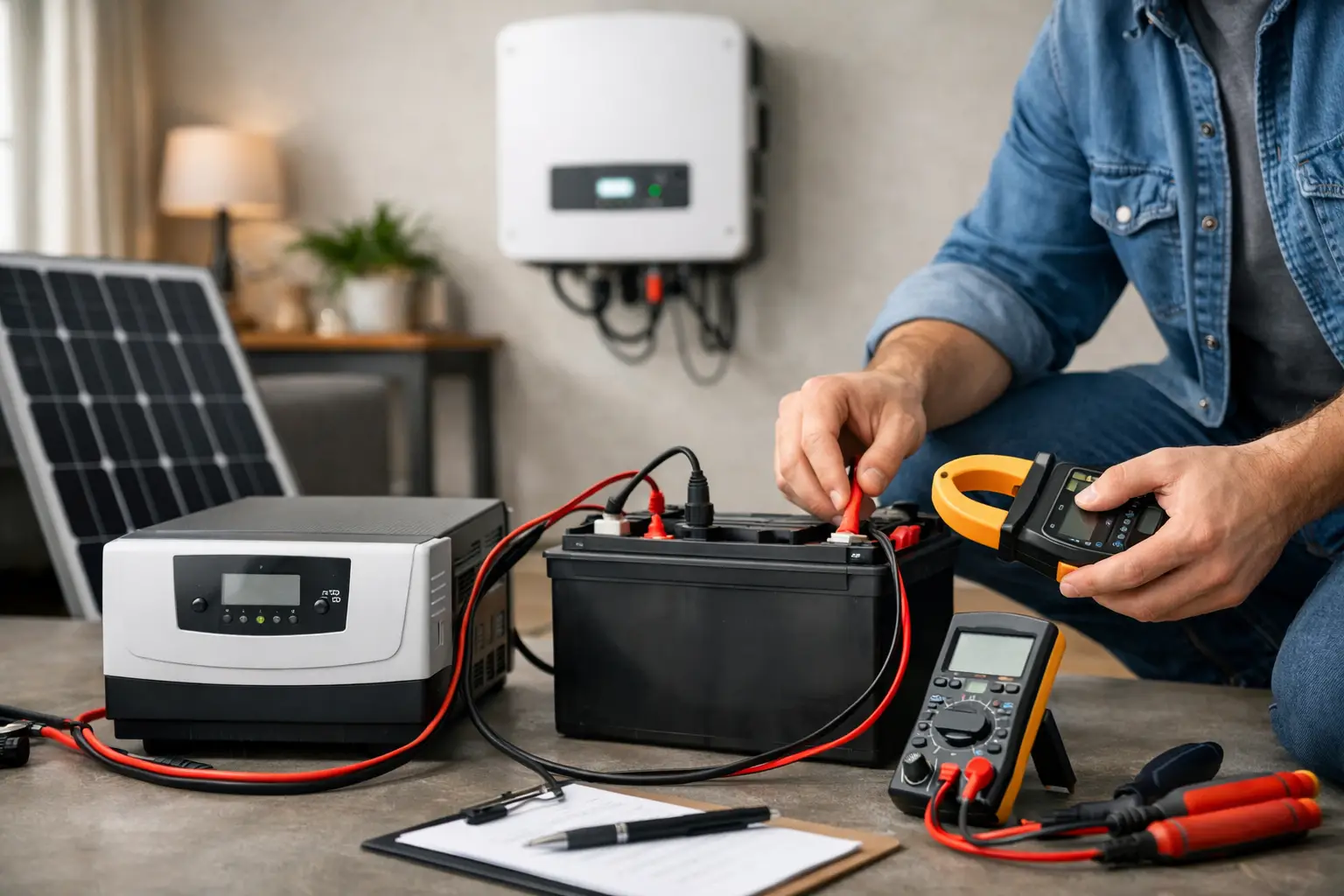
A scheduled inverter test should not mean a day spent guessing what the electrician needs from you. Knowing how to prepare for inverter testing helps the visit run efficiently, gives the technician a clear view of your system’s condition and reduces the chance that access issues hide a fault.
For many ACT solar owners, testing follows an Evoenergy notification for mandatory anti-islanding compliance. For others, it is part of a health check after hail, water ingress, a drop in production or years of normal wear. Either way, a small amount of preparation protects your time and helps ensure the results reflect the real condition of the system.
Know why your inverter is being tested
Your inverter does more than convert solar electricity into power your home can use. It continuously monitors grid conditions and must disconnect from the network when the supply fails. This anti-islanding function prevents your system from continuing to feed electricity into grid lines while crews may be working on them.
Anti-islanding testing verifies that the inverter responds correctly under the required conditions. It is a safety and compliance test, not simply a check that the inverter screen is showing a green light. A qualified electrician may also identify related issues affecting performance or safety, including deteriorated isolators, damaged cabling, water entry, poor connections or inverter fault history.
If you received a notice, keep it handy. It may include the required test, due date, National Metering Identifier details or other system information that helps confirm the correct property and equipment. Do not leave the booking until the deadline is close. Allow time for the test and for any repairs that may be needed before compliance can be confirmed.
Check access before the appointment
The most useful preparation is straightforward access to the equipment. Your technician will generally need to inspect the inverter, AC and DC isolators, switchboard or meter area, and possibly roof-mounted solar equipment. The exact scope depends on the system design and the testing package.
Clear stored items, garden tools, boxes and furniture away from the inverter and switchboard. There should be safe standing room in front of each item, with labels and switches visible. If the inverter is in a garage, shed, utility cupboard or under a deck, make sure the area is unlocked and well lit.
Where roof access is required, move vehicles away from the likely ladder position and keep pets indoors or securely contained. Tell the electrician about anything unusual before work starts, such as a steep driveway, a locked side gate, a fragile awning, a pool, overhead service lines or access through a neighbour’s property. These details do not automatically prevent testing, but they can affect how the work is planned safely.
Do not remove covers, open electrical enclosures or try to operate isolators yourself to prepare. Solar DC equipment can remain live whenever panels are exposed to daylight. Leave electrical work to the licensed electrician attending your site.
Make someone available if access is restricted
An adult should be available at the property if equipment is behind locked doors, gates or inside the home. If you cannot attend, arrange authorised access in advance and ensure the contact person understands where the inverter, switchboard and meter are located.
This matters particularly for older systems, where components may have been installed in less obvious locations. An inverter may be on an external wall while the main switchboard is on the other side of the house, with a separate solar supply main switch near the meter.
Gather the information that saves time
You do not need to understand the technical details of your solar installation. However, any records you have can help the electrician compare the system’s intended setup with its present condition.
Have available the original installation paperwork if you can find it, along with the inverter brand and model, commissioning documents, warranty details and previous inspection or repair reports. A recent power bill can also be useful where production concerns are part of the visit. If you use a monitoring app or web portal, make sure you can access it on your mobile or have the login details ready.
It is also worth writing down what you have noticed. Be specific about dates and symptoms: an inverter warning message, repeated shut-downs, lower-than-expected generation, tripped switches, water marks near equipment or damage after a storm. Photos of error codes or alerts are helpful, especially if they appear intermittently and are not present when the electrician arrives.
For homes with more than one inverter, identify each unit where possible. Small commercial properties and larger homes may have separate systems, battery equipment or additions installed at different times. Testing requirements and fault findings can differ between units.
Plan for a short interruption to solar generation
During anti-islanding testing and electrical checks, the inverter may need to be shut down or disconnected briefly. That means your solar system will not generate electricity for part of the appointment. This is normal and should not cause a problem for most households.
If you have a battery, backup circuit or electric vehicle charger, tell the electrician before testing begins. Battery systems can have specific shutdown procedures and backup arrangements that need to be understood before any switching takes place. Do not assume your battery will continue to power the property during the test. It depends on the equipment, configuration and the work being completed.
If you work from home, rely on medical equipment, operate refrigeration for a business or have another critical load, raise this at booking time. Inverter testing is usually planned to minimise disruption, but the technician needs to know if a particular time window is unsuitable.
Check the monitoring data, but do not diagnose it yourself
A quick look at your inverter display or monitoring app before the appointment can give useful context. Note the current production figure, recent alerts and whether the system has been reporting consistently. If the app has stopped communicating, mention that too. A communications issue does not always mean the solar system has failed, but it can make underperformance harder to spot.
Avoid resetting the inverter, clearing alarms or changing settings in the days before testing. Those actions can remove useful fault information. Likewise, do not turn the system off merely because you have seen a warning. If there is visible damage, burning smell, heat around electrical equipment, repeated tripping or signs of water inside an enclosure, keep clear and arrange professional advice promptly.
Prepare for a wider health check where it makes financial sense
Mandatory inverter testing is a sensible opportunity to assess the broader condition of an ageing solar system. The test itself confirms a critical safety function. It does not automatically reveal every panel, cable, mounting or weather-related issue unless those items are included in the inspection scope.
A fuller system health check may be worthwhile if your installation is older, generation has dropped, hail has recently affected the area or you can see staining, cracked conduit, loose fittings or corrosion. Canberra’s hot summers, cold winters and severe storm events can expose weaknesses over time, particularly at roof penetrations, isolator enclosures and external cable runs.
There is a practical trade-off here. Not every system needs an extensive inspection at every test, and there is little value in replacing sound components simply because they are old. But leaving a known fault uninvestigated can cost more through lost generation, safety risk or a larger repair later. A clear inspection report and repair plan lets you make that decision on evidence rather than guesswork.
What happens when the electrician arrives
A properly prepared visit should begin with confirmation of the system details, the reason for testing and any issues you have observed. The electrician can then inspect the relevant equipment, complete the required anti-islanding procedure and record the outcome.
If a problem is found, ask for a plain-English explanation of what it means now and what may happen if it is left unresolved. Some findings require prompt repair for safety or compliance. Others can be monitored or scheduled, depending on their condition and the system’s performance. Good advice should separate urgent electrical defects from sensible preventative maintenance.
Solar Testing and Maintenance provides electrician-led inverter testing and solar health checks for owners who want a clear result, not a vague assessment. Before the appointment, make access safe, gather your records and note any concerns. That gives the technician the best starting point to keep your solar investment producing safely and reliably.
Leave a Reply