

A solar system can keep generating while a cable fault develops quietly beneath a panel, beside an isolator or inside roof conduit. That is why knowing how to inspect solar wiring damage starts with recognising what you can safely observe and what must be left to a licensed electrician. A quick visual check may identify storm damage or obvious deterioration early, but it is not a substitute for electrical testing.
Why solar wiring damage deserves attention
Solar wiring works in a tough environment. Roof cables are exposed to heat, UV, wind movement, rain and, in the ACT, sharp temperature changes through the year. Hail, nesting birds, rodents and roof works can also damage cable insulation, conduit, connectors or the hardware that holds cables clear of the roof.
The risk is more than reduced generation. Damaged insulation or loose connections can create arcing, water ingress and heat at a connection point. Faults may cause the inverter to shut down intermittently, display an error code or reduce output without an obvious alarm. In more serious cases, they can present a fire or electric-shock hazard.
Solar DC circuits are particularly unforgiving. Panels produce electricity whenever they are exposed to light, so switching off an inverter does not necessarily make rooftop DC wiring safe to handle. Treat all solar cables, connectors, isolators and inverter terminals as live unless a qualified person has tested and made the circuit safe.
How to inspect solar wiring damage without taking risks
A homeowner inspection should be visual only. Do not climb onto the roof, unplug solar connectors, open isolator covers, remove inverter panels or probe wiring with a multimeter. These tasks require the correct isolation procedure, test equipment and electrical licence.
Start with a ground-level roof check
From the ground, use binoculars or your mobile camera zoom to look across the solar array and visible cable paths. You are looking for changes, not trying to inspect every millimetre of cable. Pay particular attention after hail, high winds, roof repairs or pest activity.
Look for hanging cables, loose conduit, broken clips, sagging cable loops or anything resting directly on roof sheeting or tiles. Solar cable should be properly supported and protected from abrasion. A cable that rubs against a sharp roof edge can wear through over time, especially where wind causes repeated movement.
Also check whether panels or mounting hardware appear displaced. A shifted panel may strain a cable or connector beneath it. If you can see cracked conduit, exposed wiring or components that have fallen loose, keep clear of the area and arrange a professional inspection promptly.
Inspect accessible areas around the inverter
At ground level, inspect the wall area around the inverter and isolators without opening or touching equipment. Look for cracked conduit, deteriorated cable glands, loose mounting hardware, staining around enclosures or signs that water may be entering from above.
The inverter should be clean, secure and free from unusual noise, burning smells or excessive heat. It will normally run warm while generating, but a hot electrical smell, discolouration around an isolator, warped plastic or black marks are warning signs. Do not attempt to reset an isolator that looks damaged or has heat marks.
Check the display or monitoring app for faults, repeated shutdowns and unexpected gaps in generation. One low-production day may simply be cloud cover. A pattern of reduced output in similar weather, frequent inverter faults or production that stops during the middle of sunny days needs investigation.
Check cable routes where they are safely visible
Some systems have conduit visible along an external wall, through a garage or near the switchboard. Inspect these areas from a normal standing position. Make sure conduit is intact and fixed firmly, and that cable entries into boxes are sealed and not under strain.
Do not assume a cable is safe because the outer surface only has a small mark. UV damage and abrasion can compromise insulation before copper becomes visible. Equally, water staining near a cable entry does not prove there is an electrical fault, but it does justify closer assessment by an electrician.
Signs of solar wiring damage to act on
Arrange a licensed solar electrician to inspect the system if you notice any of the following:
- exposed, cracked, flattened or chewed cable insulation
- conduit that is split, loose, crushed or damaged by UV exposure
- scorch marks, melting, discolouration or a burning smell near an inverter or isolator
- water marks, corrosion or condensation around electrical enclosures
- recurring inverter error messages, unexplained shutdowns or a significant drop in generation
- visible damage after hail, wind, tree impact, roof work or pest activity.
Take clear photos from a safe position and note the date, weather event and inverter messages. This gives the electrician useful context and may assist with an insurance claim. Do not place tape over a damaged cable, push it back into place or cover an overheating component.
Why a visual check cannot confirm wiring condition
Some of the most consequential solar faults are hidden. A connector can be poorly terminated beneath a panel, a cable can have insulation damage inside conduit, or a high-resistance connection can heat up only when the system is producing strongly. None of these issues can be reliably ruled out by looking at the inverter from the ground.
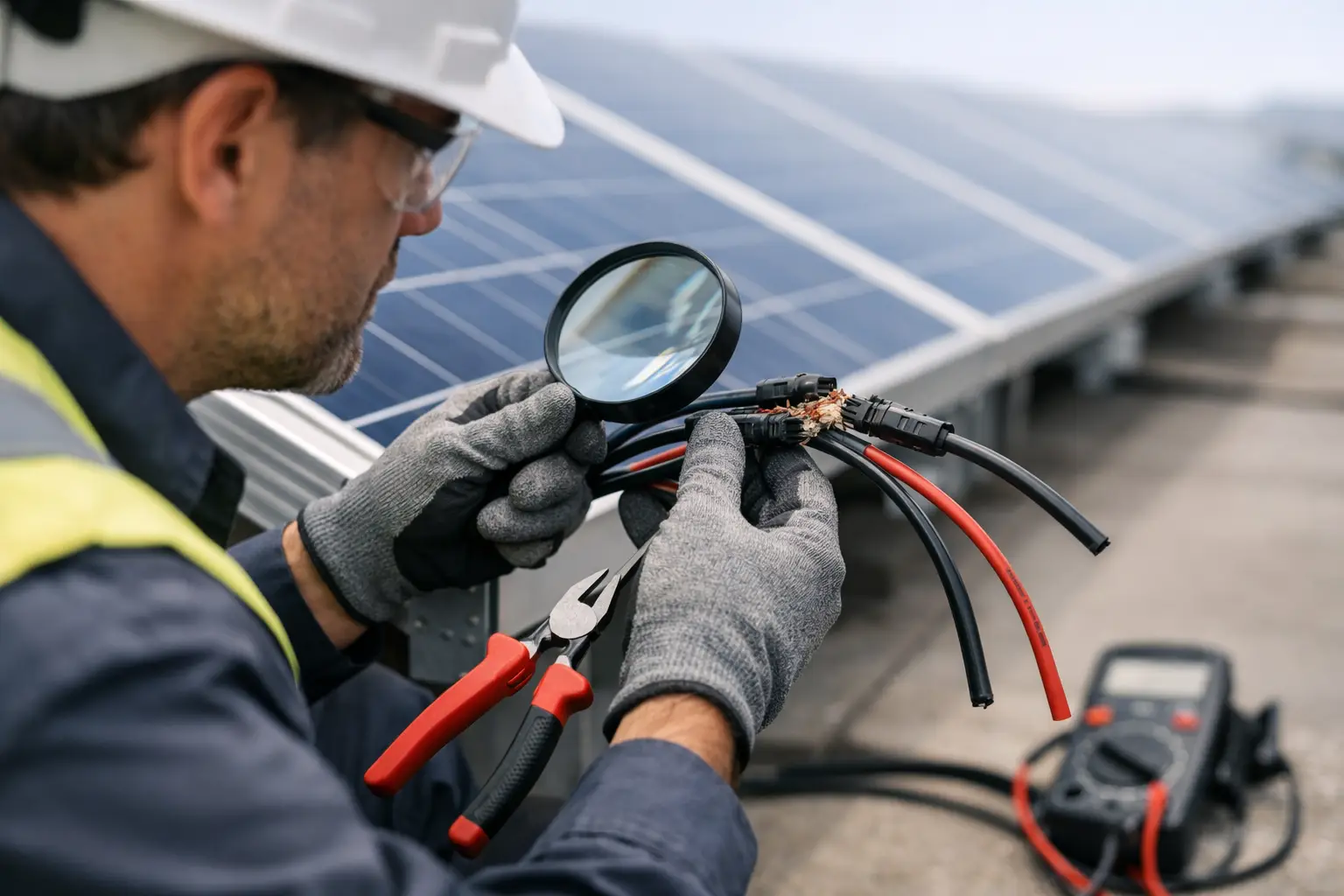
Professional fault finding uses electrical measurements and a controlled isolation process. Depending on the system and the symptoms, this can include checking DC string voltage and polarity, insulation resistance, earth continuity, connector condition, inverter operation and AC-side protection. Thermal checks can also help identify hot connections under load.
Testing matters when output has fallen because the cause is not always wiring. It could be panel degradation, shading, a failed optimiser, an inverter fault, a grid issue or damaged isolator equipment. A proper assessment separates the likely causes before repair work is planned, which helps avoid replacing parts unnecessarily.
What a qualified solar inspection should cover
A useful inspection goes beyond a quick look at the panels. The electrician should assess accessible cable routes, conduit, isolators, inverter connections and signs of environmental damage. They should also review inverter performance and fault history against the system’s expected operation.
For older systems, this is a sensible opportunity to assess age-related wear in rooftop DC isolators, cable supports and weather seals. Systems affected by hail or water ingress may need a more targeted inspection, particularly where the roof has been repaired since the original installation.
If you have received a notice about anti-islanding testing, the visit should also confirm that the inverter responds correctly to a grid outage condition. This is a separate compliance requirement, but it is a practical time to identify visible wiring concerns and broader system health issues. Solar Testing and Maintenance provides electrician-led testing and fault finding for ACT system owners who need clear results and repair recommendations.
Protect the system between formal checks
Keep vegetation trimmed back from the array and avoid allowing trades to move solar cabling during roof, gutter or air-conditioning work. If roof access is required, tell the contractor that solar cables and connectors may be beneath the panels. A careful trade will work around them rather than pulling or standing on cable runs.
After major storms, inspect from the ground before relying on normal production figures. If the inverter remains off, shows an insulation or isolation fault, or there is visible equipment damage, leave it off and seek advice from a licensed electrician. For suspected fire risk, smoke or active sparking, keep people away and contact emergency services.
A solar system earns its return over many years, and wiring condition is part of protecting that return. A safe visual check can flag obvious problems early; professional testing provides the certainty needed before a small cable issue becomes lost generation, a compliance concern or an expensive repair.
Leave a Reply