

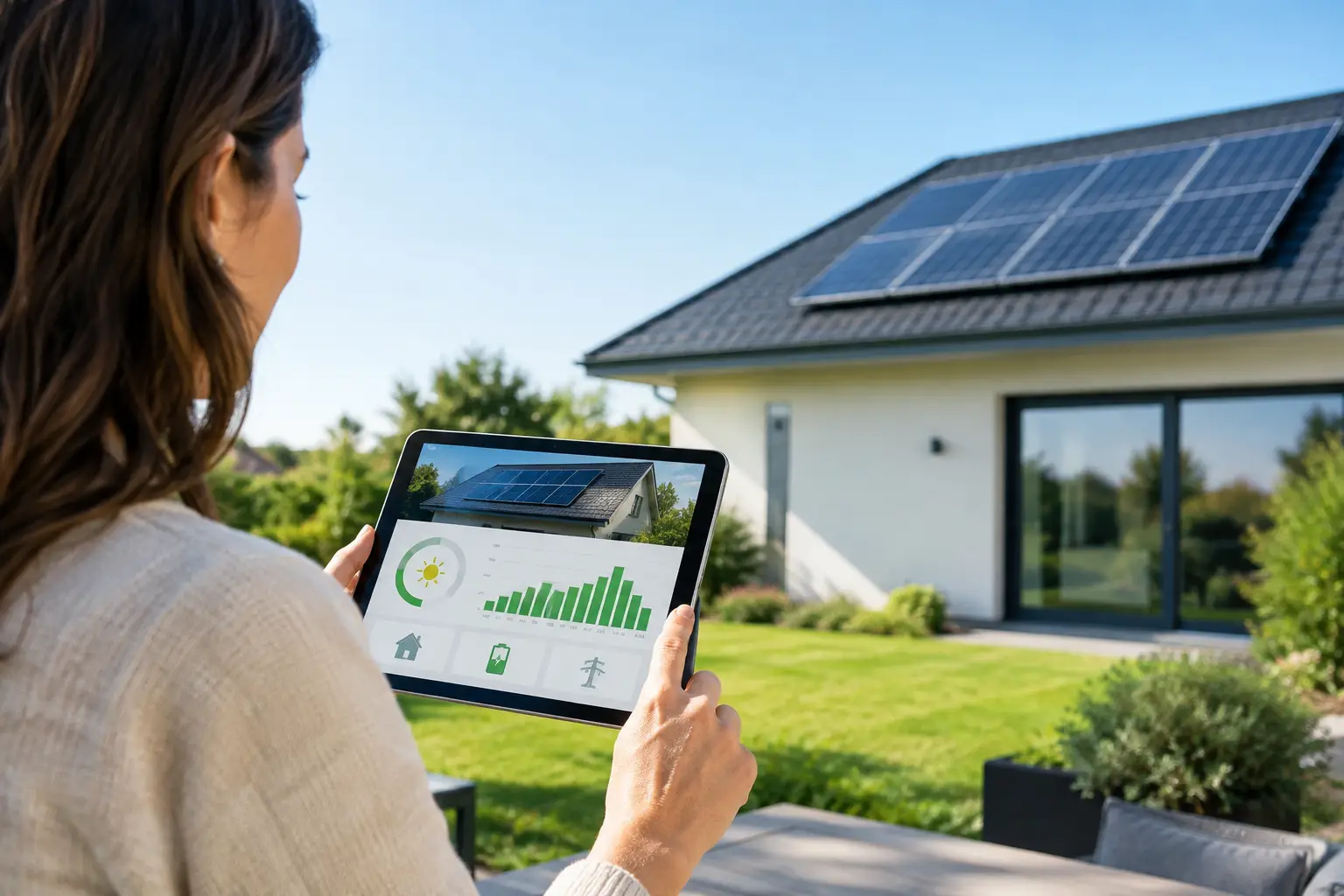
A solar app showing a healthy green status can be reassuring – until the next power bill arrives higher than expected. That is the practical issue behind any solar monitoring comparison. Monitoring is useful, but different platforms measure different parts of the system, report at different intervals, and cannot physically inspect the equipment on your roof or test required safety functions.
For Canberra and ACT solar owners, the right monitoring arrangement is the one that helps you spot lost production early without mistaking an app for a full system health check. A clear view of performance is valuable. It is not the same as proof that your system is safe, compliant or free of developing faults.
Solar monitoring comparison: what is actually being compared?
Most solar owners are comparing an inverter manufacturer’s app with another brand’s app, or considering whether to add a consumption meter or third-party monitoring platform. These are related products, but they do different jobs.
An inverter portal usually reports what the inverter says it has produced. Depending on the model and installation, it may also show daily, monthly and lifetime generation, inverter status, error codes and the output of individual strings or panels. This is often enough to identify a complete outage or an obvious production drop.
A system with a consumption meter goes further. It can show how much electricity the property imports from the grid, exports to the grid and uses at the time it is generated. For households trying to shift loads to daylight hours, this information is often more useful than generation figures alone. A system can be generating well while the household still buys significant electricity in the evening.
Independent monitoring platforms can bring data from several inverters, batteries or sites into one dashboard. That can suit a small property operator with multiple systems, particularly where each system has different equipment. The trade-off is that data quality still depends on compatible hardware, correct meter installation and a reliable internet connection.
The key point is simple: an app may tell you what it can see. It cannot report on equipment it does not measure.
Generation monitoring
Generation-only monitoring is the common starting point. It answers, “How many kilowatt-hours did my system make?” It is useful for checking whether output follows the season and for identifying days when the inverter appears to have stopped.
Its limitation is context. A lower-than-usual result may be caused by cloud, smoke haze, shading, dirty modules, a failed string, a disconnected section of the array or an inverter issue. A portal can indicate that something has changed, but it rarely confirms why.
It can also obscure smaller losses. If one string is underperforming but the remaining string continues to generate, the system may still look active and healthy to an owner who only checks the headline total.
Consumption and export monitoring
Consumption monitoring gives a more complete financial picture. It helps answer whether daytime appliances, heating, pool pumps or hot water are using solar generation rather than importing from the grid. It can also show whether a battery is behaving as expected.
However, meter clamps need to be installed in the correct orientation and configured properly. If the readings do not make sense, the issue may be the monitoring setup rather than the solar system itself. It is worth checking this before making costly decisions based on apparently high imports or low self-consumption.
Panel-level monitoring
Some systems report individual panel output through optimisers or microinverters. This can be valuable on roofs with complex shading or multiple roof faces because it makes a poorly performing panel easier to identify.
Panel-level data is not automatically better for every home. It adds equipment, cost and another layer of communications hardware. It also does not eliminate the need for an electrical inspection. Water ingress, cable damage, deteriorated isolators and roof penetration concerns are physical conditions, not dashboard readings.
Compare monitoring by the questions you need answered
Rather than choosing a platform because it has the most graphs, start with the decisions you want the data to support.
If your concern is whether the inverter is still producing, a standard inverter portal may be sufficient. Check that it records daily generation, retains historical data and sends a useful alert when the inverter is offline or reports a fault. A portal that only works when you remember to open it will not provide much early warning.
If reducing electricity purchases is the priority, compare systems with properly installed consumption monitoring. Look for clear import, export and household-load information, not just estimated savings. Estimates can be helpful, but the meter data and electricity bill remain more meaningful measures of what the property is actually using and buying.
If you manage a property with several inverters, compare whether the platform presents each inverter separately and whether it can flag a site that has stopped reporting. A single total can hide an outage in one section of a larger system.
For older systems, ask a different question: can the platform still communicate reliably? A perfectly serviceable inverter may lose app visibility because of an outdated Wi-Fi connection, a replaced modem, poor signal at the inverter or an obsolete communications device. Loss of monitoring does not always mean loss of generation, but it removes your ability to spot a genuine problem quickly.
What solar monitoring cannot confirm
This is where a solar monitoring comparison needs some perspective. Monitoring is an observation tool. It does not replace licensed electrical testing or a physical inspection.
An app cannot confirm that roof-mounted isolators are in good condition, that cables are secured and protected, or that connectors have remained sound after years of heat, wind and weather exposure. It cannot identify hail impact that has damaged a panel surface without causing an immediate shutdown. It cannot check for water ingress inside equipment enclosures.
Most importantly, ordinary production monitoring cannot carry out anti-islanding testing. Anti-islanding protection is designed to stop a solar inverter supplying power when the grid is unavailable. This protects network workers and supports grid safety. Where an owner has received an Evoenergy notification requiring this test, viewing inverter production data is not a substitute for the required work and documentation.
A system may generate normally on a sunny day and still need attention. That is why a proper health check combines performance review with inspection and electrical testing appropriate to the system.
Use monitoring as an early-warning tool
The best approach is not to watch the app every day. Set a simple baseline instead. Record a few comparable monthly production figures, keeping in mind that summer and winter output will differ substantially. If your inverter provides alerts, make sure they are enabled and linked to an email address or mobile number you still use.
Pay attention when production drops sharply compared with similar weather periods, when the inverter repeatedly disconnects, or when a monitoring system stops communicating. Also investigate a sustained fall in export or unexpected increases in grid imports if your household routine has not changed.
Do not assume every alert needs a major repair. Internet dropouts and temporary grid events occur. But do not keep clearing recurring messages without checking the cause. Repeated faults are often the point at which a small, manageable repair becomes an extended period of lost generation.
When a physical solar inspection makes financial sense
Book an inspection when monitoring identifies a persistent issue, but also after hail, significant storm activity, visible roof work near the array or unexplained changes in generation. Older systems deserve particular attention because outdoor electrical components and rooftop cabling have been exposed to years of temperature changes and UV.
A qualified inspection is also sensible when you have acquired a property with existing solar and do not know its service history. The monitoring login may tell you a lifetime generation number, but it will not tell you whether the installation has been inspected recently, whether compliance testing is due or whether a previous fault was properly resolved.
At Solar Testing and Maintenance, the focus is on the practical next step: inspect the system, test what needs testing, identify faults and provide clear repair priorities. That gives owners more than a dashboard notification. It gives them a basis for deciding where maintenance money will protect generation, safety and the return on the original solar investment.
The most useful monitoring system is the one you can understand and act on. Let it alert you to changes, then rely on proper inspection and electrician-led testing when the data suggests your solar system needs a closer look.
Leave a Reply