


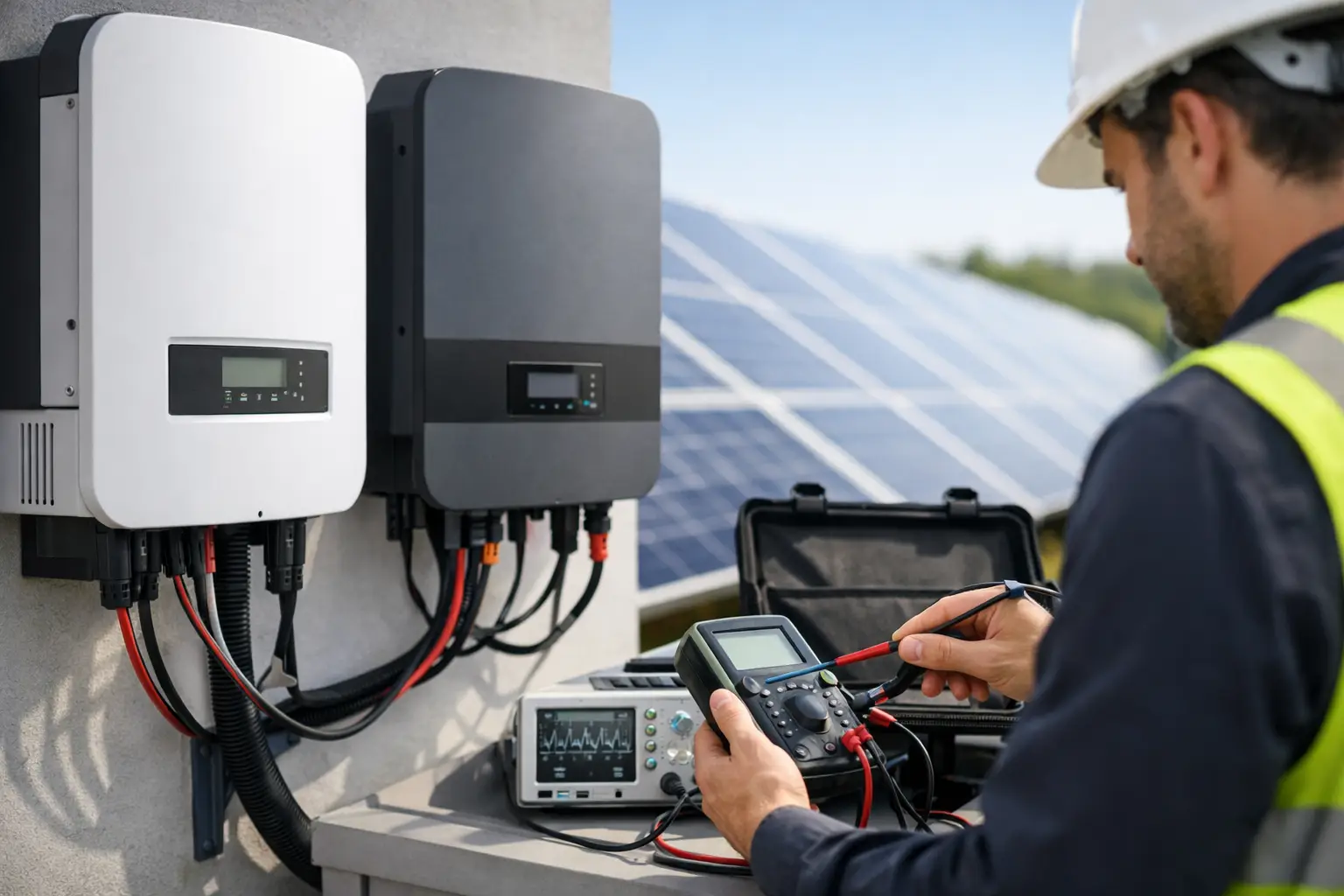
A solar app showing normal generation is reassuring, but it does not confirm that the inverter will respond correctly during a grid event, that safety equipment is sound, or that reduced output is not being hidden by good weather. This inverter testing comparison explains the difference between a quick performance check, a compliance-focused inverter test and a broader system health check, so you can pay for the level of work your system actually needs.
Why inverter testing is not one standard service
The term “inverter test” can mean very different things. One provider may confirm the unit is generating and check its display for error codes. Another may carry out anti-islanding testing required by the network. A more detailed visit may test inverter operation while also inspecting isolators, cabling, panels and system performance.
That difference matters because the inverter is both the control point and a common place for faults to become visible. It converts your panels’ DC power to usable AC power, monitors the grid and is designed to disconnect when grid supply is lost or falls outside acceptable limits. If it does not operate as intended, the issue can affect safety, compliance and the financial return from your solar system.
A low-cost check is not automatically poor value. It can be the right choice for a newer, trouble-free system when you only need a specific compliance requirement addressed. The problem starts when a limited test is sold or understood as a full health check. Ask what is physically tested, what is visually inspected, and what results or recommendations you will receive afterwards.
Inverter testing comparison: three common service levels
1. App or production review
This is the lightest level of assessment. It usually involves reviewing generation data, checking for recorded inverter faults and comparing recent output with previous periods. It can be useful when a system owner has noticed a clear drop in production or wants an initial view before booking onsite work.
However, monitoring data has limits. It may show that output is lower than expected, but not why. A dirty panel, a failed string, partial shading, water ingress, deteriorated connectors or a developing inverter fault can all produce similar-looking results. Data also cannot verify the physical condition of rooftop equipment or prove anti-islanding operation.
Treat an app review as a screening tool, not evidence that the installation is safe or compliant.
2. Inverter-focused compliance testing
An inverter-focused test is appropriate when you have received a notice requiring anti-islanding testing, or when the main question is whether the inverter responds correctly to an interruption or abnormality on the grid side.
Anti-islanding protection prevents a solar inverter from continuing to energise a disconnected section of network. This protects electrical workers, property and equipment. The test needs to be performed using the correct procedure for the inverter and site arrangement, by a suitably qualified electrician.
A compliance-focused visit should identify the inverter, confirm relevant settings or operating status where required, carry out the necessary test procedure and record the outcome. If the inverter fails, trips unexpectedly or cannot be tested because of another fault, the next step should be clearly explained rather than guessed.
This level of service is targeted. It may not include a detailed inspection of every panel, roof penetration or cable run. For a system that is otherwise performing normally and only requires the requested test, that can be a sensible and cost-effective scope.
3. Full system health check with inverter testing
A full health check suits older systems, systems with unexplained poor production, properties affected by hail or severe weather, and owners who want a clearer maintenance plan rather than a pass-or-fail result.
The inverter remains central, but the inspection looks beyond it. An electrician can assess accessible AC and DC components, isolators, visible cabling, panel condition, mounting concerns and signs of water ingress or heat damage. Performance findings can then be considered alongside what is physically present onsite.
This approach is often the better comparison point for systems that have had years of Canberra heat, cold mornings, storms and general rooftop exposure. A compliant anti-islanding result does not rule out a cracked panel, degraded connector, worn isolator or string issue that is quietly reducing generation.
The trade-off is straightforward: a broader inspection takes more time and costs more than a narrowly defined test. In return, it is more likely to identify the cause of avoidable losses before a small issue turns into a shutdown, repair bill or insurance discussion.
What a worthwhile onsite visit should establish
Before testing begins, the electrician should be able to identify the system configuration. That includes the number and type of inverters, whether there are multiple strings, the location of switchgear, any battery equipment and reported faults or changes in output. Multi-inverter properties need particular care because one unit can be working while another is underperforming or offline.
During the visit, the work should follow the agreed scope rather than a generic checklist that ignores the actual installation. If anti-islanding testing is required, the result needs to be based on the test performed, not an assumption that a modern inverter must be fine. If a health check is included, visible defects and safety concerns should be documented in plain language.
Afterwards, you should know whether the inverter passed the required test, whether the system has faults needing attention, and which repairs are urgent versus worth monitoring. A useful report does not create unnecessary alarm. It distinguishes between a compliance issue, a performance issue and a maintenance recommendation, because each calls for a different decision.
Choosing the right test for your situation
If you have received an Evoenergy notification for required testing and the system is operating normally, an inverter-focused anti-islanding test may be the appropriate starting point. Confirm that the service specifically covers the required test and that results will be supplied.
If your feed-in figures have dropped, the inverter has displayed intermittent errors, or one part of the array appears to be producing less than another, a basic compliance test alone may not answer the question. Ask for diagnostic work or a full health check that considers production data and the physical installation together.
If your system is more than several years old, has been through a major hailstorm, or has not been inspected since installation, broader testing is usually better financial sense. Age-related wear is not always obvious from the ground or from an app. Early attention to isolators, connectors, cable protection and water ingress can prevent a more expensive fault later.
For rental properties and small commercial sites, choose a scope that produces clear records. The owner or manager needs practical information: what was tested, what passed, what needs repair and whether action is time-sensitive. Vague wording makes it harder to plan work and demonstrate reasonable maintenance.
Faults that can change the result of an inverter test
An inverter issue is not always an inverter failure. Grid voltage conditions, failed DC isolators, damaged cabling, loose connections, string faults and panel damage can all affect what the inverter reports or how reliably it operates. Conversely, a healthy-looking inverter display does not guarantee every solar component is healthy.
Water ingress deserves particular attention. Moisture around electrical components can lead to corrosion, insulation problems and intermittent faults that appear only after rain or during temperature changes. Hail damage can be equally deceptive, with panel damage sometimes reducing output without an immediate complete failure.
That is why the best testing comparison is not simply “cheap versus expensive”. It is “specific requirement versus likely risk”. A narrowly scoped test is appropriate when the question is narrow. A system with a history of faults, weather exposure or declining returns needs more investigation.
Protect the return your system was built to deliver
Solar maintenance should give you a clear basis for action, not a confusing list of technical terms. Choose a testing scope that matches the notification, fault or performance concern you have, and make sure the work is completed by an electrician who understands existing solar systems. A properly tested inverter and a well-maintained installation help keep your solar investment safe, compliant and earning its keep.
Leave a Reply