


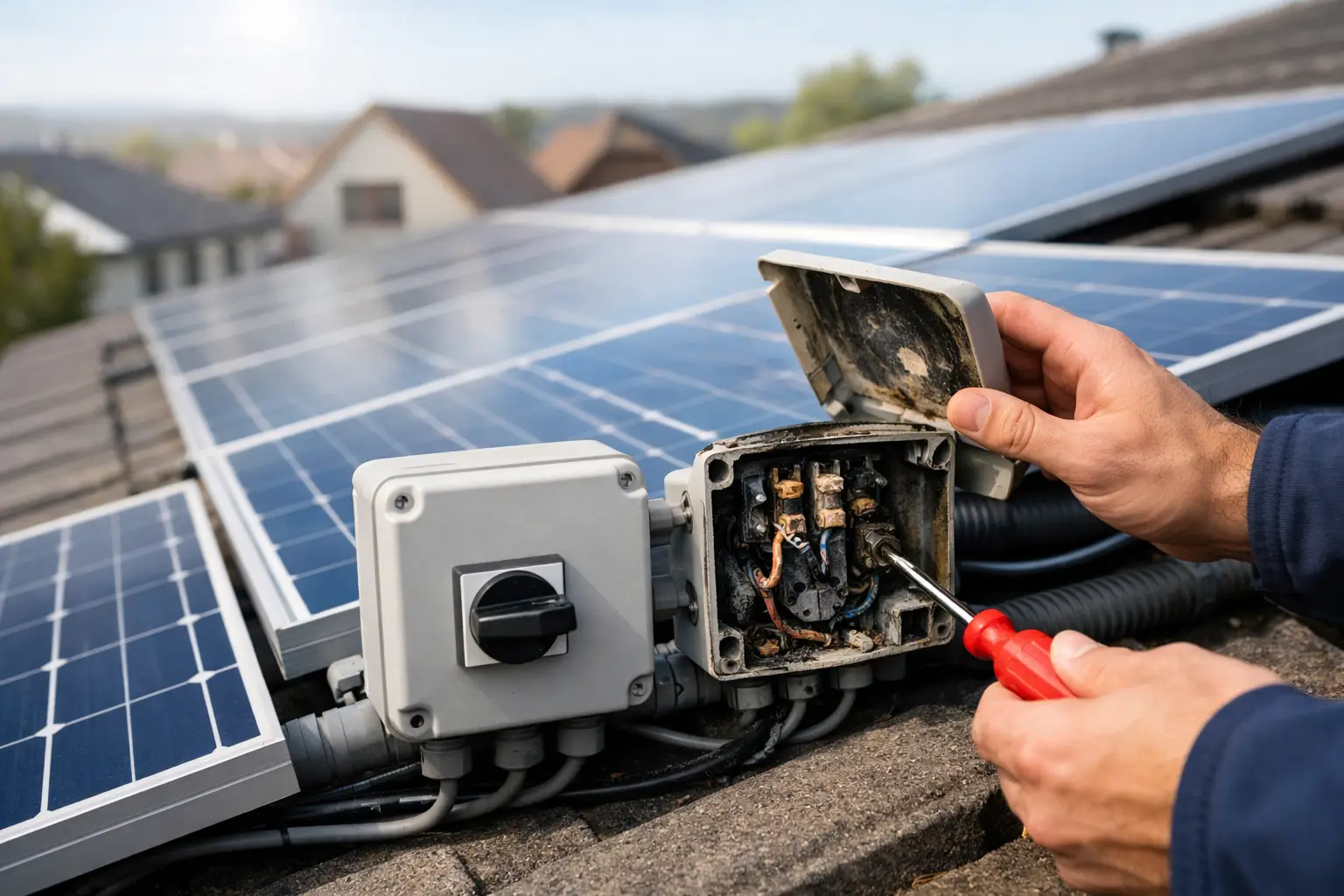
A solar system can keep generating while a rooftop isolator is quietly deteriorating. That is what makes these components worth taking seriously. Knowing when to replace solar isolators can prevent a small enclosure or connection issue from becoming a safety concern, a costly fault, or an extended loss of solar production.
Solar isolators are not maintenance-free switches. They sit outdoors, often in direct sun, rain, frost and wind, and they carry DC electricity whenever the panels are producing. On Canberra roofs, years of UV exposure and weather extremes can take their toll. A licensed electrician should assess their condition as part of a proper solar health check, particularly on older systems or after severe weather.
What a solar isolator does
A solar isolator is a switch that allows the DC power from your solar panels to be safely disconnected from the inverter. Depending on the system layout, there may also be an AC isolator near the inverter or switchboard. The rooftop DC isolator is usually the component that receives the most exposure and deserves close attention.
It gives electricians a controlled way to isolate parts of the installation during testing, fault finding and repair. It also needs to operate safely under load. If the enclosure has deteriorated, water has entered, terminals have overheated or the switch mechanism is failing, simply leaving it in service is not a sensible option.
When to replace solar isolators: the main warning signs
There is no single replacement age that applies to every solar isolator. Quality of original installation, product type, roof location, exposure and use all matter. Condition is more useful than age alone, but systems approaching or beyond ten years should be inspected carefully.
Cracking, fading or a damaged enclosure
A brittle, cracked, warped or badly faded enclosure may no longer keep water and dust out as intended. Broken hinges, missing screws, damaged cable glands and lids that do not close properly are also warning signs. Once the weather seal is compromised, internal corrosion and electrical faults become more likely.
Do not assume a closed-looking isolator is sound. Damage can be hidden underneath the lid, around cable entries or at the back of the enclosure where it meets the roof.
Evidence of heat or electrical arcing
Brown marks, melted plastic, a burnt smell, blackening around terminals or heat damage to nearby cable are urgent signs. These can indicate a loose termination, internal resistance or arcing. DC arcing is particularly serious because it can continue differently from an AC fault and may create a fire risk.
If you notice these signs, do not open the isolator or try to operate it. Arrange an inspection by a licensed electrician with solar experience. The system may need to be shut down using the correct procedure until it is assessed.
Water ingress, corrosion or insect activity
Moisture inside an isolator can corrode terminals and contacts, while condensation can affect components even where obvious rain entry is not visible. Insects can also build nests inside outdoor enclosures. Any sign of rust, white corrosion, dirt trails, staining or moisture needs investigation.
Water ingress often develops slowly. A small failure in a gland or seal can become a larger problem after repeated rain, hail or temperature changes. This is one reason visual inspections after major storms are worthwhile.
A stiff, loose or unreliable switch
An isolator should be operated by a qualified person during appropriate testing. If it feels unusually stiff, loose, gritty, difficult to lock into position or does not switch cleanly, it may be nearing the end of its useful life. A switch that has become unreliable should be replaced rather than forced.
Repeated switching can contribute to wear, but an isolator does not need frequent operation to deteriorate. Heat, UV and moisture are often the bigger factors on rooftop equipment.
Faults, low production or inverter messages
A failed isolator will not always produce an obvious alarm. It can, however, contribute to intermittent inverter faults, insulation resistance issues, unexplained shutdowns or low solar yield. Those symptoms can also be caused by panels, cabling, connectors or the inverter itself, so replacement should follow proper diagnosis rather than guesswork.
A full system check identifies whether the isolator is the cause, part of a wider issue, or simply a component that should be proactively renewed while other work is being completed.
Age, weather and installation history matter
Older systems deserve a closer look, especially if the original isolators are exposed on a north-facing roof or were installed before current product and installation practices became more consistent. A system that has performed well for years can still develop age-related faults without much warning.
Hail is another reason to organise an inspection. Even if panels appear intact from the ground, hail can damage isolator housings, lids and cable entries. Strong wind can loosen fittings, while UV can weaken plastic over time. A visual check from ground level can identify obvious damage, but it cannot confirm the internal condition or electrical integrity of an isolator.
Previous repair history also matters. If an isolator has already had water ingress, heat damage or a temporary repair, replacing it with suitable equipment may be the better long-term decision. The cheapest repair is not always the best value if it leaves a weak point in an otherwise sound system.
Why replacement is licensed electrical work
Solar DC circuits can remain live whenever panels are exposed to daylight. Turning off an inverter does not necessarily make rooftop DC components safe to handle. That is why isolator replacement, testing and fault finding must be completed by a suitably qualified, licensed electrician.
The work is more than swapping a box on the roof. A proper replacement considers the isolator rating, enclosure suitability, cable condition, terminations, mounting, water protection and the condition of connected components. The electrician should then test the relevant circuits and confirm the system is operating correctly after the work.
This approach also protects your insurance position and helps ensure the installation remains compliant. If there is a suspected safety issue, avoid climbing onto the roof or removing covers yourself.
What should be checked at the same time
When an isolator needs replacement, it makes financial sense to inspect the surrounding solar components as well. The issue may not be isolated to one switch. Cabling exposed to UV, damaged conduit, loose panel connectors and roof penetrations can all contribute to faults or future repair costs.
A practical solar maintenance visit can include a visual inspection of panels and mounting hardware, assessment of isolators and cabling, inverter fault review, electrical testing where required, and a clear repair plan. For systems that have received an anti-islanding testing notification, this work can also be an opportunity to identify maintenance concerns before they affect compliance or production.
Act before a minor defect becomes downtime
There is a balance between replacing components too early and waiting until they fail. A sound isolator does not need replacement simply because it has reached a particular birthday. But visible deterioration, water ingress, heat damage, switching problems and unexplained electrical faults are all reasons to act promptly.
For Canberra solar owners, periodic electrician-led inspections are a practical way to catch weather-related and age-related issues while repairs are still straightforward. A clear assessment gives you the information needed to protect the system, its output and the investment on your roof.
Leave a Reply