

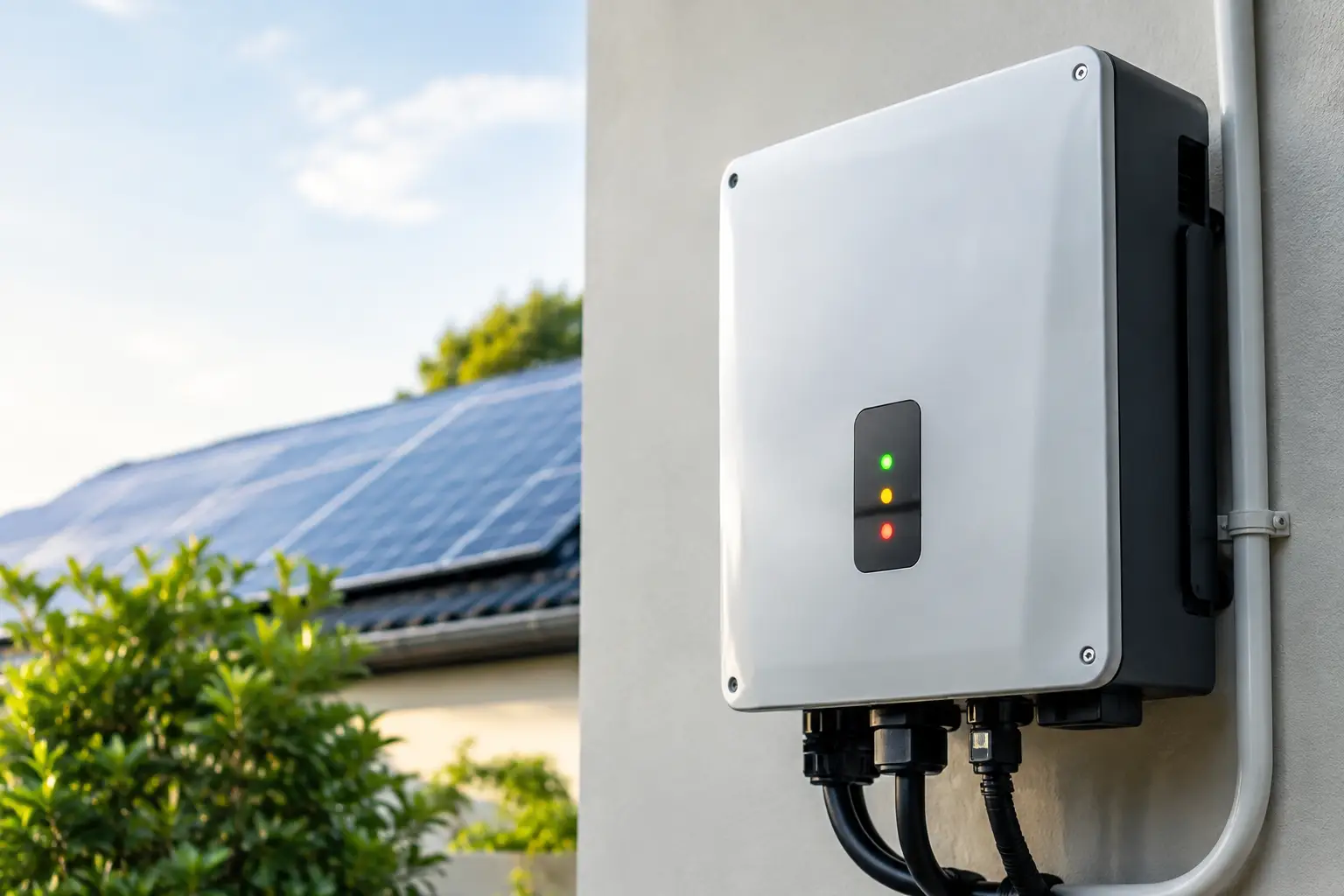
A red or flashing indicator on the wall is easy to dismiss when the panels are still sitting in full sun. But warning lights on solar inverters can mean your system has stopped producing, disconnected from the grid, or identified a condition that needs attention. The colour alone rarely tells the full story. The display message, fault code and recent conditions around the system matter just as much.
For Canberra solar owners, acting early can prevent days or weeks of missed generation, particularly after storms, hail, heavy rain or a grid interruption. It can also help identify faults before they develop into a safety or compliance concern.
What warning lights on solar inverters can mean
Inverters use different colours and flashing patterns depending on their manufacturer and model. A green light commonly indicates normal operation and generation. A red light usually indicates a fault or shutdown, while amber, orange or flashing lights often show a warning, standby state, communication issue or grid-related condition.
That said, no colour has one universal meaning. A red indicator on one inverter may be a minor communications alarm; on another, it may signal an insulation fault or internal failure. Treat the screen message or error code as the starting point, not the final diagnosis.
A warning can also appear when there is nothing wrong with the panels themselves. The inverter is the point where the solar array, household wiring and electricity grid meet. It monitors voltage, frequency, insulation resistance and grid connection conditions. If one of those measurements falls outside permitted limits, it may disconnect automatically to protect people, equipment and network workers.
This automatic shutdown is often the correct response. The job is to find out why it happened and whether it will clear normally or needs repair.
Grid loss and voltage warnings
A grid loss message can appear during a local power outage, planned network work or a disturbance on the electricity supply. A standard grid-connected solar system must stop exporting when the grid is unavailable. This is known as anti-islanding protection. It prevents your system from energising lines that may be under repair.
High-grid-voltage warnings are also common, especially around the middle of a bright day when many nearby systems are exporting. The inverter may reduce output or disconnect if the voltage at the property rises beyond its allowable limit. Repeated voltage warnings should not be ignored. They may relate to network conditions, undersized or ageing cabling, connections, inverter settings, or the way the installation was originally designed.
Insulation, earth and isolation faults
An insulation resistance, earth fault or isolation warning requires proper investigation. These messages can be associated with damaged cables, deteriorated connectors, moisture ingress, faulty isolators, damaged panel junction boxes or equipment degradation over time.
Roof-mounted DC equipment is exposed to heat, rain, UV and wind for years. In the ACT, frost, temperature swings and hail can add to that wear. The fault may be intermittent, appearing after rain and disappearing when conditions dry. That does not make it harmless. Intermittent faults are often harder to find and are best assessed before they worsen.
Internal inverter and temperature faults
An inverter can also warn of overheating, fan failure, internal relay faults or a DC input problem. Dust, insect activity and poor ventilation can affect some models, particularly units installed in enclosed garages or harsh outdoor locations. Older inverters may also develop component faults after years of normal operation.
An internal fault code does not automatically mean replacement is the only option. A qualified inspection can establish whether the issue is external to the inverter, a repairable installation fault, a configuration issue or a genuine inverter failure.
Safe checks to make before booking a service
You do not need to climb onto the roof or open an electrical enclosure to collect useful information. Start by taking a clear photo of the inverter display, including the fault code, indicator lights and the time it occurred. If the message disappears, that photo can still give the electrician an important lead.
Check your monitoring app or portal if you have one. Look for the date and time generation dropped, whether the fault keeps returning, and whether output has been lower than expected over several days. Compare it with a similar sunny day where possible, rather than judging production by one cloudy afternoon.
It is also useful to consider what happened shortly before the warning appeared. Was there a storm, hail, a power outage, recent electrical work, water around the inverter, or a switchboard trip? These details narrow down the likely cause and can reduce time spent fault finding.
Avoid repeatedly switching the system off and on in the hope that the message will clear. A single restart only when it is permitted by the manufacturer’s instructions may be reasonable for some minor communications issues. Repeated resets can mask an intermittent fault and do not resolve damaged cabling, failing isolation equipment or grid compliance problems.
Do not remove inverter covers, touch rooftop DC isolators, disconnect plugs or attempt electrical testing yourself. Solar cabling can remain live whenever panels are exposed to daylight, even if the inverter is not generating.
When a warning light needs urgent attention
Arrange prompt electrical assessment if the inverter remains in fault after normal daylight conditions return, or if generation has stopped without an obvious grid outage. Some signs should be treated as more urgent:
- Burning smells, unusual heat, buzzing, crackling or visible smoke around the inverter or switchboard.
- Water entering the inverter, isolators, conduits or electrical enclosures.
- Cracked panels, damaged mounting equipment or exposed cables after hail, wind or storm damage.
- Repeated tripping of a circuit breaker, safety switch or solar isolator.
- A fault message referring to insulation, earth leakage, arc detection or isolation failure.
Keep clear of wet or visibly damaged equipment. If there is smoke, fire or an immediate risk to people, follow emergency procedures and contact emergency services. For non-emergency electrical concerns, a licensed electrician with solar fault-finding experience can inspect the installation safely.
Why anti-islanding warnings should not be brushed aside
Some inverter warnings relate directly to the system’s grid-disconnection function. Anti-islanding testing confirms that the inverter stops exporting when required and reconnects correctly when the grid is stable. This is a safety and network-compliance function, not just a performance check.
If you have received a notice requiring anti-islanding testing, do not wait for a warning light before acting. Required testing may identify a connection or protection issue that is not obvious through day-to-day generation figures. It also creates a clear record that the system has been assessed by a qualified professional.
A warning that follows a test, electrical work or a grid event may be related to settings, connection conditions or an underlying fault exposed by the event. The right response depends on the code and test results. Guessing or changing settings without proper verification can create further compliance issues.
What a professional inverter fault inspection involves
A proper fault investigation goes beyond reading the code on the inverter screen. The electrician should review the system history, confirm inverter operation, inspect accessible AC and DC components, and test the electrical conditions relevant to the reported fault.
Depending on the system and symptoms, this may include checking inverter output, grid voltage, cabling, isolators, connectors, earthing, insulation resistance, panel condition and signs of water or hail damage. For systems with multiple inverters or strings, each section may need separate testing to identify whether the problem is isolated or affecting the whole array.
The outcome should be practical: a clear explanation of what was found, whether the system is safe to operate, what repairs are required, and which work is recommended versus optional. Sometimes the fix is straightforward. Other times, an older system may need staged repairs or a replacement plan that considers the remaining life of the inverter and panels.
Protecting generation after the light goes out
A warning that clears on its own is still worth recording. If it occurred during an outage or brief voltage disturbance and never returns, there may be no further action required. If it returns after rain, on hot days, at similar times each afternoon or whenever the system reaches higher output, that pattern is valuable evidence.
Regular health checks make these patterns easier to catch before they become costly downtime. They can also uncover age-related issues such as brittle conduits, degraded seals, loose connections and weather damage that may not trigger an immediate inverter fault.
A warning light is not a reason to panic, but it is a reason to pay attention. Keep the fault details, avoid unsafe DIY checks and have recurring or serious warnings assessed properly. Your solar system should be earning its keep, not quietly sitting offline while the sun is out.
Leave a Reply