

A solar system can look fine from the ground and still be leaving money on the roof. We see this often with older systems, storm-affected arrays, and installations that have not been properly tested since they were commissioned. If you want to check solar system efficiency properly, you need more than the inverter app and a quick glance at yesterday’s generation figure.
Efficiency, in practical terms, is about whether your system is producing what it reasonably should for its size, age, orientation and weather conditions. A healthy system does not have to be perfect. It does need to be safe, compliant and free from faults that quietly reduce output over time.
What efficiency actually means on a rooftop solar system
For most property owners, efficiency is not a lab number. It is the real-world relationship between the sunlight hitting your panels and the usable power your system delivers. That includes panel condition, inverter performance, cable integrity, isolator condition and whether every part of the system is operating as intended.
This is where many people get tripped up. Panel efficiency and system efficiency are not the same thing. A panel may still be within its original performance range, but the overall system can underperform because of a failing isolator, string imbalance, inverter derating, water ingress or damaged connectors. That is why a meaningful assessment looks at the whole installation, not one component in isolation.
Weather also matters. A hot summer day can reduce panel output even when the sky is clear. Light cloud can sometimes have less impact than people expect. Heavy soiling, partial shading and seasonal sun angle all influence production. So the right question is not, “Is my system hitting a perfect number?” It is, “Is my system performing as it should under current conditions?”
How to check solar system efficiency at home
You can do a useful first pass yourself before booking a technician. The key is to look for patterns rather than one-off dips.
Start with your inverter display or monitoring portal. Compare current and recent generation to the same period last year, allowing for obvious weather differences. If output has dropped noticeably without a clear reason, that is worth following up. A steady decline can point to ageing, dirt build-up or component deterioration. A sudden drop is more often linked to a fault.
Next, check whether the inverter is showing any warnings or fault codes. Even intermittent messages matter. Some systems keep generating while one string is down or while the inverter is operating in a reduced state. Owners often miss this because the system has not fully shut off.
From the ground, inspect what you can see safely. Look for obvious grime, leaves collecting near panel edges, signs of impact after hail, loose conduit, and anything that suggests movement or damage. If one section of the array is visibly dirtier or shaded for part of the day, that can affect output more than expected.
Then look at your electricity bills. If your self-consumption habits have not changed much but your imports have risen, the system may not be carrying the load it used to. This is not a perfect diagnostic tool, but it can support what you are seeing in the monitoring data.
Signs your system may be underperforming
The clearest sign is lower generation than normal over an extended period. Beyond that, there are other red flags. One is an inverter that switches off and on, particularly during hot weather. Another is inconsistent production curves that suggest a string is dropping in and out.
You should also take notice if your system is older and has never had a proper health check. Connectors, isolators and cabling do not last forever simply because they are installed outdoors. Canberra conditions can be hard on rooftop equipment, especially after years of heat, cold, wind and storms.
Physical damage is another obvious trigger. Hail impact, cracked backsheets, water ingress, discoloured isolators and brittle conduit can all reduce efficiency or create safety issues. In those cases, production is only part of the concern. The system also needs to be checked for continued safe operation.
Why an inverter app is helpful but not enough
Monitoring apps are useful, but they only tell part of the story. They report what the inverter can see and how it is interpreting system performance. They do not independently confirm that all strings are healthy, that voltage and insulation values are where they should be, or that switchgear and rooftop components remain in good condition.
An app also will not identify every compliance issue. For systems that require anti-islanding inverter testing, generation data alone does not meet that requirement. A compliant test has to be carried out correctly and recorded properly.
So if you are relying on an app to decide whether everything is fine, treat it as an early warning tool, not a full diagnosis.
The right way to check solar system efficiency professionally
A proper efficiency check is really a system health check. It should combine performance assessment with electrical testing and visual inspection.
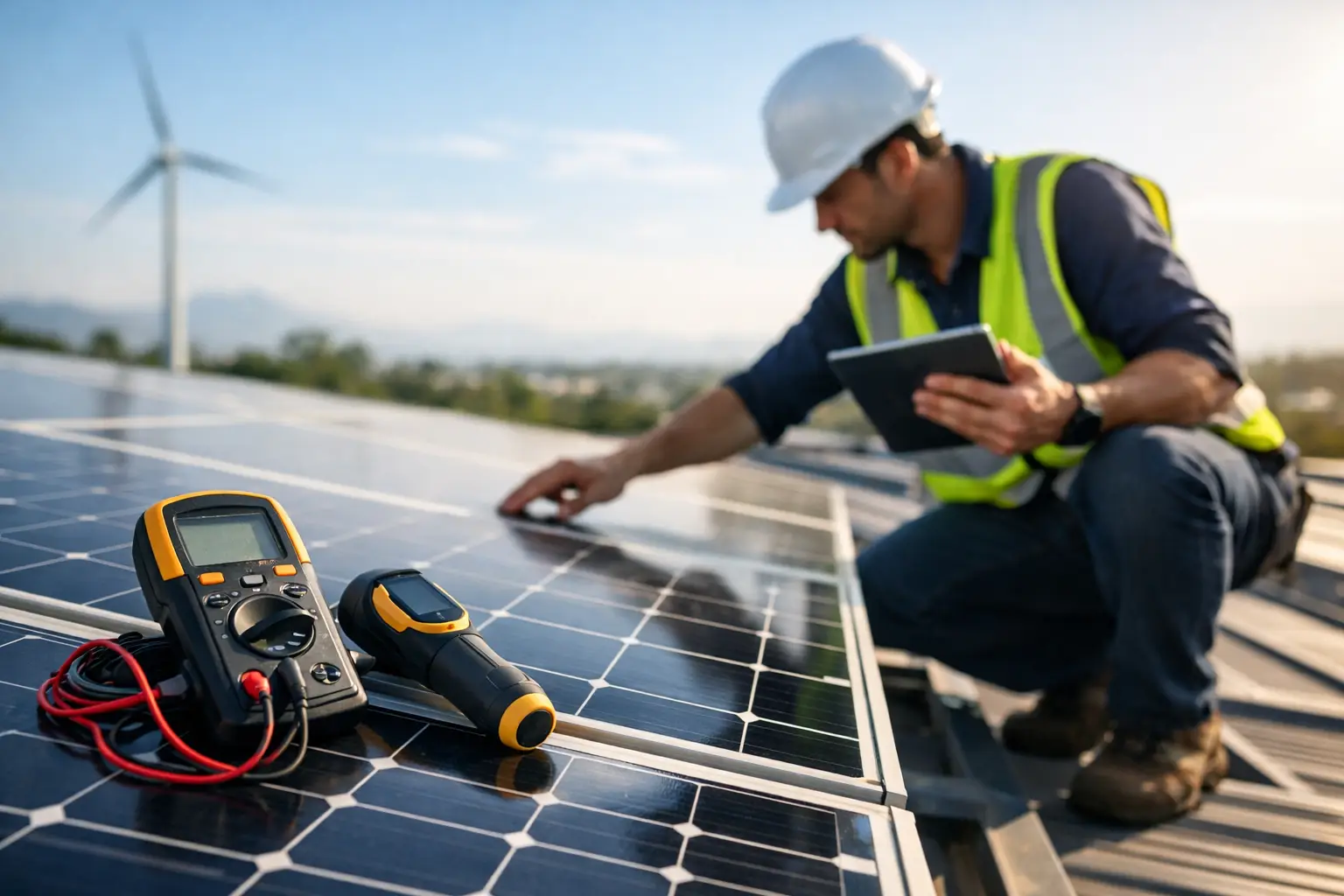
At a minimum, that means checking inverter operation, reviewing generation behaviour, inspecting accessible components for signs of wear or damage, and testing the electrical side of the installation. Depending on the system and its history, that can include string testing, insulation resistance testing, polarity checks, isolator inspection, thermal assessment and confirmation that the inverter is operating within expected parameters.
This is where trade-offs come in. A newer system with stable production and no faults may only need a straightforward inspection and periodic compliance testing. An older system, or one affected by hail or unexplained losses, usually needs a deeper assessment. There is no benefit in paying for testing that does not match the problem, but there is also little value in a superficial check when a fault is likely hiding in the detail.
For owners in the ACT who have received notification for anti-islanding testing, efficiency should not be viewed separately from compliance. If the inverter protection function has to be tested, it makes sense to use the visit to assess broader system health at the same time. That gives you a clearer picture of both safety and financial performance.
Common causes of low solar efficiency
The usual culprits are not always the ones people expect. Dirty panels can reduce output, but in many cases the larger losses come from electrical faults or component ageing.
A single failed string can cut production substantially while the system still appears to be working. Inverter faults can lead to derating or intermittent shutdowns. Isolators can deteriorate from weather exposure. Connectors can loosen or overheat. Water ingress can create insulation issues that affect both safety and output.
Shading is another common problem, especially as trees grow or nearby structures change. Even small areas of regular shade can drag down a string. Then there is panel degradation. All panels age, but abnormal degradation, hot spots or physical damage need closer attention.
The point is simple: low efficiency is often a symptom, not the core problem.
When to stop checking and book testing
If your monitoring shows a clear drop, if your inverter has active faults, or if the system has been through severe weather, it is time for a qualified inspection. The same applies if your system is older and has not had electrician-led testing in years.
This is especially true where safety or compliance may be involved. Rooftop DC equipment is not a DIY area. Opening isolators, removing covers or trying to test live components yourself is not worth the risk.
A specialist service should be able to tell you what is happening, what needs repair, and what can reasonably wait. Good advice here is practical, not alarmist. Some issues need urgent action. Others can be planned and budgeted without rushing into replacement.
What a good result looks like
A good result is not just a bigger generation number next week. It is confidence that the system is operating safely, producing in line with expectations, and not hiding faults that will cost you later.
Sometimes the outcome is reassuring – the system is healthy, and the observed dip was weather-related or seasonal. Sometimes the visit uncovers issues early enough to avoid more expensive repairs. Both outcomes are worthwhile, because both protect the return on the system you already paid for.
If you suspect your solar is not pulling its weight, do not wait for a total failure to confirm it. A timely check usually costs less than months of lost production and gives you a clearer basis for the next decision.
Leave a Reply