


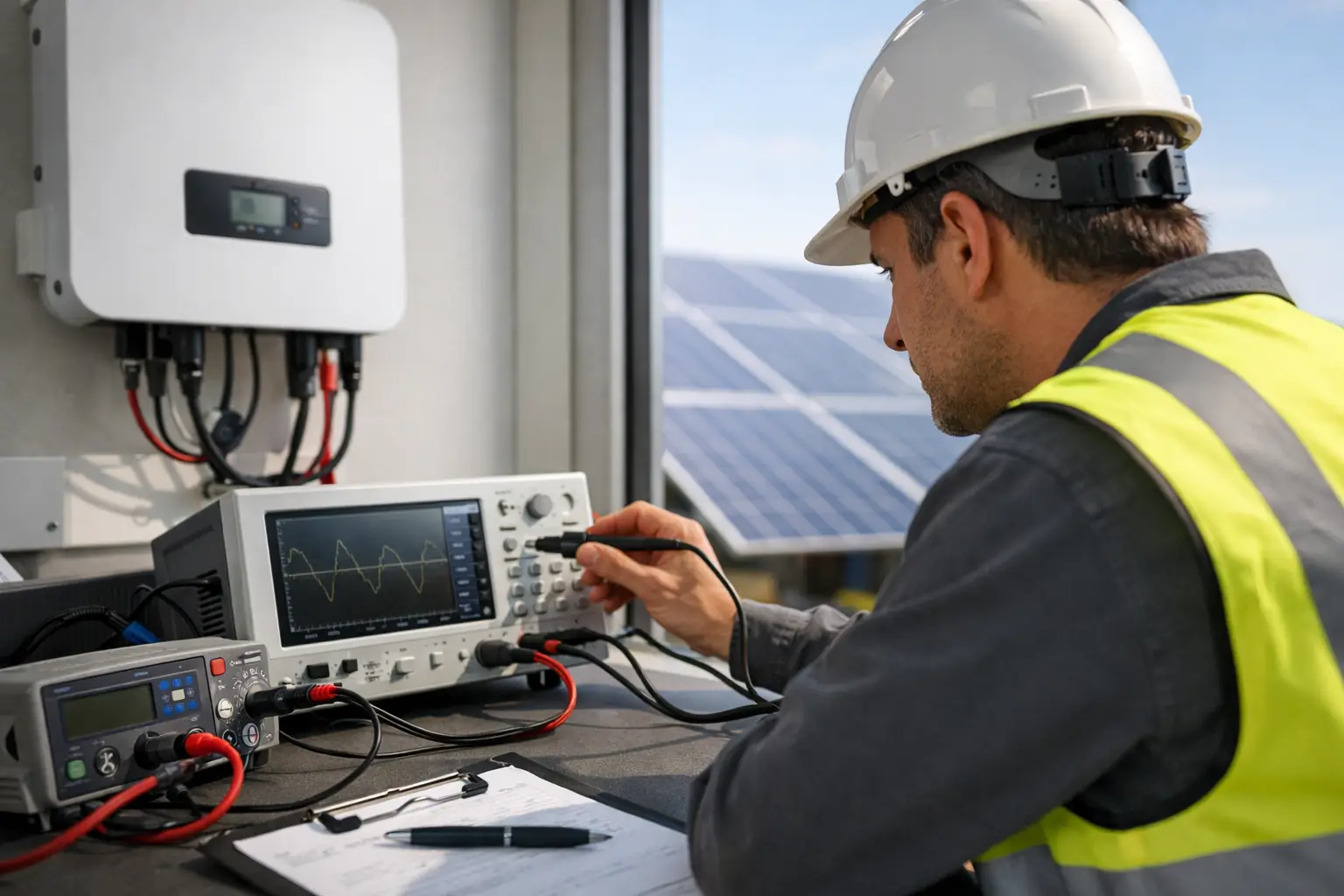
If you have received a notice about inverter testing, the main question is usually simple – do you actually need it, and what happens during the visit? A solar inverter compliance test is not a box-ticking exercise for most system owners. It is a practical check that confirms your inverter still disconnects correctly from the grid when required and that your solar system is operating safely.
For Canberra solar owners, this matters for two reasons. First, grid compliance is not optional when your distributor requires testing. Second, older systems can drift away from best performance long before they fail completely. A proper compliance visit can pick up both issues at once.
What a solar inverter compliance test actually checks
At its core, this testing is focused on inverter behaviour under grid fault conditions, especially anti-islanding protection. Anti-islanding is the safety function that shuts the inverter down when grid supply is lost. Without it, your solar system could continue exporting power during an outage, which creates a risk for network workers and can damage equipment.
A compliance test checks whether that protective function still responds within the required limits. In practice, the electrician verifies the inverter’s shutdown response and confirms the unit is behaving as it should under test conditions. Depending on the system and site, the visit may also include a broader inspection of associated components so you are not left with a narrow pass result on paper but obvious problems still sitting on the roof or switchboard.
That broader view matters. A system can pass one functional test and still have isolator deterioration, water ingress, damaged cabling or signs of heat stress. Those issues may not trigger an immediate shutdown, but they can affect safety, output and future repair costs.
Why compliance testing is sometimes mandatory
Not every solar owner books a compliance test because they want one. Many book because the distributor has issued a notice requiring anti-islanding verification on a particular inverter model, installation period or system type.
This usually happens when network operators want confirmation that connected systems still meet grid protection requirements over time. In the ACT, that can mean a formal request tied to your inverter and connection details. If you have received that notification, delaying it is rarely a smart move. The requirement does not disappear, and putting it off can create unnecessary stress if deadlines tighten.
There is also a practical upside to acting early. If a problem is found, you have more time to assess repair or replacement options instead of rushing into a decision.
What happens on site during the test
A proper solar inverter compliance test should be carried out by a qualified electrician who understands both inverter protection requirements and real-world solar faults. The process is usually straightforward, but it should be disciplined.
The visit commonly starts with a visual inspection of the inverter, isolators, switchgear and accessible solar components. The electrician checks for obvious deterioration, incorrect labelling, signs of moisture, damaged enclosures and other issues that can affect safe operation.
From there, the inverter’s anti-islanding or grid disconnection function is tested using the appropriate procedure and test equipment. Results are recorded so there is a clear record of compliance or non-compliance. If your distributor requires proof, that documentation is part of the value of the service.
Good technicians also pay attention to the condition of the system around the inverter. There is little point confirming that a shutdown function works if the installation is showing signs of age-related faults elsewhere. A sensible compliance visit often picks up concerns such as brittle rooftop cable, cracked conduit, isolator wear, pest damage or evidence of previous water entry.
Pass or fail is not the whole story
Homeowners often assume the result is binary – pass and forget about it, fail and panic. In reality, there is usually more nuance than that.
A clean pass is the best outcome, but it does not always mean the entire system is in top condition. It only means the tested compliance function has met the required standard at that time. If the system is older, has had storm exposure or has not been inspected for years, there can still be maintenance items worth addressing.
A fail also does not automatically mean a full system replacement. Sometimes the issue is isolated to the inverter. Sometimes settings, deterioration or related electrical faults need to be investigated further before the right fix is clear. That is why a technician who can test, diagnose and explain next steps is more useful than someone who simply records a failed result and leaves you to sort out the rest.
When a compliance test makes financial sense
Some owners only think about testing when they receive a notice. That is understandable, but there are other times when a solar inverter compliance test is worth booking even without a formal requirement.
If your system is older, if output seems lower than expected, if the inverter trips intermittently, or if the property has been through hail, heavy rain or prolonged heat, testing can be a sensible part of broader system care. Inverters do not always fail in a dramatic way. Performance drift, nuisance shutdowns and ageing protection components can all reduce return on investment quietly over time.
For investment-minded homeowners, this is the key point. Solar is meant to offset bills over many years. Letting small issues sit because the system is still producing some power often costs more than dealing with them early. Compliance testing can act as a trigger for timely maintenance instead of reactive repairs.
What to ask before booking
Not all testing services are equal, and this is where many owners get caught. A low advertised price can sound attractive until you realise it covers only a narrow test with little diagnostic value.
Ask whether the testing is electrician-led, whether documentation is included, and whether the technician can also identify visible faults outside the inverter itself. It is also worth asking what happens if the system does not pass. Can they explain the likely cause? Can they quote follow-up work clearly? Will you be left with useful recommendations rather than a vague note?
For small residential and multi-inverter systems, practical experience matters. A service focused on post-installation solar care will usually give better value than a provider whose main work is new sales and installs. The reason is simple – maintenance work is about fault patterns, ageing equipment and problem-solving, not just commissioning new gear.
Why local conditions can change the picture
In the ACT, climate and weather exposure can shorten the gap between a compliant system and a problematic one. Heat, cold, hail and moisture all affect rooftop equipment over time. A system that looked fine a few years ago may now have enclosure seals degrading, rooftop components under stress or early signs of panel damage.
That does not mean every system needs major work. It does mean compliance testing is more useful when it is treated as part of a real condition check, not just a signature for paperwork. For many homes, that approach prevents avoidable output loss and catches safety issues before they become expensive.
The value of clear reporting
After the test, you should know exactly where you stand. If the inverter complies, that should be documented clearly. If it does not, the report should explain what failed and what needs to happen next.
This is where clear communication matters. Most homeowners do not want a lecture on inverter theory. They want to know whether the system is safe, whether it meets requirements, what repairs are urgent, and what can wait. Good reporting turns technical findings into practical decisions.
That is also helpful for budgeting. If additional work is recommended, the difference between compliance-critical issues and general maintenance should be explained plainly. Mixing the two together often leads to confusion and delayed action.
A compliance test should leave you more certain, not more confused
The best reason to book a solar inverter compliance test is peace of mind backed by evidence. You are confirming that a key safety function still works, meeting any distributor requirements, and getting a clearer picture of the health of the system you already paid for.
If you have received a testing notice, now is the time to deal with it properly. If you have not, but your system is ageing or showing signs of trouble, the same test can still be a smart way to protect performance and avoid bigger faults later. A good service visit should give you straight answers, documented results and a sensible path forward – which is exactly what solar owners need when they are trying to protect both safety and return.
Leave a Reply