

You usually notice it on the bill before you notice it on the roof. If your solar system is not producing enough, there is a reason for it — and it is rarely solved by guessing. A drop in output can come from weather, seasonal changes, ageing equipment, inverter faults, damaged panels, wiring issues or a shutdown that has gone unnoticed for weeks.
The key is to separate normal variation from a genuine performance problem. Solar production moves around from day to day. A cool, clear day in spring can outperform a run of hot summer afternoons, and winter sun angles will naturally reduce generation. But if the system is consistently underperforming compared with past results, or the inverter is showing errors, it is time to treat it as a fault-finding job rather than a waiting game.
When a solar system is not producing enough: a real problem
A lot of owners are told to expect some fluctuation, which is true. What matters is the pattern. If output has fallen sharply, if one part of the day looks weak, or if savings have dropped without a clear seasonal reason, the system needs checking.
This is especially true with older rooftop systems. Components age at different rates. Panels can degrade gradually, but connectors, isolators and inverters often cause the more serious losses because they can fail in a way that cuts production dramatically. In some cases the system still appears to be on, yet one string has stopped contributing or the inverter has derated itself to protect against an internal issue.
That is why a proper inspection matters. You are not just checking whether power is being made. You are checking whether the full system is producing what it reasonably should, safely and in compliance with current requirements.
The most common reasons output drops
Shade is one of the first things to consider, but it is not the only thing and often not the main one. Trees grow. Nearby structures change. A new patch of afternoon shade can drag down output more than people expect, particularly on older systems without panel-level optimisation. Dirt buildup can also reduce performance, although on its own it usually causes a modest loss rather than a major collapse.
More serious causes tend to sit in the electrical side of the system. Inverter faults are common, especially once systems have had years of heat exposure. The inverter may show an error code, disconnect intermittently, or keep running at reduced output. Some owners only discover the issue when they look back over several billing cycles.
Panel damage is another regular culprit. In the ACT, hail and storm activity can leave visible or hidden damage. Cracked glass is obvious, but microcracking, moisture ingress and damaged backsheets are not always visible from the ground. A panel can be compromised without looking badly broken from a distance.
Then there are isolators, cabling and connections. Loose or deteriorated connections can create resistance, heat and intermittent faults. Water ingress into rooftop components can lead to corrosion and unreliable operation. These faults affect performance, but they are also a safety concern, which is why they should not be left to chance.
What you can check before calling for testing
There are a few sensible checks a system owner can make without getting onto the roof or opening electrical equipment. Start with the inverter display or monitoring portal, if your system has one. Look for error messages, warning lights or a history of low production days. Compare current generation with the same season in previous years rather than with last month alone.
It also helps to notice whether the inverter is turning on and off at normal times. If it starts late, shuts down early or drops out during the middle of a clear day, that points to more than weather. If your feed-in figures or self-consumption savings have changed suddenly, that is another useful clue.
A visual ground-level check can be worthwhile too. See if there is obvious debris on the array, new shading from tree growth, or visible panel damage after a storm. What you should not do is open covers, disconnect components or climb onto the roof unless you are qualified and equipped to do so safely.
Why monitoring data only tells part of the story
Monitoring is useful, but it does not replace inspection and testing. Plenty of systems report total generation without showing whether one string is weak, whether insulation resistance is deteriorating, or whether a component is overheating.
A common example is a multi-string system where one section has a fault but the rest of the array keeps producing. From the owner’s point of view, the system is still working. From a performance point of view, it is leaving money on the table every day. That sort of issue can continue for months if nobody carries out proper electrical checks.
The same goes for anti-islanding compliance. A system might appear to operate normally, yet still require mandatory inverter testing to confirm it disconnects correctly under grid fault conditions. That testing is about safety and compliance, but it can also highlight inverter issues that affect reliability and output.
How a proper diagnosis is done
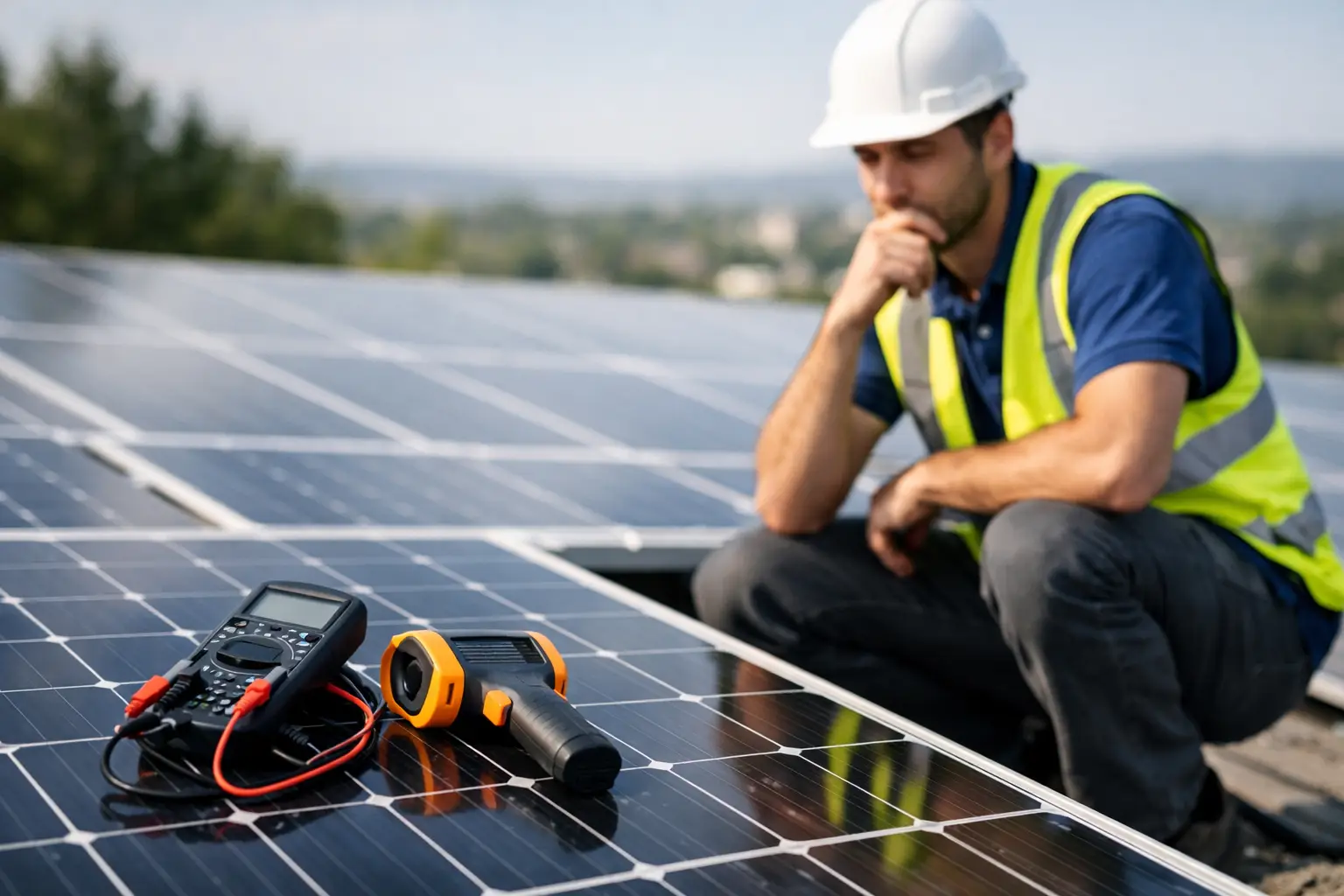
If a solar system is not producing enough, the right approach is a structured health check rather than swapping parts and hoping for the best. A qualified electrician should assess inverter performance, inspect rooftop components, check isolators and cabling, review monitoring data and test the system for faults that are not obvious from the display screen.
This kind of work is about evidence. Is the inverter clipping, derating or shutting down? Are all strings producing correctly? Is there storm damage, connector failure or water ingress? Are there signs of heat stress or ageing components that may soon fail completely? Once those questions are answered, the owner can make a repair decision based on actual findings rather than guesswork.
In practice, this often saves money. Replacing an inverter when the fault is actually in rooftop isolation or damaged wiring does not fix the underlying issue. On the other hand, delaying replacement of a failing inverter can keep output low and extend the period of lost savings.
Age, weather and compliance all affect performance
Not every underperforming system is badly damaged. Sometimes it is a mix of smaller factors. A ten-year-old system may have mild panel degradation, some dirt loading, a growing shade issue and an inverter that is beginning to lose efficiency in hot conditions. None of those factors alone explains the whole drop, but together they do.
That is why the answer is often, it depends. A newer system with a sudden output fall after a storm deserves a different line of investigation than an older system with a slow multi-year decline. A property owner who has received an anti-islanding test notice should not treat that as separate from overall system health either. Compliance testing can be the right time to identify hidden problems before they become expensive failures.
For Canberra and the wider ACT region, weather exposure matters. Heat cycles, cold mornings, hail and heavy rain all put stress on rooftop electrical equipment over time. Even a system that was installed well can develop issues years later. Solar is not maintenance-free just because it has no moving parts.
What to do next if your production has dropped
If the drop looks minor and lines up with a clear seasonal pattern, keep an eye on it and compare the next few weeks with historical figures. If the reduction is significant, if the inverter shows warnings, or if the system has not been professionally checked in years, book a proper inspection and test.
For owners who rely on solar to reduce running costs, delay usually costs more than action. Every low-output day is missed return on an asset that should be paying its way. More importantly, some of the causes of low production are also the causes of unsafe operation.
A good solar service visit should leave you with clear answers. What is working, what is not, whether the system is compliant, and what repair or maintenance work is actually worth doing. That is far more useful than being told to just wait and see.
If your system has gone quiet, your bills have crept up, or the numbers simply do not look right anymore, trust that instinct. Solar should not be a mystery once it is on the roof – and when performance drops, the sooner it is tested properly, the sooner it can start earning again.
Leave a Reply