


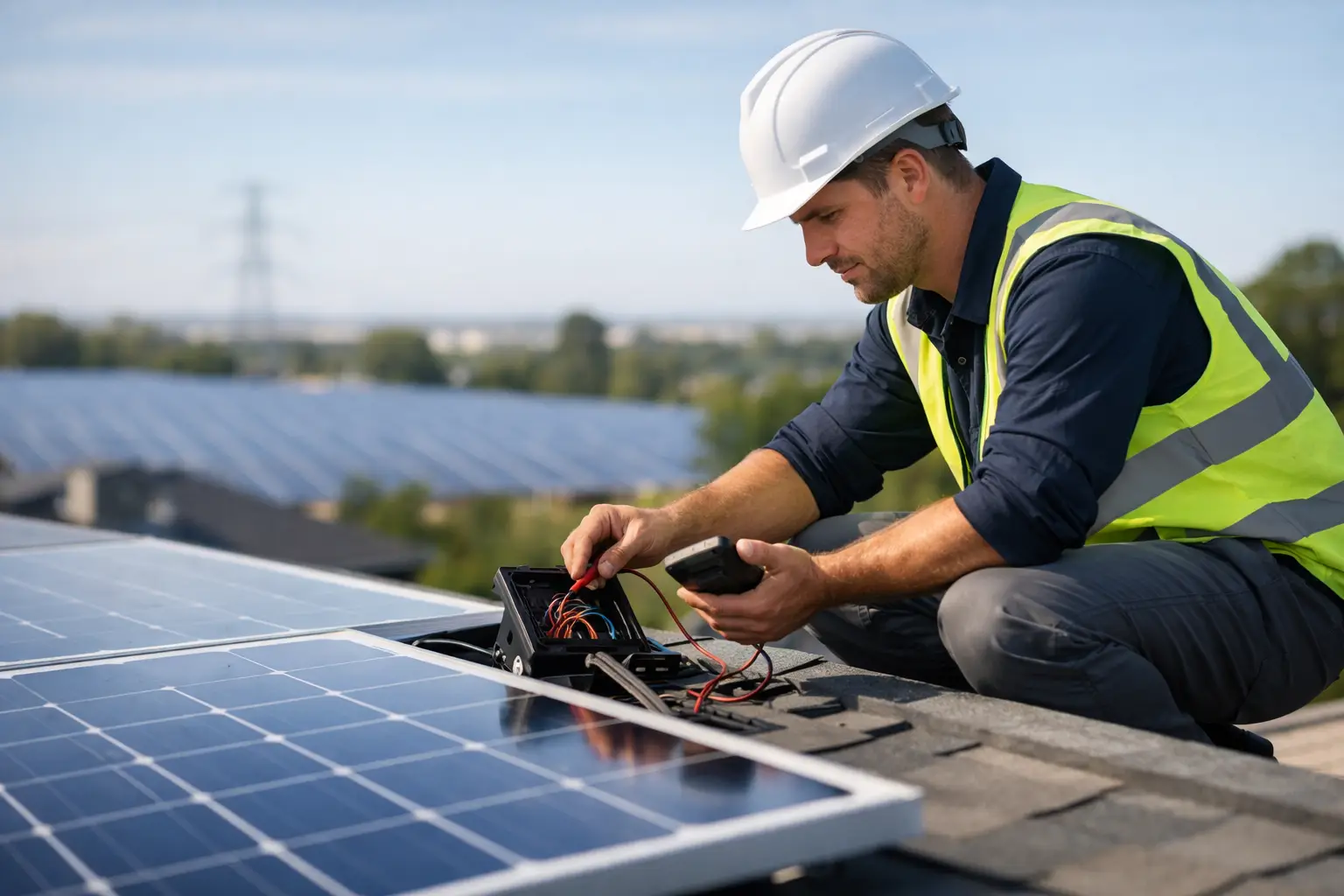
Your solar system usually tells you when something is off. The inverter starts showing an error, the app reports a drop in generation, or your power bills stop reflecting the savings you expect. When that happens, a solar fault finding service is not about guesswork. It is about finding the cause quickly, checking the system properly, and making sure any repair plan is based on evidence rather than assumptions.
For most system owners, the real frustration is not just that the system has a fault. It is not knowing whether the issue is minor, whether the system is still safe, or whether it has been underperforming for months without anyone noticing. That is where proper testing matters. A visual look at the panels from the ground is not enough, and swapping parts without diagnosis can waste time and money.
What a solar fault finding service actually covers
A proper solar fault finding service looks at the whole system, not just the part that appears to be failing. On a rooftop solar installation, one visible symptom can have several possible causes. Low output might come from panel degradation, damaged cabling, isolator issues, water ingress, inverter faults, string imbalance, or a shutdown caused by grid protection settings.
The job starts with understanding the complaint. If the inverter is offline, that changes the testing pathway. If the system is still running but generating poorly, the approach is different again. In both cases, the point is to test methodically.
That usually means inspecting the inverter, isolators, switchboard connections, cabling, panel condition and system performance data. Depending on the fault, it may also involve polarity checks, insulation resistance testing, voltage and current testing, and confirmation that protective functions are operating as intended. If the site has received a notice for anti-islanding inverter testing, that requirement needs to be considered as part of the overall condition of the system.
This kind of work is especially important on older systems. Components age at different rates. An inverter may be nearing end of life while the panels are still serviceable. An isolator may have suffered from heat and weather exposure while the rest of the installation looks fine. Without proper diagnostics, it is easy to replace the wrong thing.
Common signs you need solar fault finding
Some faults are obvious. Others are easy to miss until the financial impact builds up.
The most common trigger is an inverter fault code or shutdown. If the inverter is displaying a warning, tripping repeatedly, or not reconnecting properly, it needs more than a reset. A reset may bring it back online briefly, but if the underlying fault remains, the problem usually returns.
Poor generation is another major sign. If your system is producing noticeably less than expected for the season and weather, that needs investigation. A gradual decline can be harder to spot than a total shutdown, which is why many owners only realise there is a problem after comparing bills over several months.
Storm events also matter. In the ACT, hail, heavy rain and strong weather can leave damage that is not immediately visible from the ground. Cracked panels, moisture intrusion, loosened fittings and damaged rooftop components do not always stop a system straight away. Sometimes they create longer-term issues that show up later as performance loss or electrical faults.
There are also compliance reasons to book testing. Some inverters require anti-islanding testing in line with network requirements. If you have been notified that your system needs testing, that is not something to ignore or put off. It is a formal requirement, and it is also a good opportunity to confirm the wider health of the installation.
Why fault finding should be electrician-led
Solar faults are not just a performance issue. They can be a safety issue.
That is why fault finding should be carried out by a qualified electrician with solar testing experience, not treated as a general handyman job or a quick sales visit. Rooftop solar systems involve live DC equipment, isolators, switchboard integration and inverter protection functions. Diagnosing faults safely takes the right training, test equipment and process.
There is also a practical reason for using a specialist. A business focused on post-installation solar care is looking at the system you already have and how to keep it operating properly. The job is not to sell a new installation. It is to assess condition, identify faults clearly and recommend only the work that is actually needed.
That matters when the answer is not straightforward. Sometimes a repair is sensible and cost-effective. Sometimes the most economical option is staged maintenance, especially if several aged components are starting to show wear. And sometimes the right advice is that a major component has failed and replacement is more realistic than repeated repair attempts.
What can cause solar systems to underperform
Underperformance is not always dramatic. In many cases, the system is still on, still generating something, and still looks normal to the owner. That is why fault finding often reveals issues that have been sitting there for some time.
Panel degradation is one possibility, particularly on older systems or sites affected by weather damage. Cabling faults are another. UV exposure, poor terminations, damaged conduit or water ingress can all affect system performance and reliability. Isolator issues are also common on ageing installations, especially where rooftop components have been exposed to years of heat and weather.
Inverter problems can range from nuisance tripping to internal failure. Some faults are intermittent, which makes them harder to identify without proper testing and a clear understanding of the system’s operating history. Grid-related settings can also play a role, particularly where protection functions are involved.
It depends on the age of the system, the original installation quality, the brand and condition of components, and whether the property has had storms or other environmental exposure. That is exactly why a one-size-fits-all answer rarely works.
What to expect from the visit
A good fault finding visit should leave you with clarity. You should know what has been tested, what fault has been found if one is present, whether the system is safe to operate, and what the next step is.
In some cases, the issue can be resolved on the day. In others, the outcome is a repair plan or quotation based on the diagnosis. If replacement parts are needed, that should be explained plainly. If the system has multiple issues, those should be prioritised so you can make an informed decision about what needs urgent attention and what can be scheduled.
For homeowners, this is often the most useful part of the service. You are not left trying to interpret vague advice or work out whether the recommendation is justified. You get a clear assessment tied to actual test results and site conditions.
The cost of waiting too long
The longer a fault is left unresolved, the more it can cost in lost generation, avoidable damage and delayed compliance.
A system that is partly underperforming can quietly reduce your return on investment month after month. A fault that starts as a damaged connector or isolator issue can develop into a larger repair if heat, moisture or repeated tripping continues. If the system has safety defects, delaying action is even harder to justify.
There is also the risk of replacing major equipment too soon because no one properly diagnosed the original problem. We see this with inverters in particular. Owners are sometimes told the inverter is the issue when the actual fault sits elsewhere in the system. Good testing protects you from that kind of expensive guesswork.
Solar fault finding service for older and weather-affected systems
If your system is older, has been through hail, or has not had a proper inspection in years, fault finding becomes more valuable even if the signs are only mild. Small problems on ageing systems tend to stack up. Connectors loosen, seals degrade, isolators age and output slips gradually.
For Canberra and surrounding ACT property owners, weather exposure is not theoretical. Seasonal extremes can be hard on rooftop equipment. A targeted inspection and diagnostic service helps confirm whether the system is still performing as it should, and whether there are faults developing that deserve attention before they worsen.
That is also where working with a specialist service business makes sense. Solar Testing and Maintenance focuses on existing systems, testing requirements and aftercare work rather than new system sales, which means the advice stays centred on system condition, compliance and practical repair planning.
If your solar system is showing faults, producing less than it should, or has simply gone too long without proper testing, the sensible next step is to have it checked before a small issue becomes an expensive one.
Leave a Reply