


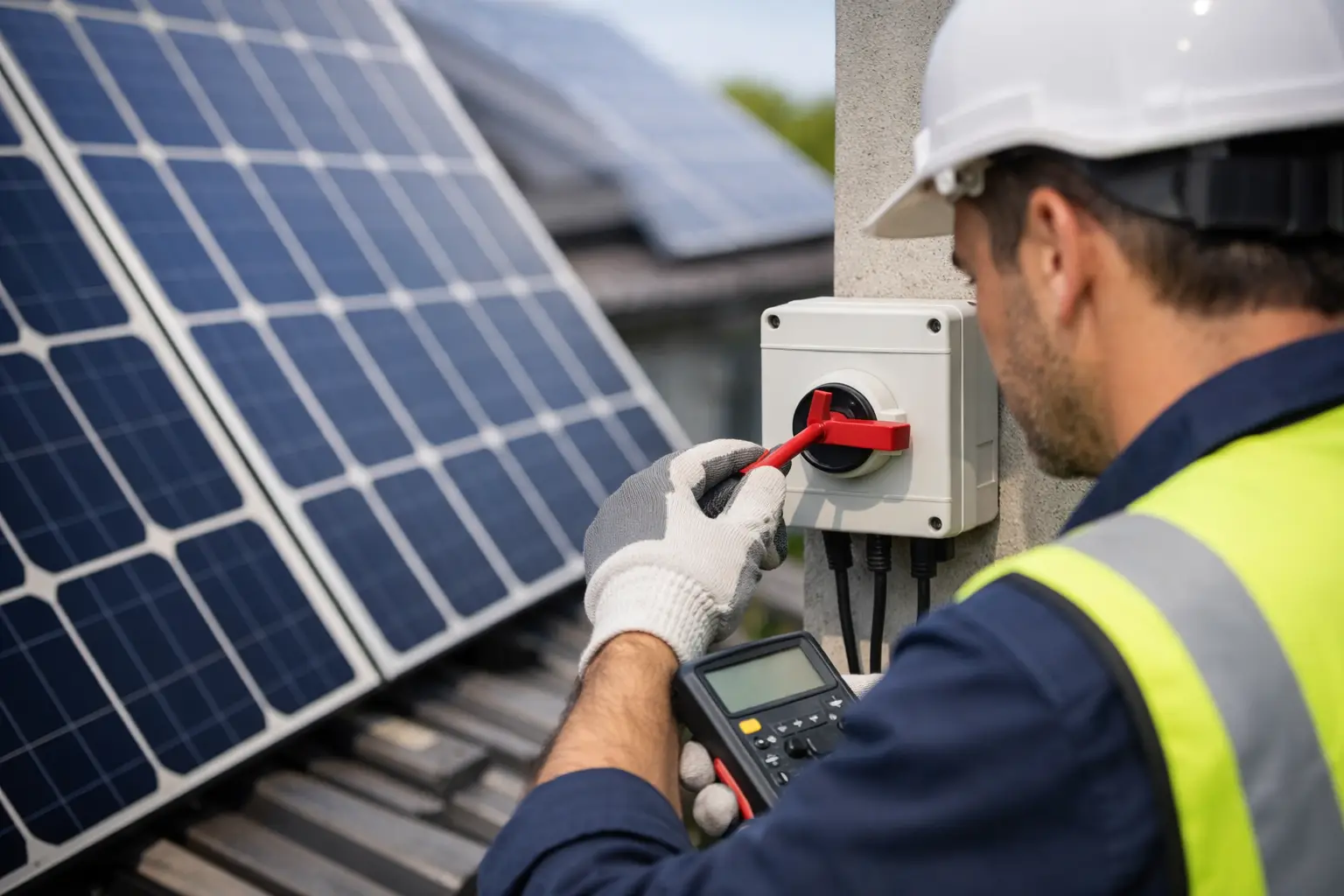
A burnt solar isolator rarely gives much warning. From the ground, your system can still look fine while heat damage, cracked seals or water ingress are building up inside the switch enclosure. That is why a proper solar isolator safety check matters. It is not box-ticking. It is one of the more practical ways to catch a fault early, protect the system, and avoid a small issue turning into a shutdown or fire risk.
For many solar owners, the isolator is easy to forget because it is not the part of the system you watch for generation. But it is a switching device sitting in a harsh environment, often exposed to sun, rain, dust and years of temperature changes. Over time, those conditions can affect the housing, seals, terminations and internal contacts. If the isolator has been poorly installed, mismatched to the application or stressed by age, the risk goes up.
What a solar isolator safety check is actually looking for
A solar isolator safety check is focused on condition, integrity and signs of electrical stress. The aim is to confirm that the isolator is still suitable for service, that it is sealed correctly, and that there are no warning signs pointing to overheating or moisture entry.
In practical terms, that means checking the enclosure for cracking, warping, brittleness and UV damage. It also means inspecting the switch body, cable entries, glands, conduit terminations and mounting points. If water can get in, or if cables are under strain, the isolator is already on the wrong path.
The internal condition matters just as much. A licensed electrician will look for discolouration, corrosion, carbon tracking, loose terminations and any evidence of heat at the terminals or switch contacts. In some cases the outside looks acceptable while the inside tells a different story. That is why visual checks from the ground are not enough.
Why isolator faults are common on older rooftop systems
On older systems, isolators tend to show their age before many owners realise there is a problem. Australian rooftops are hard on electrical equipment. Strong UV, heat cycling, wind-driven rain and dust all take a toll, especially on components installed years ago under different product ranges or practices.
The issue is not always dramatic failure. Sometimes it is gradual deterioration – seals harden, glands loosen, condensation forms, or terminal connections begin to heat under load. Those faults can sit unnoticed until a safety inspection, an inverter shutdown, or visible damage appears.
This is also why age alone is a valid reason to inspect. A system that has been running for years without attention is not necessarily a healthy system. It may simply be a system that has not been checked yet.
Heat, moisture and poor terminations
Most isolator problems come back to a few repeat causes. Heat build-up from loose or degraded terminations is a common one. Even slight resistance at a connection point can create localised heating over time. Add rooftop temperature and DC switching conditions, and the component can deteriorate faster than expected.
Moisture is another major issue. Once water enters the enclosure, corrosion and tracking can follow. It depends on the design, installation quality and exposure, but if an isolator has compromised seals or poor cable entry protection, it should not be assumed safe just because it still switches.
Signs your system may need an isolator inspection now
Some systems give clear signs that an isolator needs attention. Others do not. If your inverter has shown intermittent faults, unexplained shutdowns or erratic behaviour, the isolator should be part of the investigation. The same applies if you have had storm exposure, hail impact, or visible wear around rooftop electrical components.
You should also be cautious if you notice a burnt smell near the inverter or roof area, visible cracking in isolator housings, staining, rust marks, loose conduit, or covers that no longer close properly. Any of those signs can point to heat or water problems.
A recent purchase of a property with existing solar is another sensible trigger for inspection. Many buyers inherit systems with no maintenance history and no clear record of previous repairs. A targeted safety check can quickly tell you whether the isolators and other key components are still in serviceable condition.
What happens during a solar isolator safety check
A proper inspection is more than a quick glance at the switch. It should be carried out by a qualified electrician familiar with solar fault finding and rooftop component ageing.
The first step is usually a visual assessment of the DC isolators at the array and near the inverter, depending on the system design. The electrician checks the condition of the enclosure, UV exposure, fixings, labels, cable support and any obvious installation defects. From there, the inspection moves to closer examination of cable entries, gland sealing and signs of moisture or heat stress.
Where safe and appropriate, the internal condition is checked for terminal integrity, evidence of overheating, corrosion or contamination. This may be paired with broader solar testing, because isolator faults often show up alongside other issues such as degraded cabling, inverter alarms or poor generation performance.
Is testing always the same on every system?
Not quite. It depends on the system age, component type, installation layout and what symptoms are already present. A straightforward residential system with one inverter may need a relatively direct inspection. A property with multiple inverters, older rooftop gear or known performance issues may require a more detailed assessment.
That is an important point for owners comparing services. The value is not in someone simply saying the isolator looks alright. The value is in having the device checked in context – as part of the system’s overall safety and operating condition.
Why this check protects both safety and financial return
Most owners think of isolator checks as a safety issue first, and that is fair. A failed DC isolator can become a serious electrical hazard. But there is also a financial angle that should not be ignored.
If an isolator fault causes intermittent shutdowns or complete loss of generation, your system stops earning its keep. On an investment you expect to reduce power bills for years, that matters. The longer the fault sits, the more generation you lose and the more likely surrounding components are affected.
Early detection is usually cheaper than reactive repair. Replacing a deteriorated isolator before it fails is generally simpler than dealing with heat-damaged wiring, enclosure failure or wider system downtime. Good maintenance is not about spending money for the sake of it. It is about avoiding avoidable loss.
When a check should lead to replacement
Not every isolator that looks weathered needs immediate replacement, but some conditions leave little room for debate. If there is evidence of overheating, melted plastic, corrosion affecting terminals, failed seals, water ingress or switching damage, replacement is usually the sensible path.
There are also cases where the isolator may be technically functioning but no longer inspires confidence due to age, product condition or installation defects. This is where experience matters. A competent electrician should explain what is acceptable, what is marginal, and what should be changed now rather than watched and hoped for.
For owners, clear advice is important. You do not need engineering theory. You need to know whether the isolator is safe, whether it is likely to become a problem soon, and what the next step will cost.
Solar isolator safety check as part of routine maintenance
The best time to find an isolator problem is before it becomes obvious. That is why this check sits well within scheduled solar maintenance, especially for older systems or installations exposed to severe weather.
In Canberra and across the ACT, seasonal temperature swings and storm events can be tough on rooftop equipment. If your system has had years of service with no formal inspection, or if you have been dealing with inverter testing, fault finding or reduced output, including isolator inspection is simply common sense.
For many systems, the right approach is to combine the isolator check with a broader health assessment. That gives you a clearer picture of safety, compliance and performance at the same time, rather than treating one visible component in isolation.
A solar system does not need constant attention, but it does need the right attention at the right time. If an isolator has been baking on a roof for years, has seen storms, or is part of a system with unknown history, leaving it unchecked is a gamble. A proper inspection gives you something better than guesswork – a clear view of whether the system is still safe to run and worth relying on.
Leave a Reply