


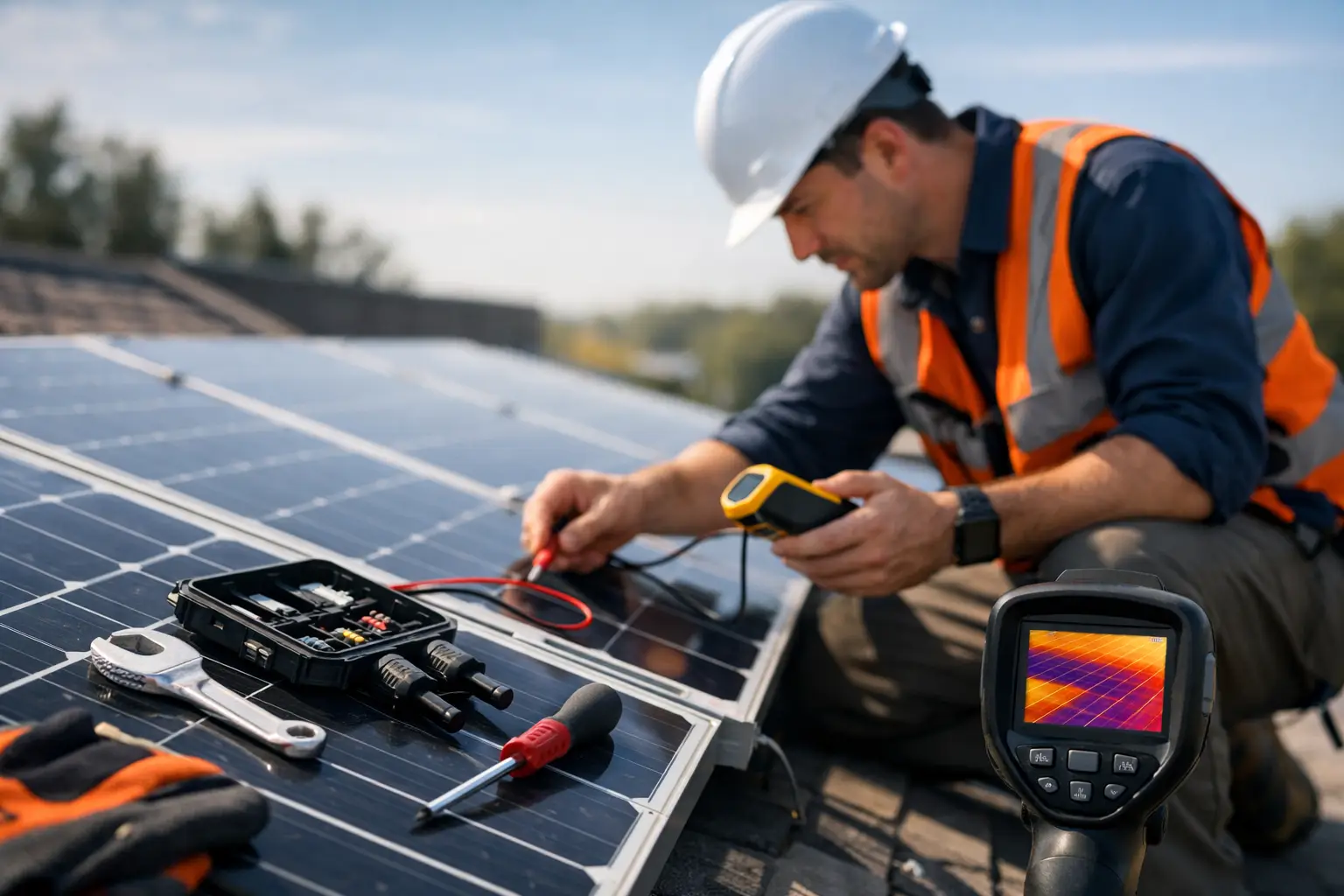
A solar system rarely fails all at once. More often, output slips a little, an inverter starts showing an intermittent fault, or weather exposure begins to damage parts that were meant to last. That is why solar repairs are usually less about one dramatic breakdown and more about finding the cause early, fixing the right component, and protecting the return on the system you already own.
For most property owners, the real question is not whether something can be repaired. It is whether the issue is affecting generation, safety, compliance, or all three. If your system is older, has been through hail or heavy rain, or you have received notice for anti-islanding inverter testing, small faults are worth taking seriously.
When solar repairs are actually urgent
Some faults can wait a short time for inspection and planning. Others should be treated as priority work. A damaged DC isolator, signs of water ingress, burnt connectors, cracked cable insulation, or repeated inverter shutdowns are not minor maintenance items. They can reduce production, create safety risk, and in some cases lead to larger failures if left alone.
The same applies when a system is visibly underperforming. If your bills have crept up without a clear change in usage, or your monitoring shows a drop that does not match seasonal weather, the system may already be losing value every day it stays unresolved. A panel fault, failed string, inverter issue, or degraded connection can all sit in the background while the system keeps appearing to run.
Urgency also matters from a compliance point of view. In the ACT, some solar owners receive notification that anti-islanding testing is required. That is not a cosmetic check. It is a grid compliance requirement tied to how the inverter behaves when grid conditions change. If testing identifies a fault, repair planning needs to happen promptly and correctly.
What solar repairs usually involve
Many owners expect solar repair work to mean replacing panels. Sometimes that is necessary, but often the problem sits elsewhere. A proper repair process starts with testing and diagnosis, because replacing parts without confirming the cause is an expensive way to guess.
Inverter faults and shutdowns
The inverter is one of the most common sources of trouble in an ageing solar system. It may show error codes, cycle on and off, lose communication, or stop exporting properly. Some issues come from the inverter itself. Others are upstream or downstream, such as voltage problems, wiring faults, poor connections, or failed isolators.
This is where experience matters. Swapping an inverter without checking the rest of the system can leave the original fault untouched. On the other hand, there are times when inverter replacement is the sensible option, especially where the unit is well past its expected service life or no longer meets current requirements.
Panel damage and degradation
Panels are built to handle years of exposure, but they are not immune to impact and weather. Hail can crack glass or damage cells. Water ingress can affect junction boxes and connectors. Heat cycling over time can also contribute to degradation that reduces output.
Not every mark on a panel means urgent replacement. Surface grime, cosmetic wear, and normal ageing are different from electrical faults or structural damage. The key is to separate harmless appearance issues from defects that affect performance or safety.
Isolators, cabling and connectors
A lot of serious solar faults are found in the parts owners rarely see. DC isolators, rooftop connectors, cabling and terminations all age differently depending on installation quality and exposure. UV, moisture, poor sealing, and thermal stress can all take their toll.
When these components start to fail, symptoms can be vague. You might only notice lower generation, a fault light, or occasional inverter trips. Proper inspection can reveal whether the repair is a straightforward component replacement or part of a larger remediation job.
Why testing should come before repair planning
Good solar repairs start with evidence. That means inspection, electrical testing, fault finding, and where relevant, compliance testing. Without that step, it is too easy to focus on the most obvious symptom rather than the real cause.
For example, an inverter that keeps dropping out may not be the main problem. It could be reacting correctly to poor insulation resistance, damaged cabling, or instability elsewhere in the system. A system with low production may not need new panels at all if one string has simply failed or a connector has degraded.
This is also why fixed-price testing packages can be useful for owners of existing systems. They make it easier to understand the condition of the system before committing to repair work, and they reduce the uncertainty that often puts maintenance off for too long.
What can wait and what should not
Not every fault needs same-day repair, but delaying too long usually costs more than acting early. The practical approach is to divide issues into three groups.
Safety and compliance faults come first. These include isolator damage, water ingress affecting electrical components, exposed wiring, failed anti-islanding tests, or any signs of overheating. They should be assessed and repaired as a priority.
Performance faults come next. If the system is producing well below expectation, every week of delay means lost savings. The exact urgency depends on how large the drop is and whether the system is still operating partially or has effectively lost a whole section.
Cosmetic or lower-impact issues can often be scheduled. That might include ageing components that still test within acceptable limits but show signs they are nearing end of life. In those cases, planned replacement can be the smarter move than waiting for a failure during summer peak production.
The trade-off between repair and replacement
This is where many solar owners need straight advice rather than a sales pitch. Sometimes repair is clearly the best option. If a system is structurally sound and the fault is isolated to a connector, isolator, section of cable, or a single failed component, targeted repair can restore performance at a reasonable cost.
But it depends on the age and condition of the wider system. If multiple parts are deteriorating, if the inverter is obsolete, or if storm damage is spread across the array, repeated repair work may stop making financial sense. The cheapest job today is not always the lowest-cost outcome over the next five years.
A good technician should be able to tell you when a repair is worthwhile, when a staged approach is sensible, and when replacement should be considered. That advice should be based on test results and condition, not guesswork.
What to expect from a proper solar repairs service
A credible repair service for existing solar systems should do more than swap parts. It should confirm the fault, identify any related safety or compliance issues, and explain what needs immediate attention versus what can be monitored.
You should expect clear reporting, licensed electrical work, and straightforward recommendations. If anti-islanding testing is required, that process should be handled correctly and documented. If repairs are needed after inspection, the scope should be easy to understand, with no vague language around what is actually being fixed.
For Canberra and ACT solar owners, that local understanding also helps. Weather exposure, hail history, and local compliance requirements all shape what faults show up and how systems should be maintained over time.
Signs it is time to book solar repairs
If your inverter is showing recurring faults, your production has dropped without explanation, your system has been through a major storm, or you have never had the installation properly checked since it was commissioned, there is a strong case for inspection. The same applies if your system is getting older and you want to avoid a more expensive failure later.
Solar Testing and Maintenance deals specifically with this stage of solar ownership – the part after installation, when performance, compliance and wear start to matter more than brochure promises. That specialist focus is valuable because repair work on existing systems is rarely as simple as it first appears.
The best time to deal with solar faults is usually before they turn into outages, safety risks, or months of lost generation. A system that is tested properly and repaired with a clear plan is far more likely to keep doing the job it was installed for: producing reliable savings without unwanted surprises.
If something looks off, sounds off, or simply is not adding up on your bill, it is worth having the system checked while the fix is still straightforward.
Leave a Reply