


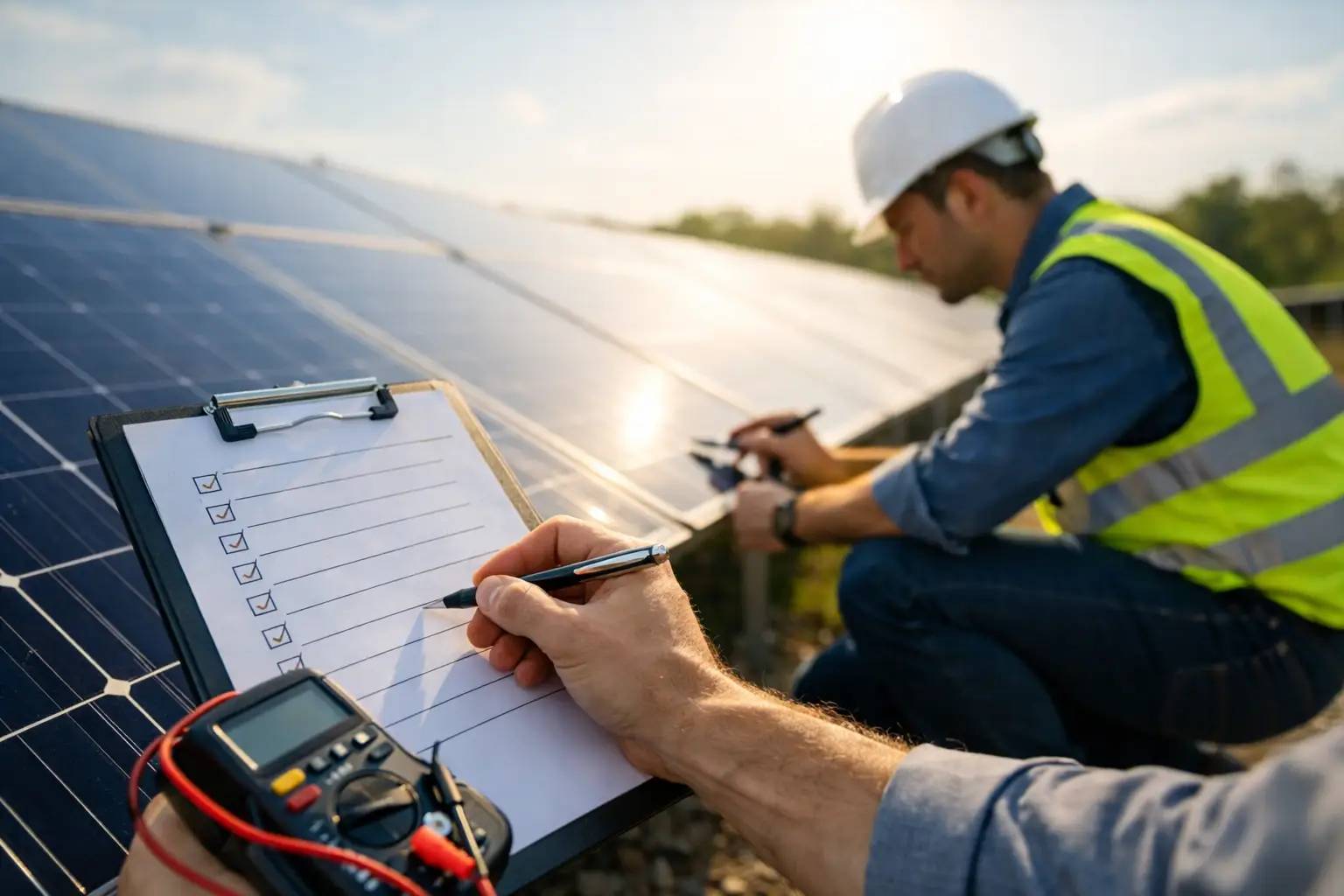
A solar system rarely fails all at once. More often, output slips a little, one inverter starts throwing the odd fault, or a damaged isolator sits unnoticed until it becomes a safety issue. That is why a practical solar maintenance checklist matters. It helps you pick up the obvious warning signs early and understand when a proper electrical inspection is the smarter next step.
For most solar owners, maintenance is not about climbing onto the roof with a bucket and brush. It is about protecting performance, meeting testing requirements where they apply, and avoiding the slow financial loss that comes from faults, ageing components, storm damage, or poor shutdown hardware. A good checklist keeps the focus where it should be – safety, output, and compliance.
What a solar maintenance checklist should cover
A useful solar maintenance checklist starts with what you can observe safely from the ground, then moves to the parts of the system that need qualified testing. That distinction matters. Solar equipment includes live DC components, rooftop cabling, isolators, and inverter settings that should only be handled by a licensed electrician.
From an owner’s point of view, the checklist should answer five basic questions. Is the system producing as expected? Has anything changed since the last season or last power bill? Are there visible signs of damage after hail, heavy rain, or high winds? Has the inverter shown faults, alarms, or irregular shutdowns? And if your network has required anti-islanding testing, has that been completed on time?
Those are simple questions, but they often reveal where a system is starting to drift from normal operation.
Start with output, not assumptions
The first place to look is your generation data. If your solar monitoring app or inverter display shows a drop that cannot be explained by weather, shorter winter days, or a clear increase in household usage, there may be a fault developing. A string issue, panel damage, inverter derating, water ingress, or a failed component can all reduce output without making the whole system stop.
Compare current performance with the same period last year if you have the records. One poor day means very little. A sustained dip over weeks is worth attention. If one inverter in a multi-inverter setup is underperforming while the others look normal, that is even more useful information.
This is also where owners can waste time chasing the wrong issue. Dirty panels do affect output, but in many cases the bigger losses come from electrical faults, shading changes, degraded connectors, or inverter problems. If the drop is material, proper testing usually tells you more than a visual guess.
Visual checks you can do safely
A ground-level inspection is a sensible part of any solar maintenance checklist. Walk around the property and look for anything obviously out of place. Panels should appear intact and evenly aligned. If you can see cracked glass, impact marks, burnt areas, loose panels, or sections lifting from the roofline, stop there and book an inspection.
After storms, check for tree debris, leaf build-up, or signs that branches may have struck the array. Hail can leave subtle panel damage that is not always easy to spot from below, but obvious impact marks or sudden output loss after a storm should not be ignored.
Look at accessible equipment as well. The inverter should be clean, dry, and free from obvious corrosion or insect activity. Warning lights, fault codes, unusual fan noise, or repeated restarts are all worth attention. Around isolators and switchgear, look for cracked covers, discolouration, warped plastic, or signs of water ingress. These are not cosmetic issues. They can point to heat damage or failing enclosures.
If your cabling is visible, it should be secure and protected, not hanging loose or rubbing against sharp edges. Any sign of deterioration, exposed insulation, or animal damage needs qualified repair.
Cleaning panels: sometimes useful, sometimes overstated
Panel cleaning gets more attention than it deserves. In many situations, normal rainfall does most of the work. A layer of dust or grime can reduce output, but it is not always the main reason a system is underperforming.
If panels are heavily soiled by bird droppings, dust, or nearby construction residue, cleaning may help. The trade-off is safety and the risk of damage. Roof access, fragile tiles, and improper cleaning methods can create more problems than they solve. High-pressure cleaning, abrasive tools, or harsh chemicals are poor practice.
For many owners, the better question is not “Should I clean the panels myself?” but “Is the output loss significant enough to justify professional attention?” If there is obvious heavy soiling and safe access is possible, cleaning can be part of maintenance. If the system has more serious warning signs, cleaning should not distract from electrical testing.
Inverter checks and compliance matters
The inverter is where many faults first become visible. It records errors, shutdown events, and irregular operating patterns that tell a much clearer story than a quick look at the roof. If your inverter display shows repeated alarms, communication errors, insulation faults, or grid-related trips, the system needs more than casual observation.
For some solar owners in the ACT, anti-islanding inverter testing is not optional. If you have received notification that testing is required, it should be treated as a compliance task, not something to leave until the reminder becomes urgent. The purpose is straightforward – to confirm the inverter disconnects correctly from the grid under specified conditions.
This is one area where a proper service matters. A checklist can remind you that testing is due, but only qualified equipment and competent electrical work can confirm that your system is meeting the requirement.
The parts owners often miss
Most solar faults are not dramatic. They sit in the background and chip away at performance or reliability. A weathered rooftop isolator, a connector problem, moisture intrusion, declining insulation resistance, or a damaged panel string may not be visible from the ground. Yet these are the issues that often turn up during a full system health check.
Older systems deserve closer attention here. Age alone does not mean a system is unsafe, but components do wear. Plastic becomes brittle. Seals fail. UV exposure affects cable protection. Previous repair work may not have aged well. If your system is several years old and has never had a detailed inspection, there is value in checking it before a minor problem becomes a larger repair.
The same applies after severe weather. Hail, wind, and water exposure can affect panels, mounting hardware, connectors, and rooftop electrical gear in ways that are not obvious straight away. If output changed after a storm, or if there is any sign of ingress or impact, testing is the sensible step.
When to call a licensed solar specialist
A checklist is useful, but it has limits. If you notice a sustained drop in generation, visible panel damage, inverter fault codes, signs of overheating, storm-related concerns, or overdue compliance testing, it is time to book a licensed electrician with solar maintenance experience.
That experience matters because post-installation service is its own discipline. Fault finding on existing systems is different from installing new solar. It involves diagnosis, safe isolation, testing under load, component inspection, and clear repair planning. Guesswork costs money. Targeted testing saves it.
For homeowners and small property operators, the practical goal is simple: know whether the system is healthy, whether it is compliant, and whether any faults are reducing return on investment. A proper inspection should leave you with clear findings, not vague advice.
A practical maintenance rhythm
Most owners do not need a complicated maintenance calendar. A sensible routine is to keep an eye on output, do a visual ground-level check after major weather, pay attention to inverter alerts, and arrange professional inspection when testing is due or performance changes.
If your system is older, has had hail exposure, or has a history of faults, more frequent checks make financial sense. If it is newer and performing steadily, the focus may be more on compliance testing and catching issues early rather than expecting major maintenance every few months.
The point of a solar maintenance checklist is not to turn you into a technician. It is to help you notice what has changed, avoid preventable losses, and bring in the right support before a small fault becomes an expensive one. If your system is meant to save you money for years, it is worth treating maintenance as part of the investment, not an afterthought.
Leave a Reply