

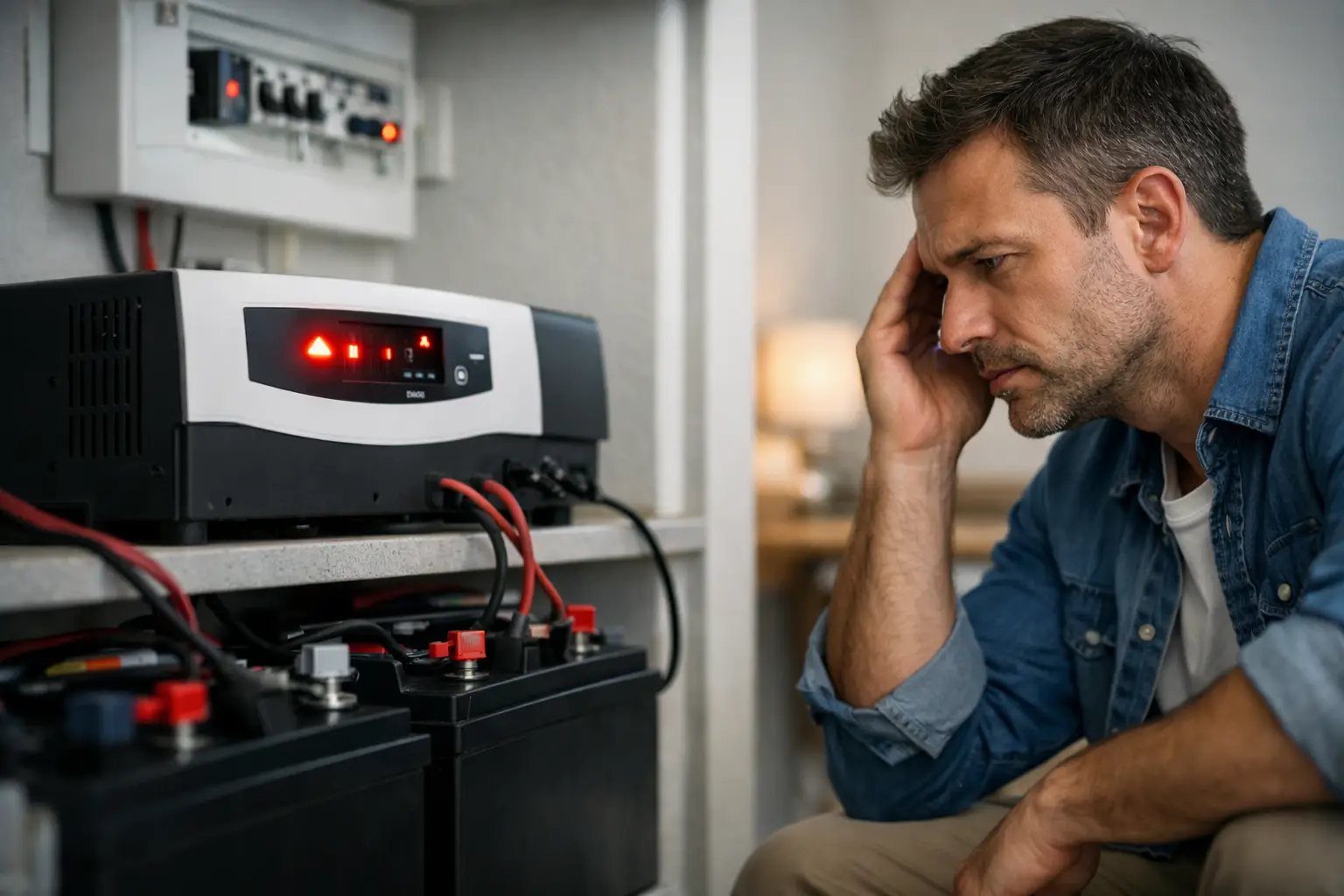
A solar inverter that trips once can be frustrating. One that repeatedly shuts down can quietly cost you generation every sunny day it remains unresolved. If you are asking, “why does my inverter keep tripping?”, the answer may be as simple as an overloaded circuit or as significant as a developing insulation, grid-voltage or inverter fault. The key is not to keep resetting it and hoping for the best.
Your inverter is designed to disconnect when it detects conditions that could affect safety, equipment or the electricity grid. In many cases, tripping is the system doing exactly what it should. The job is to identify what is causing that protection to operate.
What does it mean when a solar inverter trips?
“Inverter tripping” can describe a few different events. The inverter itself may display a fault and stop exporting power. An AC or DC isolator may have switched off. A circuit breaker or safety switch in the switchboard may have tripped. These are not the same fault, and treating them as though they are can lead to wasted time or unsafe actions.
A fault code on the inverter screen or monitoring app is useful, but it is only a starting point. The code records what the inverter detected, not always the root cause. For example, an inverter reporting a grid fault may be responding correctly to high voltage at the property, a loose connection or a network issue. It does not automatically mean the inverter has failed.
If a switch has tripped, leave it off if it will not reset cleanly or trips again. Do not repeatedly operate rooftop isolators, remove covers or attempt electrical repairs. Solar systems contain live DC components when panels are producing, even when the inverter is off.
Common reasons an inverter keeps tripping
Grid voltage is too high or unstable
Voltage issues are a common cause of solar inverter shutdowns, particularly in areas with many exporting solar systems. When local grid voltage rises above the inverter’s permitted limit, it must disconnect to protect the network. It may reconnect later, then trip again as export increases.
This often happens around the middle of a clear day, when solar output is high and household consumption is low. You may see messages such as “grid overvoltage”, “VAC high” or “grid fault”. It can also occur because of voltage rise between the switchboard and inverter, undersized cabling, poor terminations or an issue on the supply side.
A qualified electrician can test voltage at the right points, check cable condition and connections, and determine whether the issue is within the solar installation or requires discussion with the electricity distributor. Simply changing inverter settings is not an appropriate first response and may create a compliance issue.
A safety switch or circuit breaker is detecting a fault
A tripped safety switch may indicate current leaking to earth, while a circuit breaker generally responds to overload or short-circuit conditions. With solar, possible causes include damaged cables, moisture in equipment, deteriorated insulation, faulty surge protection or an internal inverter fault.
Water ingress deserves particular attention after prolonged rain, storms or ageing seals. Canberra’s weather can be hard on rooftop equipment, cable entries and external enclosures. A problem may only appear during wet conditions, then seem to disappear once things dry out. That does not mean it has fixed itself.
DC isolator, cable or connector problems
Many older solar systems have DC isolators and cable connections that have spent years exposed to heat, cold and weather. UV exposure can degrade cable insulation, seals can fail, and connectors can loosen or corrode. Hail can also damage panels, junction boxes and rooftop components without creating an obvious fault straight away.
A DC fault may cause an inverter to stop, display insulation or isolation errors, or refuse to restart. These faults need proper testing, not visual guesswork from the ground. A licensed solar electrician can inspect the array, test insulation resistance where appropriate and assess whether damaged components need repair or replacement.
The inverter is overheating
Inverters reduce output or shut down when internal temperatures become too high. A unit installed in direct afternoon sun, inside a poorly ventilated enclosure or near a heat source may trip on hot days but operate normally in cooler weather.
Check whether the fault pattern matches temperature. Does the inverter stop during the hottest part of the afternoon, then restart when the shade arrives? Is there dust blocking ventilation, or has storage been placed around the unit? Keep the area clear and follow the manufacturer’s clearance requirements, but leave internal cleaning and electrical work to a qualified technician.
Overheating is not always an installation-location problem. Failing cooling components, internal faults and age-related degradation can produce the same symptom.
An internal inverter fault or ageing component
Solar inverters do not last forever. Capacitors, relays, fans and internal electronics can deteriorate over time, especially after repeated heat cycles, power disturbances or storm activity. Fault messages relating to relays, insulation, earth faults or internal hardware may point to an inverter issue, but testing is still needed before approving an expensive replacement.
A full system health check can establish whether the inverter is actually at fault, whether the panels and wiring are operating correctly, and whether repair is sensible compared with replacement. This is particularly valuable for systems that have been underperforming for months rather than failing completely.
Anti-islanding protection has operated
Grid-connected solar inverters must stop exporting if the electricity network fails. This is called anti-islanding protection. It prevents a solar system from energising local lines while network crews may be working on them.
If your inverter trips during or after a local outage, that may be normal operation. It should reconnect once the grid has returned and remained stable for its required reconnection period. However, if it continues to report grid or anti-islanding-related faults when the rest of the property has normal power, the protection function and associated wiring should be checked.
For ACT solar owners who have received an EvoEnergy notification, required anti-islanding testing should be completed by a suitably qualified electrician. This is a compliance test, but it is also a practical opportunity to identify issues before they affect energy production or system safety.
Why does my inverter keep tripping only at certain times?
The timing is one of the most useful clues. A trip on bright, mild days may suggest voltage rise at high export. A trip during heavy rain can indicate moisture ingress or insulation trouble. A shutdown on extreme heat days may point to overheating. A fault that occurs at sunrise or sunset can sometimes relate to low-light operating conditions, grid stability or a developing component issue.
Before arranging service, make a short record of the date, time, weather, fault code and whether the home had a power outage. Screenshots from the monitoring app are helpful. This information allows the electrician to investigate the right path rather than starting with assumptions.
Safe checks you can make before booking a technician
You do not need to climb on the roof or open electrical equipment to gather useful information. Check the inverter display or app for the exact error message and note whether the unit has warning lights. Look for obvious external signs of damage around accessible equipment, such as cracked enclosures, water staining, burnt smells or loose-looking conduit.
Also check whether other electrical circuits in the home are affected. If the inverter is off but the home still has normal grid power, the issue may be limited to the solar system. If a safety switch has tripped and will not stay on, treat it as an electrical fault and arrange professional assistance.
Avoid cycling switches repeatedly. Multiple resets can mask an intermittent fault, place stress on equipment and, in the case of a serious fault, create further risk.
When a professional solar inspection is the sensible next step
Book an electrician-led inspection if the inverter trips more than once, displays recurring fault codes, stops generating for extended periods, or has been affected by hail, water or storm damage. It is also wise to act promptly if the system is older, its production has dropped, or it has never had a detailed post-installation health check.
A proper assessment should examine more than the inverter screen. It may include inverter operation, AC and DC isolators, cable condition, visible panel damage, system output, protective devices, earthing and relevant compliance requirements. The right repair plan depends on what testing finds. Some faults require a straightforward connection or isolator repair; others may justify distributor investigation, component replacement or a broader system upgrade.
Your solar system should earn its keep without becoming a recurring switchboard problem. A clear diagnosis from a qualified solar electrician helps protect the equipment, maintain compliance and get your system back to producing as it should.
Leave a Reply