

A solar system can keep generating while a serious fault develops quietly on the roof, beside the inverter, or inside a weathered isolator. The top rooftop solar safety defects are not always obvious from ground level, but they can reduce production, create fire or electric shock risks, and leave a system out of step with grid requirements. For Canberra solar owners, heat, frost, hail and heavy rain all place real pressure on rooftop equipment over time.
A proper inspection is not just a panel clean or a glance at the inverter screen. It is a structured check of the DC and AC side of the system, the roof-mounted components, safety switching, earthing, weather protection and system operation. The aim is straightforward: find developing faults before they become an expensive repair, a safety issue or months of lost generation.
Top Rooftop Solar Safety Defects Found in Existing Systems
Damaged panels and compromised glass
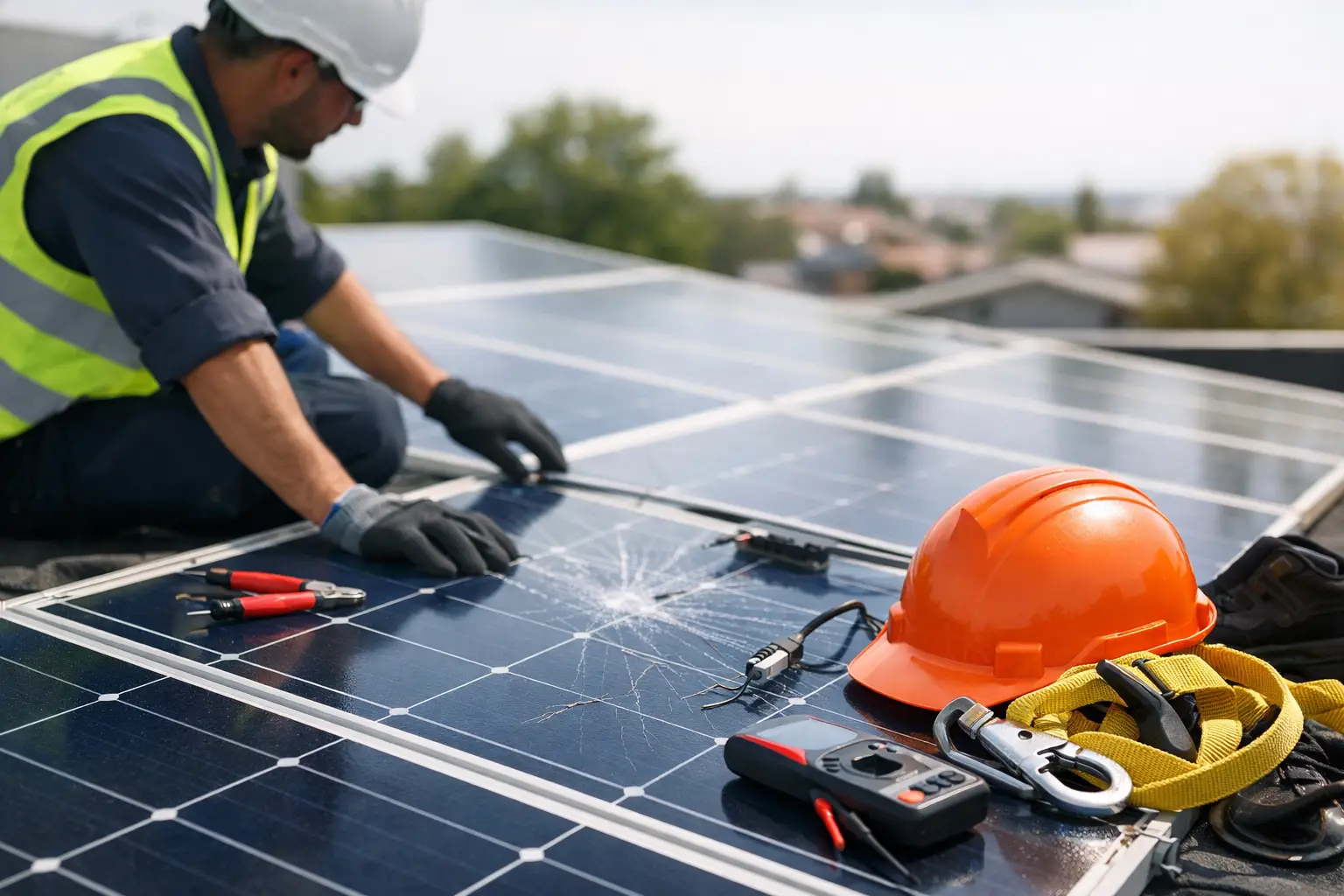
Cracked glass, broken backsheets and damaged panel frames are common after hail, falling branches or impact during roof work. A panel may still produce power with minor-looking damage, which is why the issue is easily missed. However, moisture can enter through cracks or damaged seals and lead to internal corrosion, insulation faults or hot spots.
Discolouration, burn marks, bubbling backsheets and visible delamination also need attention. These signs can indicate heat stress or material deterioration. Not every mark means a panel must be replaced, but it needs assessment by a qualified solar electrician who can determine whether the panel remains electrically safe and performing as it should.
Water ingress at connectors, junction boxes and conduits
Solar equipment sits outside year-round, so seals and enclosures matter. Water ingress can occur in panel junction boxes, DC connectors, roof penetrations, conduits, isolators and inverter enclosures. It may follow storm damage, poor original installation, movement in conduit fittings or simply years of UV exposure.
Moisture and DC electricity are a poor combination. Corrosion raises resistance, connection points can overheat, and insulation resistance can fall. In some cases, the inverter will report a fault or shut down. In others, the problem only appears during wet weather or early in the morning when condensation is present.
A visual check is useful, but it is not enough to confirm the condition of concealed wiring and connections. Electrical testing helps identify insulation issues before a fault becomes more severe.
Failed or deteriorated DC isolators
DC isolators have been a known weak point in many older Australian solar installations, particularly units exposed to direct sun and rain. Cracked housings, faded plastic, damaged seals, stiff switches and signs of heat around the enclosure all warrant prompt investigation.
An isolator may look closed and intact while its internal contacts are worn, corroded or overheating. Because DC arcs behave differently from normal household AC faults, damaged DC switching equipment should never be ignored or handled by an unqualified person. If an isolator is damaged, making noise, smells burnt or shows heat damage, arrange an electrician-led inspection rather than attempting to operate it yourself.
Exposed, unsupported or damaged solar cabling
Cables need protection from UV, sharp roof edges, movement, pests and water. Over time, cable clips can fail, conduit can crack, and wiring can sag onto roof sheeting or rub against mounting hardware. Poor cable support can damage insulation and create a pathway for faults.
Rodent damage is also worth considering, especially where cable runs pass through roof spaces. A system can appear normal at the inverter while insulation has been compromised somewhere along the array wiring. A full health check should look at accessible cable routes, cable containment, mechanical protection and the condition of electrical terminations.
Loose mounting hardware and failed roof penetrations
The solar array and the roof work as one system. Loose clamps, corroded brackets, damaged rails or unsuitable fixings can affect panel security and roof integrity. In high winds, even a small mounting issue can become significant.
Water leaks are another concern. A leak may not show up immediately after installation. Roof penetrations and flashings can deteriorate, tiles can crack, or sealing details may fail after seasonal movement. The electrical system and the roof should be assessed together when there is staining in the ceiling, water in the roof space, or evidence of movement around the array.
This is one area where the right repair depends on the fault. Tightening hardware without checking the roof fixing, rail alignment and surrounding materials may only mask the underlying problem.
Defects That Affect Protection and Grid Compliance
Inadequate earthing and bonding
Earthing and bonding provide a safe path for fault current and help ensure exposed conductive parts do not become hazardous. Missing, loose or corroded earth connections can reduce this protection. Problems may develop after alterations, roof repairs, storm damage or gradual corrosion at connection points.
Earthing faults are not something to diagnose by sight alone. A qualified electrician uses appropriate testing to verify that the system’s protective measures are intact. This is particularly important for older systems where components, wiring routes and standards may differ from current installation practices.
Inverter faults and failed anti-islanding operation
The inverter is the control point between the solar array, your property and the grid. Error messages, repeated shutdowns, unusual fan noise, a blank display, or lower-than-expected production all deserve investigation. Sometimes the fault is within the inverter. In other cases, it is responding correctly to a problem on the DC or AC side of the system.
Anti-islanding protection is especially important. It is designed to stop the inverter exporting power when the grid is unavailable, helping protect network workers and the electrical network. Where an owner receives a request for anti-islanding testing, it should be completed by a suitably qualified professional using the correct process and test equipment. A system generating normally is not proof that this protective function will operate correctly when required.
Missing labels, inaccessible shutdown points and altered switchboards
Clear labels and accessible shutdown equipment matter during an emergency, maintenance visit or electrical fault. Faded labels, missing warning signs, unclear isolation points and switchboard changes can create unnecessary risk for occupants and trades.
If a renovation, battery installation, switchboard upgrade or meter work has occurred since the solar system was installed, the solar arrangement should be reviewed. Changes elsewhere in the property can affect cable routes, protective devices, labelling and access to isolation points.
When Should You Arrange a Solar Safety Inspection?
There is no benefit in waiting for a total inverter failure. A check is sensible after a hailstorm, major wind event, roof repairs, water leak, pest activity or unexplained drop in solar output. It is also worthwhile when buying a property with an older system, taking over responsibility for a small commercial site, or responding to a network notification about inverter testing.
Watch for practical warning signs: the inverter is regularly showing faults, daily production has fallen compared with similar seasons, panels have visible damage, an isolator is cracked, or the system shuts down during wet weather. Electricity bills can provide a clue, but they do not identify the cause. Lower output may be shade, soiling, inverter curtailment, a failed string, panel damage or a wiring fault.
A qualified inspection separates those possibilities. It should include a visual condition assessment, electrical checks appropriate to the system, inverter operation review, fault finding where needed, and clear repair recommendations. The result should tell you what is urgent, what can be monitored and what is likely to affect system return.
What Not to Do When You Suspect a Defect
Do not climb onto the roof to inspect panels, remove connector covers, open isolators or pull on cabling. Rooftop work carries fall risks, and solar circuits can remain live whenever panels are exposed to daylight. Turning off the inverter does not automatically make every part of the rooftop DC system safe to touch.
Photographing visible damage from a safe position can help document a storm event or support an insurance claim. Note inverter error codes and the date the issue began, then arrange an inspection. If there is smoke, a burning smell, obvious arcing or damaged electrical equipment, keep clear and contact an electrician urgently. If there is an immediate threat to life or property, call emergency services.
A solar system is a long-term asset, not a fit-and-forget appliance. Timely testing and repairs give you a clearer picture of its condition, protect the people around it, and help keep the generation you paid for working for your property.
Leave a Reply