

A solar system can keep generating power while a fault is quietly reducing its output, creating a safety concern or leaving it out of grid compliance. So, do solar systems need servicing? Yes. Rooftop solar has no moving engine to service, but its electrical equipment, connections and protective components need periodic inspection and testing to keep the system safe, compliant and financially worthwhile.
For most owners, servicing is not about cleaning panels every few months. It is about having a qualified electrician check the parts that cannot be assessed safely from the ground or through an app: the inverter, isolators, cabling, connections, switchboard protection and the condition of the array.
Why solar servicing is worth doing
Solar systems work outdoors in heat, frost, wind, rain and UV exposure. Canberra conditions can be particularly hard on rooftop equipment, with cold winters, summer storms and the occasional hail event all contributing to wear over time. A system may look fine from the street but still have water ingress in an isolator, deteriorated cable insulation, a loose connection or a panel fault that is affecting production.
The cost of a problem is not always obvious. A failed inverter is easy to notice because generation stops. Smaller faults are different. One underperforming string, intermittent inverter error or damaged connector can reduce output gradually, meaning the owner may lose solar savings for months before the issue becomes clear.
A proper service also provides a record of system condition. That can be useful when planning repairs, responding to a fault notification, making an insurance claim after storm damage, or simply deciding whether an older system is still performing as expected.
Do solar systems need servicing for compliance?
In some cases, yes. Distributed solar systems must disconnect from the grid if the electricity network loses supply. This is called anti-islanding protection. It prevents a solar inverter from continuing to energise local network lines while crews may be carrying out repairs.
Network requirements can include periodic anti-islanding inverter testing. If you receive an Evoenergy notice requesting a test, it should not be ignored or treated as a general maintenance reminder. It is a compliance requirement that needs to be completed and documented by a suitably qualified electrician.
The required test depends on the inverter and the system configuration. A technician verifies that the inverter responds correctly under the required test conditions and confirms the system is operating within the relevant settings. If the inverter does not pass, the next step may be a configuration check, firmware assessment, repair or replacement planning.
Anti-islanding testing is distinct from a broad health check, although it makes practical sense to inspect the rest of the installation at the same visit. A compliance test confirms one critical safety function. A system inspection looks more widely at the condition and performance of the equipment protecting your investment.
What a professional solar service should include
The exact scope should match the age, design and condition of the system. A newer, trouble-free system may only need periodic electrical checks and compliance testing when required. An older system, a multi-inverter installation or a system with unexplained low output may need deeper fault finding.
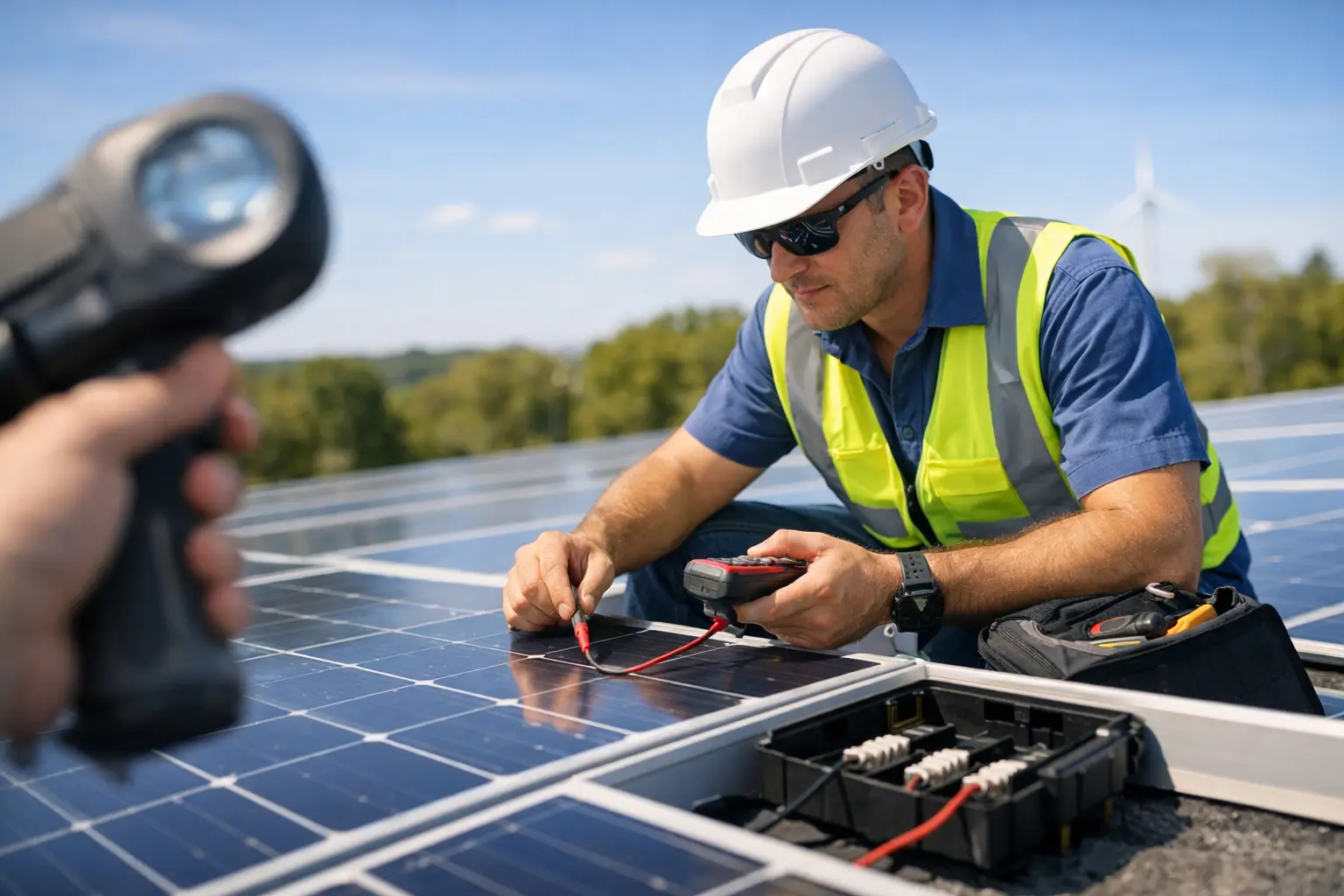
A useful solar health check generally starts with the inverter. The technician reviews its status, alerts, generation information and visible condition. Error history can point to issues that only occur during high temperatures, low light, grid disturbances or wet weather.
The inspection should then cover accessible DC and AC isolators, rooftop and visible cabling, electrical enclosures, labels, protective devices and signs of deterioration. Common issues include brittle conduit, failed seals, corrosion, damaged cable clips, loose fittings, water ingress and isolators that have weathered beyond their intended service condition.
Where appropriate, testing can check that electrical safety functions and system performance are behaving as they should. For fault finding, this may involve tracing a string issue, identifying an inverter problem, assessing panel damage or isolating where a production loss is occurring. The outcome should be clear: what was checked, what was found, what needs attention now and what can be monitored or planned for later.
Panel cleaning is sometimes useful, but it is not the main purpose of servicing. Normal dust and rain residue often have a modest impact. Heavy soiling from construction dust, bird activity, smoke residue or a particularly dirty site can justify cleaning after the electrical condition has been assessed. Cleaning alone will not repair a failed string, degraded isolator or inverter fault.
How often should solar be inspected?
There is no single interval that suits every rooftop system. A practical approach is to organise a professional inspection every few years, alongside any mandated anti-islanding testing, and sooner when there is a reason to suspect a problem.
Older installations deserve closer attention. Systems installed many years ago may use components that have experienced prolonged UV exposure and thermal cycling, particularly rooftop isolators and cable protection. Equipment can remain operational while its weather resistance and safety margin are declining.
Arrange an inspection promptly after significant hail, a severe storm, a roof leak near solar equipment or electrical work affecting the switchboard. Visible panel damage is not the only concern after hail. Cracked glass, disturbed connectors, damaged mounting hardware and moisture entry can develop into more serious problems later.
It is also sensible to book a check if your bills have risen without an obvious change in energy use, your monitoring shows a sustained production drop, the inverter displays recurring warnings, or the system shuts down during sunny periods. These signs do not always mean major repairs are needed, but they do justify an electrician-led assessment.
What you can monitor between visits
Owners do not need to climb on the roof to look after their solar. In fact, climbing onto a roof or opening electrical equipment is not a safe DIY task. The most useful action is simply checking the inverter display or monitoring portal from time to time.
Compare current generation with the same season in previous years rather than comparing a cloudy winter week with peak summer output. Look for long periods of zero production, repeated fault messages, unexplained daily gaps or a material decline that cannot be explained by weather, shade growth or household changes.
From ground level, note obvious changes such as broken panel glass, hanging cables, loose conduit, damaged rooftop equipment or new shading from trees. If you see anything unusual, take a photo where safe to do so and arrange an inspection. Do not touch isolators, attempt to reset equipment repeatedly or spray panels and electrical components with a hose.
Servicing versus repair: what is the difference?
Servicing is the planned work that checks condition, tests critical functions and identifies developing issues. Repair is the corrective work needed when an issue is found, such as replacing a weathered isolator, repairing cabling, addressing an inverter fault or planning replacement of damaged panels.
Not every service visit results in repair work, and a good inspection should not manufacture a problem where there is none. Equally, delaying a clearly identified fault to avoid a smaller repair can lead to longer downtime, greater production losses or a more complicated job later.
Transparent recommendations matter. You should understand whether an item is an immediate safety or compliance concern, a fault affecting output, or an age-related condition worth budgeting for. That distinction helps property owners make decisions based on risk and return rather than guesswork.
When a solar health check has the best return
The best time to service a solar system is before a minor issue becomes an outage. This is especially true for systems that are no longer covered by a straightforward installation warranty, systems with multiple inverters, and properties where solar savings form a meaningful part of the household budget.
For ACT solar owners who have received an anti-islanding test notice, arranging the required testing is the clear starting point. For everyone else, a qualified system health check is a sensible way to establish a baseline, particularly if the installation is ageing or its performance has not been reviewed in years.
Solar Testing and Maintenance approaches this work as solar aftercare, with electrician-led testing, fault finding and clear repair planning rather than a sales pitch for a new system. The aim is straightforward: keep safe equipment working well, identify what needs attention, and give you the information to protect the return your solar system was installed to deliver.
A quick check of your monitoring today may be enough to confirm everything is tracking normally. If it is not, or if required testing is due, a professional inspection can replace uncertainty with a clear condition report and a practical next step.
Leave a Reply