


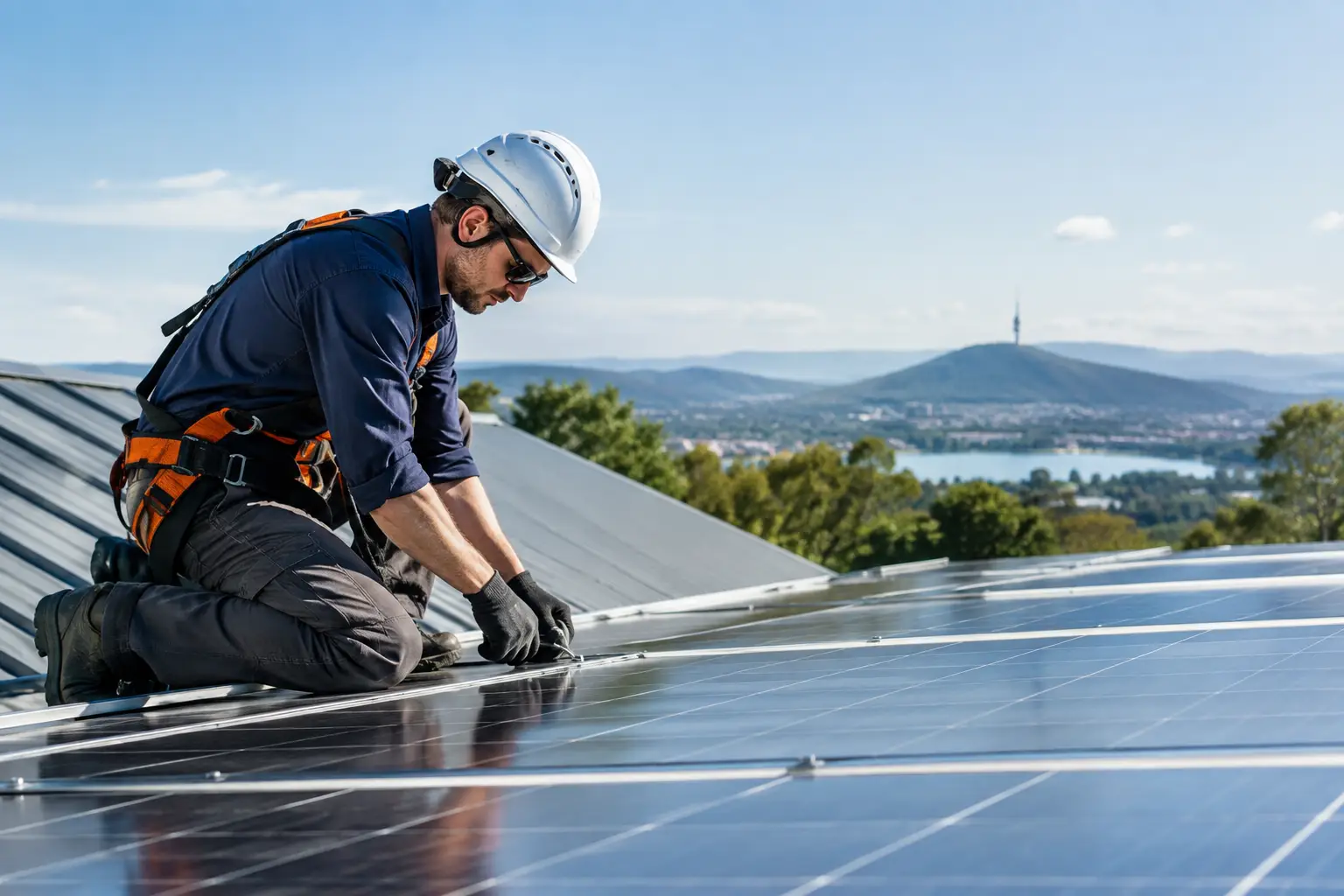
A solar system can look perfectly normal from the ground while a failed isolator, water-damaged connector or underperforming inverter quietly cuts into its output. This guide to solar system servicing explains what should be checked, when professional testing is needed and how Canberra owners can protect the return from an existing rooftop system.
Solar servicing is not simply panel cleaning. A useful service looks at the parts that generate power, convert it, protect the property and connect safely to the grid. The right scope depends on the age of the system, its performance history, weather exposure and whether you have received a network notice for anti-islanding testing.
What solar system servicing should cover
A proper service starts with a system health check, not assumptions. Your electrician should compare what the system is producing with what its size, orientation and the season reasonably allow. A lower-than-expected figure does not always mean there is a fault. Winter sun, shading from new tree growth, heavy soiling and changes in household consumption can all affect what you see in an app or on an electricity bill.
The aim is to separate normal variation from a problem that needs attention. This usually involves a visual inspection of accessible panels and mounting hardware, checks of the inverter and switchboard equipment, and electrical testing where required. It should also include a review of warnings, fault codes and production data where monitoring is available.
Key areas of a professional inspection include:
- panel condition, including visible cracking, delamination, hot-spot signs and possible hail damage;
- roof cabling, conduit, connectors and mounting equipment for deterioration or movement;
- DC and AC isolators for weathering, heat damage, water ingress or unreliable operation;
- inverter operation, ventilation, error history and output performance; and
- safety and compliance components, including the equipment that disconnects the system during a grid fault.
Older systems deserve particular attention. Components installed a decade ago may still be operating, but exposure to heat, cold, rain and UV takes its toll. Canberra’s sharp temperature changes and occasional severe storms can accelerate wear in outdoor equipment. A service creates a clear record of the system’s condition before a minor issue becomes an outage or a larger repair.
Why anti-islanding testing matters
Anti-islanding protection is a critical grid safety function. When the electricity network loses supply, a grid-connected solar system must stop exporting power. Without this protection, a solar system could continue energising lines while network crews are working to restore supply.
Some ACT solar owners receive an Evoenergy notification requiring anti-islanding inverter testing. This is not a generic maintenance suggestion. It is a compliance requirement that needs to be completed by a suitably qualified electrician using the correct test process and documentation.
The test checks that the inverter responds correctly when grid conditions fall outside acceptable limits. If it passes, the result confirms the protection is operating as intended at the time of testing. If it does not pass, the system may need inverter configuration work, component replacement or further fault finding before compliance can be confirmed.
Do not leave a notice until the last minute. Testing can identify an issue that needs parts or manufacturer support, and those steps take longer than the test appointment itself. Acting early gives you time to make a practical repair decision without risking disconnection or avoidable compliance pressure.
Signs your solar system needs attention
A system does not need to be completely offline to warrant a booking. In fact, the most worthwhile inspections often happen when the system is still generating but its performance has changed.
Watch for an inverter that regularly displays fault messages, a production graph that has dropped without an obvious weather reason, frequent inverter restarts or no visible generation during good daylight. Physical signs matter too. Discoloured isolators, cracked conduit, loose covers, water staining near equipment or obvious panel damage should be assessed promptly.
After hail, strong wind or prolonged heavy rain, arrange an inspection even if the inverter appears normal. Hail damage can be subtle, and water can enter isolators, junction boxes or roof penetrations before causing an electrical fault. Early assessment is also useful for insurance purposes because it records the condition and likely scope of damage while the event is still recent.
If your system has no monitoring, servicing becomes even more valuable. You may otherwise only discover a fault months later when an electricity bill arrives higher than expected. An electrician-led health check provides a more reliable picture than judging performance from a single bill.
What homeowners can check safely
There are sensible observations a homeowner can make, but rooftop solar is not a DIY electrical project. Do not open isolators, remove inverter covers, disconnect plugs or climb onto the roof to inspect panels. DC solar circuits can remain live in daylight, and damaged equipment may create a serious shock or fire risk.
From the ground, check whether the inverter display or monitoring app shows a fault, and note the date and wording of any message. Look for new shading from trees or structures, visible debris on panels and any obvious damage to external equipment. Take clear photos from a safe position after a storm, particularly if you can see broken glass, displaced panels or damaged conduit.
It also helps to keep your original installation documents, inverter model details, warranties and previous service reports together. These records help a technician understand the system configuration and identify whether a fault may relate to a known issue, a warranty pathway or an earlier repair.
Cleaning panels: useful, but not always the answer
Panel cleaning is often the first thing owners consider when output drops. Sometimes it helps, especially where panels have heavy dust, bird droppings, leaf litter or pollution build-up. But it should not be treated as the default fix for every performance issue.
In many suburban ACT locations, regular rain removes light dust well enough for most systems. Cleaning may offer only a modest production improvement, while a faulty string, failing inverter or degraded connector can cause a much larger loss. A performance check before cleaning prevents money being spent on the wrong problem.
Where cleaning is justified, it must be done safely and without abrasive products, harsh chemicals or practices that risk damaging panels and roof surfaces. Access is the main safety consideration. A licensed solar service provider can advise whether cleaning is worthwhile as part of a broader inspection.
Repair planning should be clear and prioritised
A good service report does more than list defects. It explains what is urgent, what should be monitored and what can be planned for later. For example, a compromised isolator cover or water ingress needs prompt action because it affects safety. A small reduction in output from ageing panels may call for monitoring and a cost-benefit discussion rather than immediate replacement.
Repair decisions should consider the system’s age, expected generation, warranty position and the likely payback from restoring output. Replacing an inverter in an older system can be financially sensible if the rest of the array is in good condition. Replacing several major components at once may not be the best choice if panel degradation or roof work is likely to make a larger upgrade more sensible in the near future.
Ask for a straightforward explanation of the fault, the recommended repair, any alternatives and the likely consequence of waiting. Transparent pricing matters here. You should know whether the visit covers testing only, includes minor remedial work, or will lead to a separate repair quote for parts and labour.
How often should solar servicing be booked?
There is no single interval that suits every rooftop system. As a practical rule, a professional inspection every few years is sensible for a system with no known issues, while older systems, storm-affected systems and systems with inconsistent output may need attention sooner. Mandatory anti-islanding testing should always be completed when notified, regardless of the timing of the last general service.
A system that is closely monitored and performing consistently may only need scheduled compliance testing and periodic condition checks. A system with limited monitoring, ageing outdoor isolators or a history of faults benefits from a more proactive approach. The cost of an inspection is usually easier to justify than months of lost generation or a fault that develops into a safety concern.
For Canberra solar owners, the practical next step is simple: keep an eye on production, respond promptly to network testing notices and arrange an electrician-led inspection when performance, weather damage or age gives you a reason to question the system. Solar Testing and Maintenance can assess the equipment, complete required testing and give you a clear plan based on what your system actually needs. A well-serviced system should not demand your attention every day, but it should never be left to hope.
Leave a Reply