


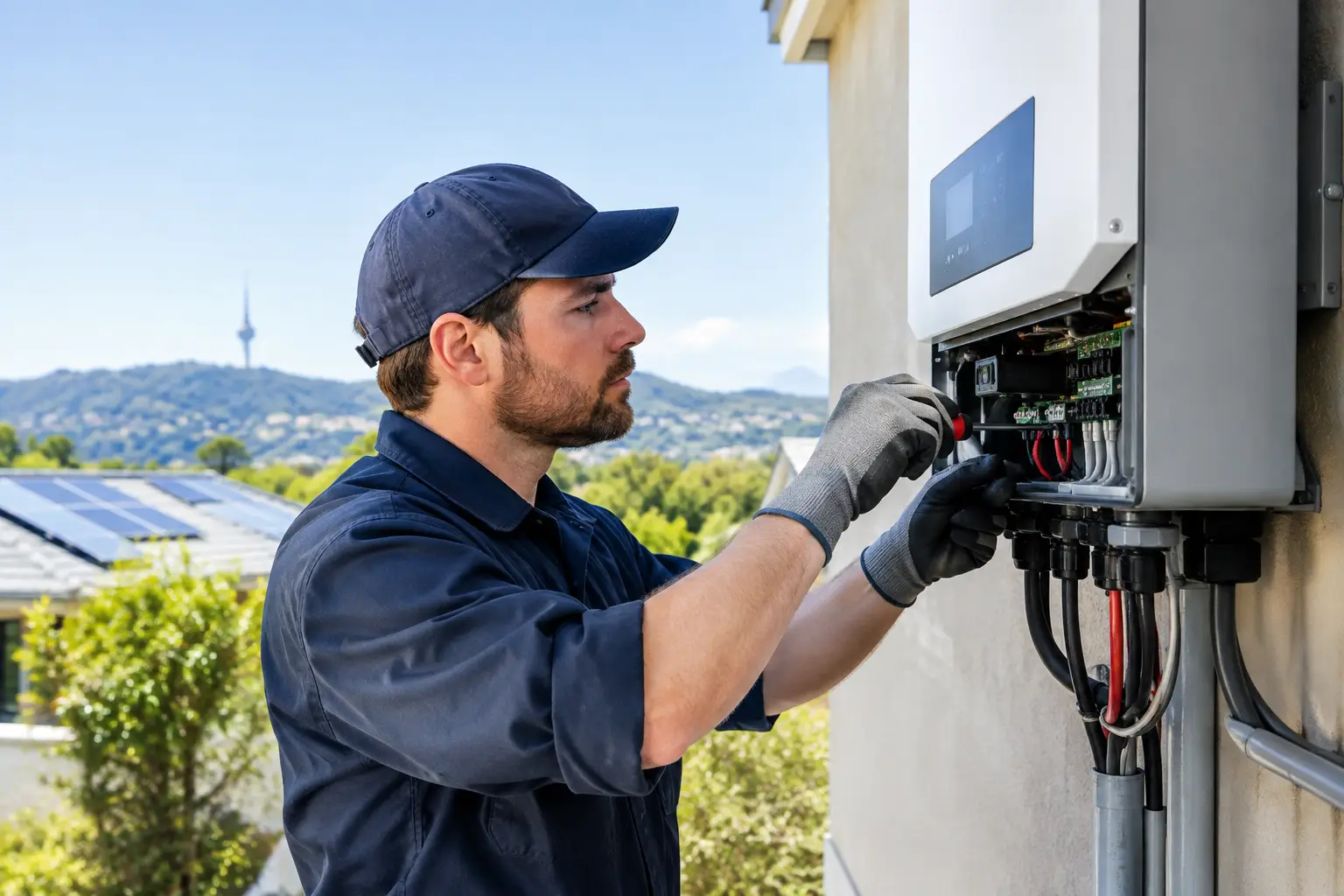
A solar inverter that has stopped producing, displays a fault code or repeatedly trips is not simply an inconvenience. It can mean lost generation every sunny day, an unresolved electrical fault, or a system that no longer meets its grid connection requirements. Canberra inverter repairs should begin with proper diagnosis, not a quick reset and a guess at replacement parts.
Your inverter is the working centre of the system. It converts the DC power produced by roof-mounted panels into usable AC power for the home and grid. It also monitors electrical conditions and must disconnect when the grid supply fails. When it is not operating correctly, the cause may sit inside the inverter, but it can also be related to isolators, cabling, panel strings, communications equipment or the grid itself.
Signs Your Inverter Needs Attention
A red fault light, a blank screen, a persistent warning message or zero daily production are obvious reasons to arrange an inspection. Less obvious signs can be just as costly. A system may still produce power, but at a level well below its normal output. The inverter may restart during the middle of the day, show intermittent faults, or report a communication error that prevents you from seeing meaningful performance data.
Older systems deserve particular attention. Heat, cold, moisture, UV exposure and years of daily operation place genuine strain on rooftop solar equipment. Canberra’s changing conditions can expose weak seals, aging wiring and components that have been operating near their limits for a long time.
A low-output system does not automatically need a new inverter. Seasonal changes, shade growth, dirt on panels and household monitoring settings can all affect what an owner sees. That is why the first step should be testing the system methodically and comparing results with the expected performance of that specific installation.
What Canberra Inverter Repairs Should Include
A useful repair visit is more than reading an error code. A qualified electrician should assess the inverter’s operation in context with the complete solar system. This helps identify whether the fault is internal to the inverter or caused by another component.
The inspection typically starts with a visual check of the inverter, AC and DC isolators, accessible cabling, mounting points and warning labels. Signs of water ingress, corrosion, heat damage, brittle cable insulation, loose connections or damaged enclosures need to be taken seriously. These issues may affect safety as well as production.
Electrical testing then helps establish whether the panel strings are delivering the voltage and current they should, whether insulation resistance is satisfactory, and whether AC-side conditions are within acceptable limits. The electrician can review inverter fault history and operating data, where available, to determine whether the issue is a one-off event or a recurring pattern.
This process matters because similar symptoms can have very different causes. An inverter that will not start may be responding correctly to an insulation fault. An inverter that disconnects on high voltage may not be defective at all – the local grid voltage may be outside the range the inverter can accept at that time. Replacing equipment before confirming the cause can leave the underlying problem unresolved.
Anti-Islanding Testing Is Not a Repair Detail
For ACT solar owners who have received notification for anti-islanding testing, the inverter’s safety response is a central part of the work. Anti-islanding protection ensures the inverter disconnects from the grid when there is a supply failure. This protects network workers and prevents a solar system from energising lines that should be de-energised.
An inverter can appear to be producing normally while still requiring this compliance test. Likewise, a failed anti-islanding test may point to an inverter setting, a firmware issue, a connection problem or equipment that needs repair or replacement. The outcome should be documented clearly so the owner understands what has been tested, what has passed, and what work remains.
For systems requiring notification to Evoenergy, testing should be handled through the correct process. This is not paperwork for its own sake. It is evidence that a grid-connected solar system is operating as required.
Repair, Replacement or Further Investigation?
Whether an inverter can be repaired depends on its make, age, fault type, parts availability and warranty status. Some issues can be addressed through approved repairs, replacement of associated isolators or cabling, correction of settings, or a manufacturer-supported service process. Other faults justify inverter replacement, particularly where the unit is out of warranty, has internal damage or is approaching the end of its practical service life.
Replacement is not always the lowest-cost decision, but it may be the sensible one. Repeated call-outs for an unreliable older inverter can cost more over time than fitting a suitable current model. On the other hand, replacing an inverter without checking the solar array, switches and wiring can be poor value if a system-side fault caused the failure.
A clear repair plan should set out the diagnosed issue, the safety or compliance implications, the recommended scope of work and any decisions the owner needs to make. It should also distinguish urgent electrical repairs from improvements that can be scheduled later.
Common Faults Found Around Solar Inverters
The inverter often receives the blame because it is where faults are displayed. In practice, the cause may be elsewhere in the installation. Common issues include weathered DC isolators, water entering rooftop components, deteriorated cable insulation, loose terminations, damaged connectors and faults affecting one panel string.
Hail can also create problems that are not immediately visible from the ground. A panel may continue to produce some power despite physical damage, while cracked glass, damaged cells or compromised junction boxes create longer-term reliability concerns. A full system health check is useful after significant storms, especially if output has changed or equipment has started reporting faults.
Monitoring faults need a different approach. Lost Wi-Fi connection, a changed router, a failed data logger or an app issue can make a healthy system look inactive. However, monitoring should not be dismissed without checking actual inverter output. The goal is to separate a reporting problem from a generation problem before spending money on repairs.
What You Can Check Before Booking
Owners can safely look at the inverter display or monitoring portal and write down the fault code, time of day it occurs and recent production figures. If a fault began after a storm, power outage or network work nearby, record that as well. This information can shorten the diagnostic process.
Do not open electrical enclosures, remove inverter covers or attempt to reset rooftop isolators. Solar systems contain DC circuits that can remain energised whenever panels are exposed to light. A switch that looks simple can conceal damage or a serious underlying fault. If there is a burning smell, visible heat damage, water around electrical equipment or repeated tripping, leave the system alone and arrange qualified assistance promptly.
Protecting the Return From Your Solar System
Solar maintenance is often delayed because the system is out of sight and still appears to be working. But small faults can quietly reduce generation for months, while neglected electrical components can become more difficult and expensive to rectify. Periodic health checks give owners a practical picture of system condition before performance losses become substantial.
At Solar Testing and Maintenance, the focus is on electrician-led testing, fault finding and clear repair planning for existing systems. That means assessing what is actually happening at your property, rather than treating every fault message as a reason to replace major equipment.
If your inverter has faulted, failed a required test or is producing less than expected, act while the evidence is still clear. A careful inspection can protect the safety, compliance and financial return of the solar system already on your roof.
Leave a Reply