


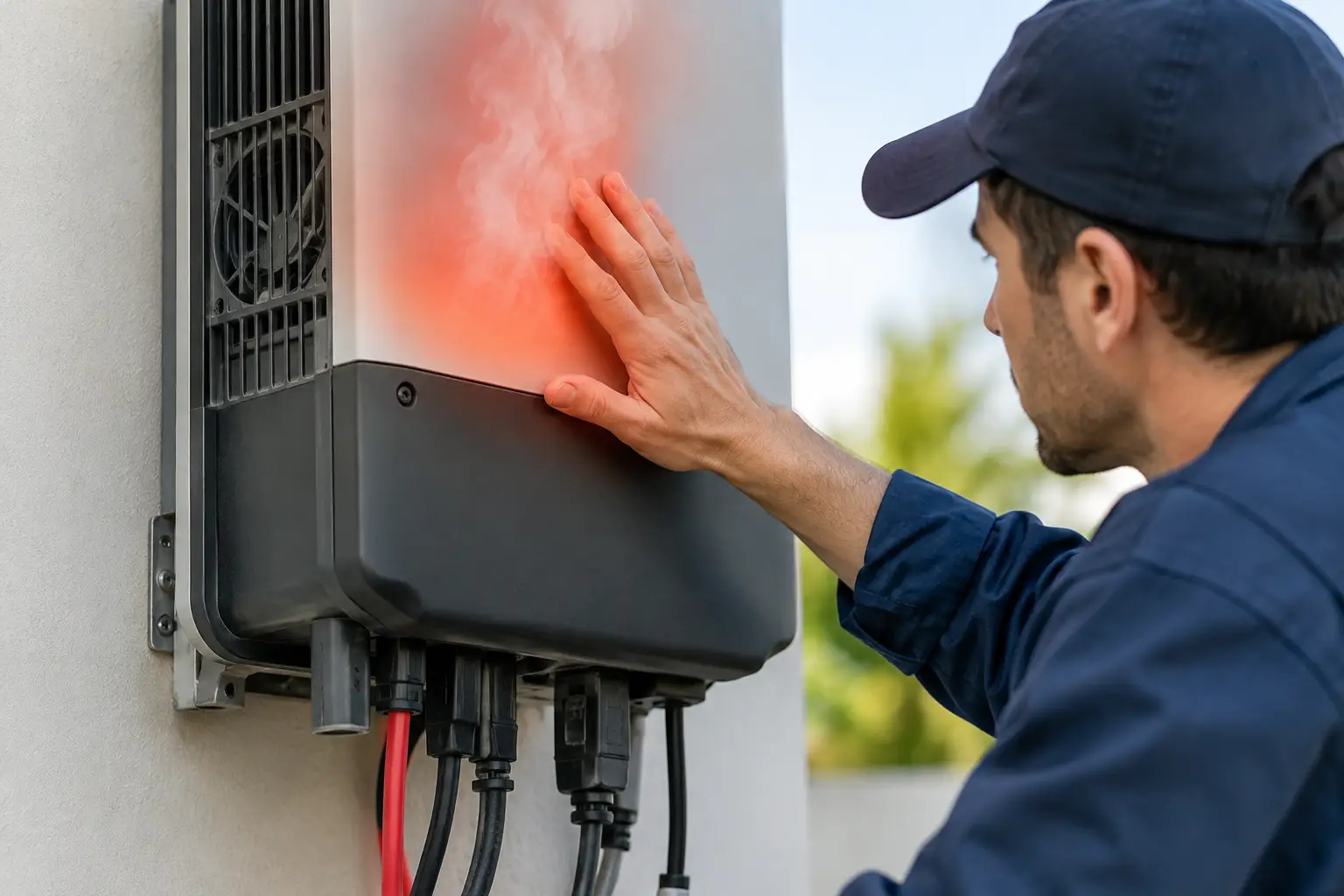
A solar inverter will normally feel warm while it is converting power, particularly on a clear summer afternoon. Inverter overheating is different. When internal temperatures rise beyond the unit’s operating limit, it may reduce output, display a fault code, repeatedly shut down, or suffer premature component wear.
For Canberra solar owners, the issue often appears during periods of high irradiance and hot roof conditions. A system can look fine for much of the year, then lose generation during the very hours when it should be producing most. Identifying the reason early protects both the inverter and the financial return from the system.
What inverter overheating looks like
Most modern inverters are designed to protect themselves. Rather than immediately failing, they usually derate their output as temperatures climb. That means the system remains connected but produces less energy than it could. If the temperature continues to rise, the inverter may disconnect until it has cooled.
Common warning signs include:
- a temperature, thermal, fan or derating message on the inverter screen or monitoring app
- output that drops sharply around midday despite clear conditions
- repeated inverter shutdowns followed by automatic restarts later in the day
- unusually loud cooling fans, or no fan noise from a model that normally uses active cooling
- a hot smell, discolouration, buzzing, or visible damage around the inverter enclosure
A warm enclosure alone is not proof of a fault. Ambient temperature, direct sun, system size and inverter model all matter. However, recurring production drops or fault notifications during warm weather should be investigated rather than dismissed as normal summer performance.
Why inverter overheating happens
Direct sun and poor installation location
Inverters generate heat as part of normal operation. Mounting one in direct afternoon sun, against a heat-soaked west-facing wall, or in an enclosed garage can make it difficult for that heat to escape. Temperatures inside roof spaces and unventilated utility areas can be substantially higher than the outdoor air temperature.
Some inverter locations cannot be changed easily, and relocation may not always be the best value option. In those cases, an electrician can assess whether improving shade, ventilation or clear space around the unit will reduce thermal stress without affecting safe access or manufacturer requirements.
Restricted airflow
Every inverter has clearance requirements around its sides, top and bottom. Stored boxes, garden equipment, cabinetry or a poorly placed cover can block airflow. Dust, leaves, insect nests and cobwebs can also build up around vents and cooling fins over time.
A cover designed to shield equipment from rain is not automatically suitable for every inverter. If it traps heat or restricts ventilation, it can worsen the original problem. Any enclosure or shade solution needs to preserve the manufacturer’s required clearances and allow the inverter to shed heat.
Failed fans or internal contamination
Many units rely on fans once internal temperatures rise. A seized, noisy or failed fan can allow heat to build quickly, especially during high production. Dust inside the unit can have a similar effect by insulating components or restricting air movement.
This is not a homeowner repair. Inverters contain live DC and AC components, and isolation procedures must be followed correctly. A licensed electrician can inspect the equipment safely, check fan operation where applicable, and determine whether cleaning, a replacement part or a broader repair is warranted.
System design or electrical faults
Overheating is sometimes a symptom rather than the main fault. An incorrectly matched inverter, overloaded circuits, deteriorated connections, damaged cable insulation or component failure can create abnormal electrical stress and heat.
Older systems deserve particular attention. Weather exposure, hail damage, water ingress and UV deterioration can affect rooftop equipment and associated wiring. A fault may only become obvious under high generation, when current and internal temperatures are at their peak.
High ambient temperature and heatwaves
Even a correctly installed inverter has limits. Extreme hot weather can reduce output because the inverter is protecting itself within its design parameters. This may be unavoidable for a short period, but it should still be measured against expected performance.
The key question is whether the reduction is occasional and proportionate to the conditions, or whether it is happening regularly at moderate temperatures. Monitoring data, fault history and an on-site inspection provide a far clearer answer than a single hot-day observation.
Safe checks you can make before booking a visit
Start with the monitoring app or inverter display. Record the exact fault wording, the time it occurred, and whether production recovered after the unit cooled. Screenshots are useful, particularly if a message disappears once the inverter restarts.
Then inspect the area around the inverter without removing covers or touching wiring. Check that vents are not blocked, there is clear space around the unit, and stored items have not been pushed against it. Look for obvious external damage, water staining, corrosion, loose mounting hardware or signs that a cover is restricting airflow.
It is also useful to compare production on similar clear days. A system will vary with season and weather, so compare like with like where possible. A recurring midday output plateau or drop can indicate thermal derating, although shading, grid voltage and panel faults can produce similar patterns.
Do not open the inverter, remove isolator covers, spray water near electrical equipment or attempt to clean internal components. If there is a burning smell, smoke, sparking, melted plastic, water entering the enclosure, or repeated shutdowns, leave the system alone and arrange urgent assessment by a licensed electrician.
How a professional inverter overheating assessment works
A proper diagnosis should look beyond the inverter screen. The goal is to identify whether the unit is genuinely overheating, why it is happening and what repair or maintenance work is justified.
An electrician-led inspection may include a visual condition check of the inverter, isolators, cabling and mounting location; verification of airflow and clearances; review of fault codes and generation behaviour; and electrical testing where required. The technician can also assess whether signs of water ingress, damaged connections, age-related deterioration or installation issues are contributing to the problem.
For systems due for anti-islanding testing, this work can be particularly valuable. Anti-islanding protection is a separate grid-safety function, but the appointment provides an appropriate opportunity to assess the inverter’s broader operating condition. A compliant inverter that is regularly overheating is still likely to underperform and may be at greater risk of avoidable failure.
The right fix depends on the diagnosis. It may be as straightforward as restoring ventilation or replacing a cooling fan. In other cases, the practical option could be repairing damaged equipment, improving the installation environment or planning an inverter replacement where the unit is no longer economical to maintain.
Preventing overheating from returning
Keep the inverter area clear throughout the year, not only when a fault occurs. Avoid stacking household items near it, and make sure new shelving, covers or landscaping do not obstruct ventilation. After storms, inspect the external area for water damage and debris, while leaving all electrical work to a qualified professional.
Periodic system health checks are worthwhile for older systems and properties exposed to harsh weather. They can identify deteriorating isolators, cable issues, panel damage and inverter concerns before a small loss of production becomes an extended outage. For ACT solar owners, this is a practical way to keep maintenance decisions based on evidence rather than guesswork.
If your inverter is shutting down on warm days or consistently producing less than expected, treat it as a maintenance issue rather than a summer inconvenience. A clear diagnosis gives you the information needed to protect the system, maintain safety and keep your solar investment working when it matters most.
Leave a Reply