


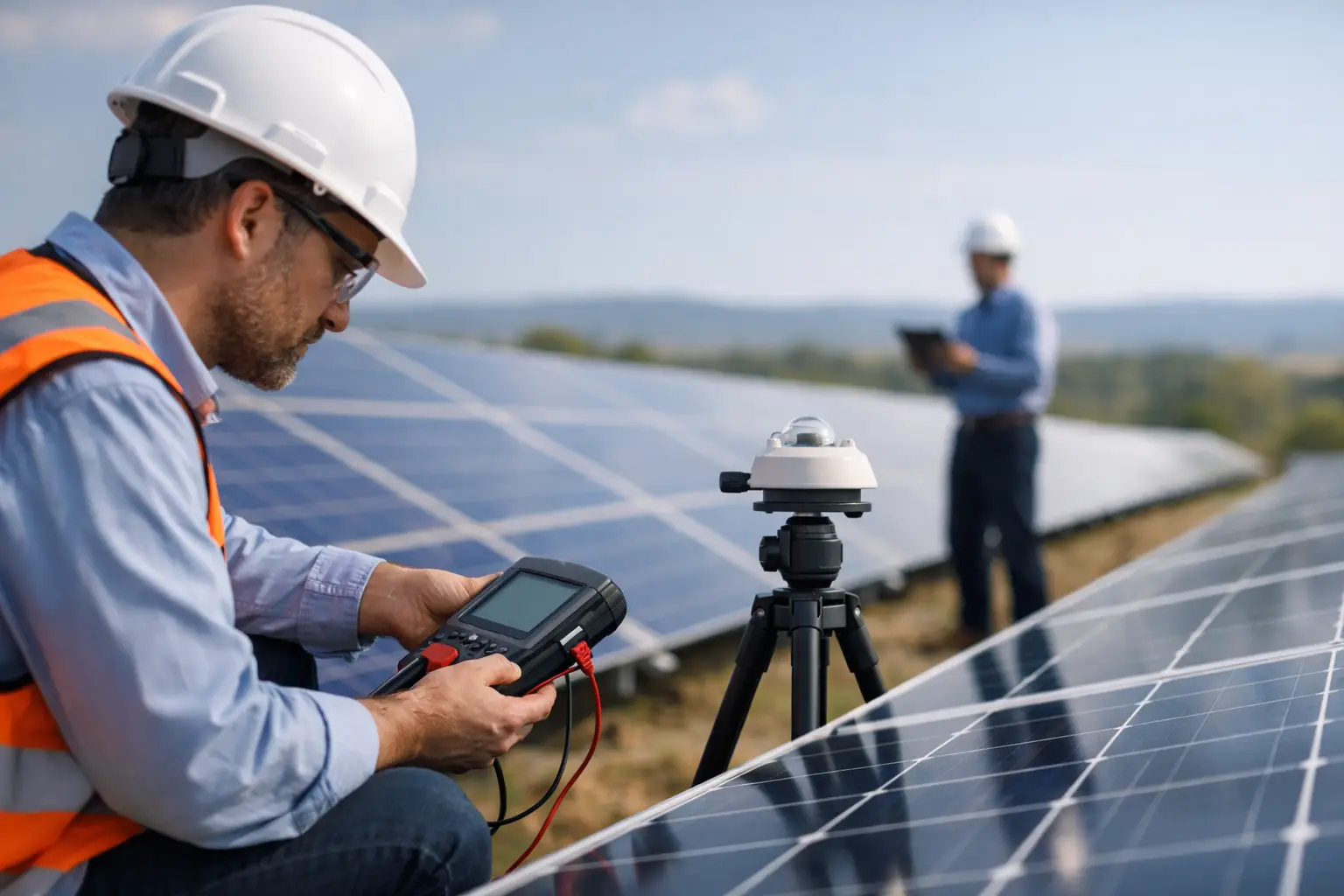
If your solar system used to offset a bigger share of your power bill and now seems to be falling short, guessing is expensive. A proper guide to solar performance testing helps you separate normal seasonal variation from real faults, compliance issues, and age-related decline that can quietly cut returns year after year.
For most system owners, performance testing is not about chasing tiny efficiency gains. It is about confirming the system is safe, producing what it reasonably should, and still meeting the requirements that apply to the inverter and grid connection. That matters even more with older systems, after major weather events, or when you have received notice that inverter testing is due.
What solar performance testing actually covers
Solar performance testing is a practical check of how the system is operating under real conditions. It usually combines electrical testing, visual inspection, inverter checks, and fault finding. The aim is to identify whether poor output is caused by weather and site conditions, or by a problem that needs repair.
A good test does more than compare today’s generation to a number on an app. Monitoring apps are useful, but they do not inspect isolators, cabling, panel condition, shutdown behaviour, or inverter response. They also do not confirm compliance obligations such as anti-islanding performance where required.
In a residential rooftop system, testing often focuses on the panels, DC cabling, isolators, inverter operation, AC side performance, system shutdown points, and any visible signs of deterioration. If the site has multiple inverters or strings, each section needs to be assessed on its own merits. One weak string can drag down the overall result while staying hidden in the daily total.
A guide to solar performance testing for existing systems
Existing systems need a different mindset from new installations. The question is not whether the system was installed correctly on day one. The question is whether it is still operating safely and efficiently now.
That is where testing becomes valuable. Heat, UV exposure, hail, water ingress, loose connections, cracked panel backsheets, isolator wear, pest damage, and inverter ageing can all affect output or safety over time. Some faults cause a sharp drop in generation. Others reduce performance gradually enough that the owner does not notice until bills start creeping up.
There is also a financial reality here. Solar is an asset, and like any asset, it needs periodic inspection if you want it to keep delivering. Leaving an underperforming system untouched for two or three years can easily cost more in lost generation than the price of a proper test.
What gets checked during performance testing
The first step is usually a visual inspection. This sounds simple, but it often reveals the story quickly. A trained electrician will look for obvious module damage, discolouration, frame issues, debris build-up, cable exposure, water entry, failed seals, and isolator condition. Signs of storm damage or previous poor workmanship are especially important on older systems.
After that, electrical testing confirms whether the numbers match expectations. DC string voltages and currents can show whether panels are producing evenly. Insulation resistance testing can help identify cable or component deterioration. Connections on both the DC and AC side are checked for condition and integrity. Inverter data is reviewed to see whether there are logged faults, abnormal shutdowns, or signs of one MPPT or string underperforming.
Where anti-islanding testing is required, that becomes a key part of the visit. This is not an optional extra when notice has been issued. The inverter must respond correctly to network loss conditions, and the result needs to be recorded properly. For owners in the ACT, that requirement is one of the clearest reasons to book specialist testing rather than a general inspection.
Performance testing may also include comparing actual generation behaviour against expected output for the season, system size, orientation, and site conditions. This part always depends on context. A west-facing system in winter will not behave like a north-facing system in summer. Shade, smoke haze, dirt and weather all matter. Good testing accounts for that instead of treating every shortfall as a fault.
When should you book solar performance testing?
There is no single rule that suits every system, but some situations justify prompt action. If your monitoring shows a noticeable drop in output, if the inverter is reporting faults, or if one part of a multi-inverter system is lagging behind the rest, testing should move up the list.
The same applies after severe weather. Hail does not always leave obvious front-glass damage. Water ingress and impact-related issues can develop slowly, and the longer they are left, the more complicated repair planning can become.
Age is another factor. Once a system is several years old, especially if it has had little or no follow-up inspection, a health check makes practical sense. This is less about alarm and more about catching wear before it becomes downtime.
And if you have been notified that anti-islanding testing is due, there is little benefit in delaying it. Compliance requirements do not disappear on their own, and testing is the point where any associated issues can also be picked up.
What performance testing can and cannot tell you
A proper test can identify many of the reasons a solar system is falling short. It can reveal failed or weakened strings, inverter problems, shutdown faults, damaged isolators, degraded connections, weather damage, and signs that parts of the system need repair or closer monitoring.
What it cannot do is turn one test result into a guaranteed forecast for every future month. Solar output changes with season, panel temperature, cloud cover, shading patterns and household export conditions. Testing gives you a reliable picture of the system’s condition and present behaviour. It does not remove the normal variation built into solar generation.
That distinction matters because some owners expect a single benchmark figure that proves whether the system is good or bad. Real systems are more nuanced than that. The right question is usually whether the system is operating safely, whether output is broadly consistent with site conditions, and whether any faults or compliance risks are present.
Why electrician-led testing matters
Not all inspections are equal. For performance testing to be useful, it needs to be carried out by someone who understands both the electrical side and the practical failure points found in existing rooftop systems.
That includes knowing where faults commonly develop, how to test safely, what signs suggest deeper issues, and when repair planning is more sensible than piecemeal fixes. It also means understanding compliance requirements well enough to document testing properly.
For system owners, this translates into clearer answers. You want to know whether the system is healthy, what is causing any losses, what needs urgent attention, and what can be monitored over time. Vague advice is not much use when your return on investment is slipping.
How to get value from a solar test
The best approach is to treat testing as decision-making, not just box-ticking. If you are booking a service, ask whether it includes visual inspection, electrical checks, inverter assessment, anti-islanding testing where relevant, and practical fault reporting. A basic once-over may be cheaper, but it can miss the issues that actually affect safety and production.
It also helps to have realistic expectations about outcomes. Sometimes the result is straightforward – a failed isolator, a faulty inverter, damaged panels, or a cable issue. Other times the system is largely sound and the next step is simply planned maintenance and periodic review. Both outcomes are useful. Confirming that a system is healthy has value too.
Where repairs are required, clear reporting makes the next move easier. You should be able to understand what has failed, how it affects performance or safety, and whether the work is urgent, recommended, or optional. That is the difference between technical information and practical service.
A practical standard for solar owners
A guide to solar performance testing should leave you with one simple standard: if your system is older, underperforming, storm-affected, or due for compliance checks, it deserves more than a glance at an app. Proper testing gives you a factual view of the system you already own, and that is how you protect both safety and return.
If you are unsure whether your solar is still doing its job, the sensible next step is not to wait for another high bill. It is to have the system checked properly, while small issues are still small.
Leave a Reply