


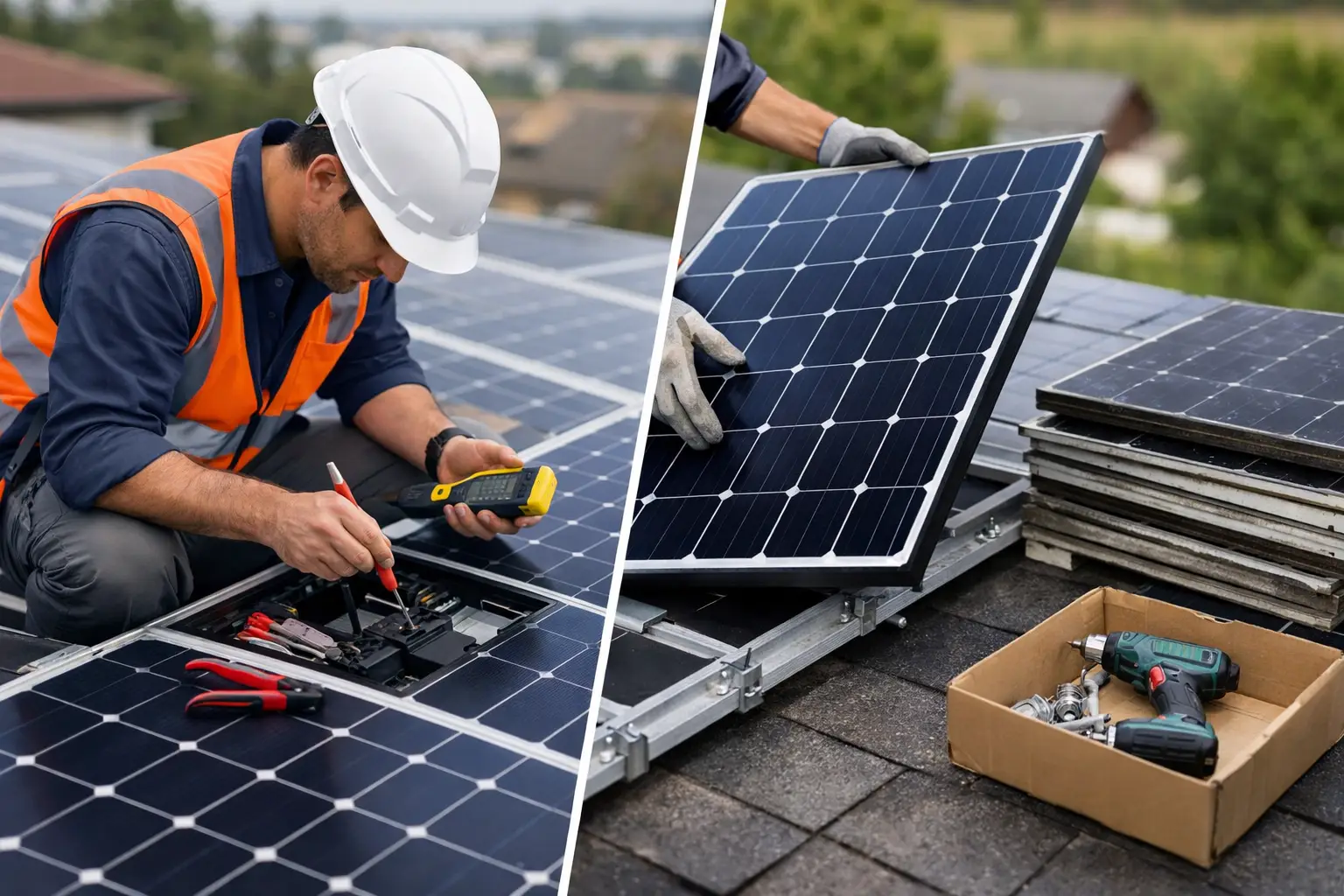
A solar system that has stopped producing properly is not automatically a system that needs replacing. In many cases, the solar repair versus replacement decision comes down to finding the actual fault first. A failed isolator, damaged cable, water-affected connector or inverter setting can look like a major system failure from the ground, yet be repaired without replacing panels or the whole system.
For Canberra and ACT solar owners, that distinction matters. Rooftop solar is a long-term investment, and unnecessary replacement can turn a manageable repair into a much larger expense. On the other hand, delaying replacement where equipment is unsafe, obsolete or repeatedly failing can cost more in lost generation, call-outs and compliance risk.
A proper inspection gives you evidence to make the right call, rather than relying on a guess based on an error message or a low bill credit.
Start with diagnosis, not a quote for new equipment
Solar systems have several components that age at different rates. Panels may still be generating well while the inverter, DC isolators, cabling or monitoring equipment needs attention. Equally, an inverter that appears to be at fault may be disconnecting because of a grid issue, poor connections or an insulation fault elsewhere in the system.
The first job is to establish what is working, what is not, and whether the system remains safe to operate. This generally includes a visual check of panels, mounting, cabling, isolators and inverter condition, followed by electrical testing and fault finding. Production data can be useful, but it is not a substitute for testing. Monitoring may show low output, but it cannot confirm whether the cause is panel degradation, shade, a failed string, water ingress or an inverter fault.
For systems that have received an EvoEnergy notification, anti-islanding inverter testing is also a separate compliance requirement. Passing or failing that test can influence the repair plan, particularly where an older inverter no longer meets the required operating standard.
When solar repair is the sensible option
Repair is usually the right financial decision when the fault is isolated, the core equipment is otherwise in sound condition, and the work restores safe, reliable operation. This is often the case with relatively common faults found on established rooftop systems.
Damaged or deteriorated DC isolators are a good example. Heat, weather exposure and age can affect these components, particularly on older installations. Replacing a faulty isolator can restore a system without disturbing panels that still have many productive years ahead of them. The same applies to damaged conduit, UV-affected cable, loose connectors, faulty circuit protection and minor water-entry issues where the affected components can be identified and rectified.
A targeted inverter repair may also be worthwhile if the unit is within a reasonable age range, parts are available, and the repair is supported by a meaningful warranty. However, this depends on the nature of the fault. A minor communication issue, fan replacement or configuration fault is different from a major internal failure in an inverter nearing the end of its service life.
Panel repairs can be more limited. Cracked glass, severe hail damage, delamination or moisture ingress generally cannot be repaired in a way that returns the module to a safe, warranted condition. But one damaged panel does not necessarily mean every panel must be replaced. If compatible replacement modules are available and electrical design requirements can be met, replacing the affected panel or string may be practical.
Signs replacement deserves serious consideration
Replacement becomes more attractive when repairs are likely to be short-lived, uneconomical or unable to return the system to current safety and compliance expectations. The cheapest immediate option is not always the lowest-cost option over the next five years.
An ageing inverter is often the clearest example. If it has suffered repeated faults, no longer has manufacturer support, fails required testing, or requires an expensive major repair, replacement can be the more reliable path. A new inverter may also restore monitoring capability and provide a fresh manufacturer warranty, although those benefits should be weighed against the cost and compatibility of the rest of the system.
Replacement may also be justified after significant storm damage. Hail can crack panel glass, damage frames and create faults that are not always obvious from the ground. Water ingress can affect junction boxes, connectors and roof penetrations. Where multiple panels are damaged or insulation readings indicate widespread deterioration, patching individual faults may not provide a dependable result.
Consider replacement where there is evidence of broader design or installation issues as well. Undersized equipment, unsuitable outdoor enclosures, extensive cable deterioration or repeated tripping can indicate that the system needs more than a single part swapped out. A repair plan should address the cause, not simply reset the system until the next fault occurs.
Solar repair versus replacement: the cost comparison that matters
The right comparison is not repair cost against replacement cost alone. It is the total cost of each option, including likely future failures, lost solar production, compliance work and the expected remaining life of the equipment.
A $600 repair that gives an inverter another five reliable years is often excellent value. A $1,500 repair on an unsupported inverter with a history of faults may be poor value if replacement is only moderately more expensive and comes with a new warranty. Likewise, replacing a full array because one panel has failed may not make sense if the remaining panels test well and a compatible repair is available.
Ask for a clear explanation of the fault, the proposed repair, the expected outcome and any limitations. A practical recommendation should distinguish between work needed to make the system safe now and optional upgrades that may improve reliability or output. It should also make clear when component availability, warranty position or system age makes a repair less certain.
For insurance-related damage, keep records of the inspection findings, photographs and test results. This is particularly helpful after hail or water damage, where some issues may not be visible without electrical checks. Insurers may also need evidence that the damage is linked to the event rather than normal wear.
Do not judge the system by panel age alone
Solar panels are commonly expected to operate for decades, but their condition is not determined by age alone. Quality of installation, weather exposure, cleaning practices, roof environment and electrical protection all affect how a system performs over time. A ten-year-old system may only need maintenance, while a newer system that has suffered water ingress or storm damage may need substantial work.
Look for practical warning signs: a sudden drop in output, frequent inverter fault codes, an inverter that switches off during normal daylight hours, visible cracked panels, discoloured isolators, damaged conduit or unexplained gaps in monitoring. A system that appears to be operating can still have reduced output from a failed string or developing connection fault.
Regular health checks are particularly worthwhile once warranty periods begin to expire. They allow small faults to be dealt with before they become a larger electrical or roof-safety issue, and they provide a useful baseline for future production and condition assessments.
What a useful repair recommendation should include
A repair recommendation should be specific enough for you to understand what you are paying for. It should identify the fault or faults found, the tests completed, any immediate safety concerns and whether the system can remain operational before repairs are carried out.
It should also explain whether the proposed work is a repair, a like-for-like component replacement, or a broader upgrade. These are not interchangeable. Changing an inverter, for example, may require checks of string voltage, panel compatibility, switchboard protection, export settings and anti-islanding operation.
For multi-inverter or more complex residential systems, testing each part of the system separately is important. One healthy inverter can mask poor performance or faults in another section of the array. The goal is not simply to see an inverter screen turn back on. It is to confirm that the system is electrically sound, compliant and producing as it should.
Make the decision before lost generation adds up
Solar equipment does not need to be replaced simply because it is getting older. Nor should an ageing or damaged system be kept going with repeat fixes when the evidence points to a more reliable replacement. The best outcome comes from electrician-led testing, a clear repair plan and an honest assessment of the remaining service life of each major component.
If your system has low output, recurring faults, storm damage or an anti-islanding testing requirement, arrange an inspection before making a replacement decision. A measured diagnosis can protect your investment and help ensure the next dollar you spend on solar is spent where it delivers a real result.
Leave a Reply