

A rooftop solar system can keep generating while an earthing fault sits unnoticed in the background. That is why homeowners should verify rooftop solar earthing as part of a proper system health check, particularly after hail, heavy rain, roof work, pest damage or years of exposure to Canberra weather.
Earthing is not a panel-performance extra. It is a core electrical safety measure that gives fault current a controlled path and helps protective devices operate as intended. If the array frame, mounting rails, inverter enclosure or associated wiring are not correctly bonded and earthed, a fault can create risks for people, property and the system itself.
For solar owners, the practical question is not whether an earth wire appears to be present. It is whether the complete earthing arrangement is intact, correctly connected and electrically sound. That requires more than a visual check.
What rooftop solar earthing does
Solar systems contain both DC and AC electrical components. The DC side runs from the panels to the inverter, while the AC side connects the inverter output to your switchboard and the grid. Earthing arrangements vary with the system design, equipment and applicable standards, but the purpose remains the same: exposed conductive parts must be appropriately protected if an insulation or wiring fault occurs.
The panel frames and mounting structure may need bonding arrangements that maintain electrical continuity across the array. The inverter, isolators, conduits and other metal enclosures also need appropriate earthing. A qualified electrician assesses the system as a whole rather than treating each component as a separate item.
A sound earth path can help reduce touch-voltage risk and supports the operation of protective devices under fault conditions. It can also help reveal issues that have no obvious impact on daily generation figures. A system producing energy is not automatically a system that is safe or compliant.
Why earthing problems develop over time
Solar equipment spends its life in harsh conditions. Heat cycles, ultraviolet exposure, wind movement and moisture all place stress on cables, connections and rooftop hardware. In the ACT, cold winters and hot summer roof temperatures can add to that long-term wear.
A connection that was secure at installation can loosen or corrode. A cable can be damaged where it passes under panels or enters conduit. Rodents and birds may affect wiring, while roofing work can disturb cable routes, clamps or earth conductors. Hail can damage panels and equipment directly, but it can also warrant a wider inspection where there is evidence of impact.
Water ingress is another concern. A weathered isolator, cracked enclosure or failed gland can allow moisture into an electrical component, creating corrosion and insulation issues. These faults may be intermittent, particularly after rain, which is one reason a single glance at the inverter screen is not enough.
Older systems deserve particular attention. Equipment may remain operational well beyond its original warranty period, but age-related deterioration does not always announce itself with a clear fault code.
Visual checks you can make safely
Homeowners should not remove covers, open isolators, unplug solar connectors or test live electrical equipment. Solar DC circuits can remain energised whenever daylight reaches the panels, and the equipment should be assessed by a licensed electrician.
There are, however, a few safe observations worth noting before you arrange an inspection. From ground level or an accessible non-electrical area, look for obvious panel damage, loose conduit, cracked isolator covers, exposed cable, discoloured enclosures, signs of water entry or panels that appear to have shifted. Check the inverter display or monitoring app for repeated faults, unusual shutdowns or a reduction in generation that cannot be explained by weather or seasonal shading.
Inside the property, note any tripped circuit breakers, burning smells, buzzing equipment or moisture around the inverter location. Do not reset a repeatedly tripping device and assume the problem is resolved. Repeated tripping is useful fault information for the electrician.
Photos taken from a safe position, along with the approximate age of the system and any recent storm or roof events, can help make an inspection more efficient.
How an electrician verifies rooftop solar earthing
To verify rooftop solar earthing properly, the electrician first inspects the installation against the relevant requirements and the practical condition of the equipment. This includes checking accessible earth conductors, terminations, cable support, equipment enclosures, isolators and signs of deterioration.
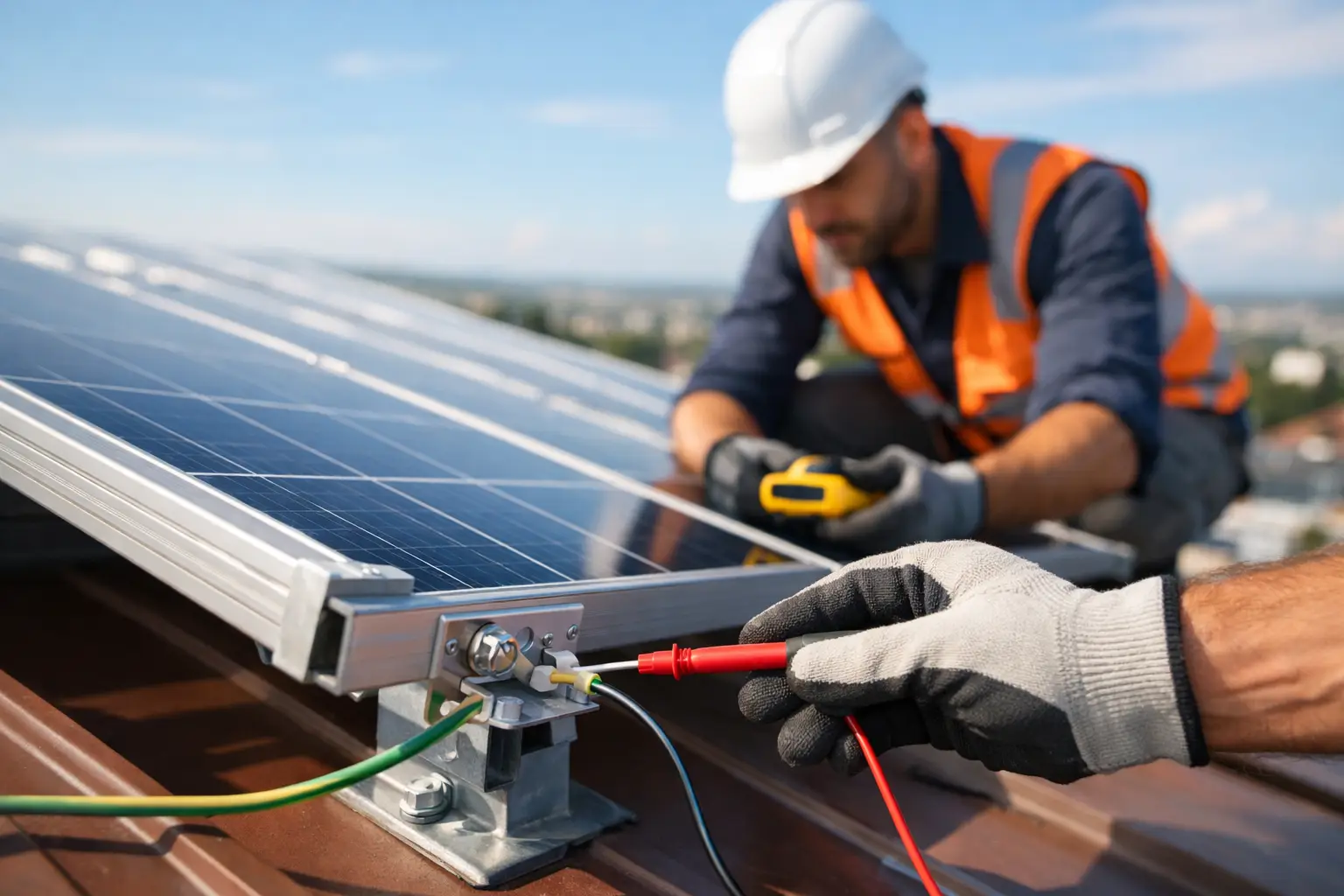
The next stage is electrical testing using appropriate test equipment. Depending on the system configuration and the work being carried out, this may include continuity testing of earthing and bonding conductors, inspection of protective-earth connections, insulation resistance testing where suitable, polarity checks and verification of protective devices. The electrician will also assess whether the solar equipment has been installed and maintained in a manner consistent with current safety expectations.
Testing must be planned carefully. Some tests require circuits to be isolated, while other checks relate to the operating condition of the inverter and grid connection. A good technician does not apply a generic test sequence without considering the inverter manufacturer requirements, the age of the installation and any existing faults.
For example, an insulation resistance concern could be caused by damaged DC cable insulation, moisture in an isolator, a compromised junction box or a panel fault. The earth path itself may test satisfactorily while another issue is causing inverter shutdowns. That is why earthing verification works best as part of a wider solar health check, not as an isolated box-ticking exercise.
Earthing, inverter testing and grid compliance
Your inverter is designed to disconnect from the grid under abnormal network conditions. Anti-islanding testing verifies that this safety function operates correctly. It is a different test from earthing verification, but both form part of a responsible approach to solar safety and compliance.
An inverter can pass an operational test while the rooftop array has developing mechanical or cable issues. Equally, a visually tidy array may have a poor electrical connection hidden beneath a panel or inside an enclosure. Combining inspection, electrical testing and inverter testing provides a more useful picture of your system’s condition.
If you have received a notification requiring anti-islanding testing, it is sensible to ask for a broader check if the system is older, has experienced hail or water exposure, or has shown irregular output. The additional inspection can identify maintenance needs before they become a more expensive repair or a prolonged loss of generation.
Signs that warrant prompt attention
Some issues should not wait for the next routine service. Arrange an electrician-led inspection promptly if you notice a damaged panel, exposed wiring, a broken isolator, persistent inverter errors, water in an electrical enclosure, evidence of scorching, or a system that has stopped producing without a clear explanation.
It is also worth arranging a check after significant roof repairs. Solar panels may need to be temporarily removed or worked around, and any disturbance to cable routes, mounting hardware or bonding connections should be reviewed before the system is relied on again.
Where there is an immediate electrical safety concern, keep people away from the affected equipment and contact a licensed electrician. Do not climb onto the roof to investigate. The risk is not limited to electric shock – damaged roofs, wet surfaces and panels make rooftop access hazardous in its own right.
What a useful service report should tell you
A quality inspection should leave you with clear findings, not a vague statement that the system was checked. You should understand whether the earthing and visible installation condition were satisfactory, what tests were completed, any faults or deterioration identified, and what repairs are recommended.
The report should separate urgent safety work from preventative maintenance and optional improvement work. That distinction matters when managing the cost of an older system. A cracked isolator or damaged cable needs a different response from minor cosmetic weathering, and neither should be confused with an inverter performance issue.
For owners focused on solar returns, this clarity supports better decisions. You can deal with safety and compliance matters first, then plan sensible repairs that protect generation rather than replacing equipment prematurely.
Rooftop solar is built to work quietly, but it should not be left unchecked indefinitely. A licensed, electrician-led inspection gives you a practical answer on the condition of the earth system and the wider installation, so you can keep your solar investment safe, compliant and working as it should.
Leave a Reply