

Your solar inverter may show a green light, the panels may look clean from the ground, and the system may still be quietly losing money. Can solar panels fail silently? Yes. Many faults do not cause a complete shutdown or an obvious alarm. Instead, they reduce generation gradually, affect only part of the array, or sit in equipment you are unlikely to inspect day to day.
For Canberra solar owners, that matters most after storms, hail, years of temperature changes and normal component ageing. A silent fault can turn a good solar investment into an underperforming one long before it becomes visible on a bill.
What a silent solar failure looks like
A silent failure is any issue that allows the system to keep operating, or appear to be operating, while production, safety or compliance has been affected. It is different from a complete inverter failure, where the display is blank and generation stops. Those faults are easier to notice and usually prompt a quick call for help.
The more costly problems are often subtle. A panel string may be producing less than the others. One section of the roof may be disconnected by a deteriorated connector. Moisture may be entering an isolator without immediately tripping the system. The inverter may continue exporting power but be working around a fault condition or limiting output.
Monitoring helps, but it is not a full health check. Many older systems have no monitoring at all. Some apps only show total daily production, which can hide a weak string, failed optimiser or mismatch between panels. Even when an app sends an alert, it cannot inspect cable insulation, check enclosure seals or confirm required protection settings.
Can solar panels fail silently after hail or weather?
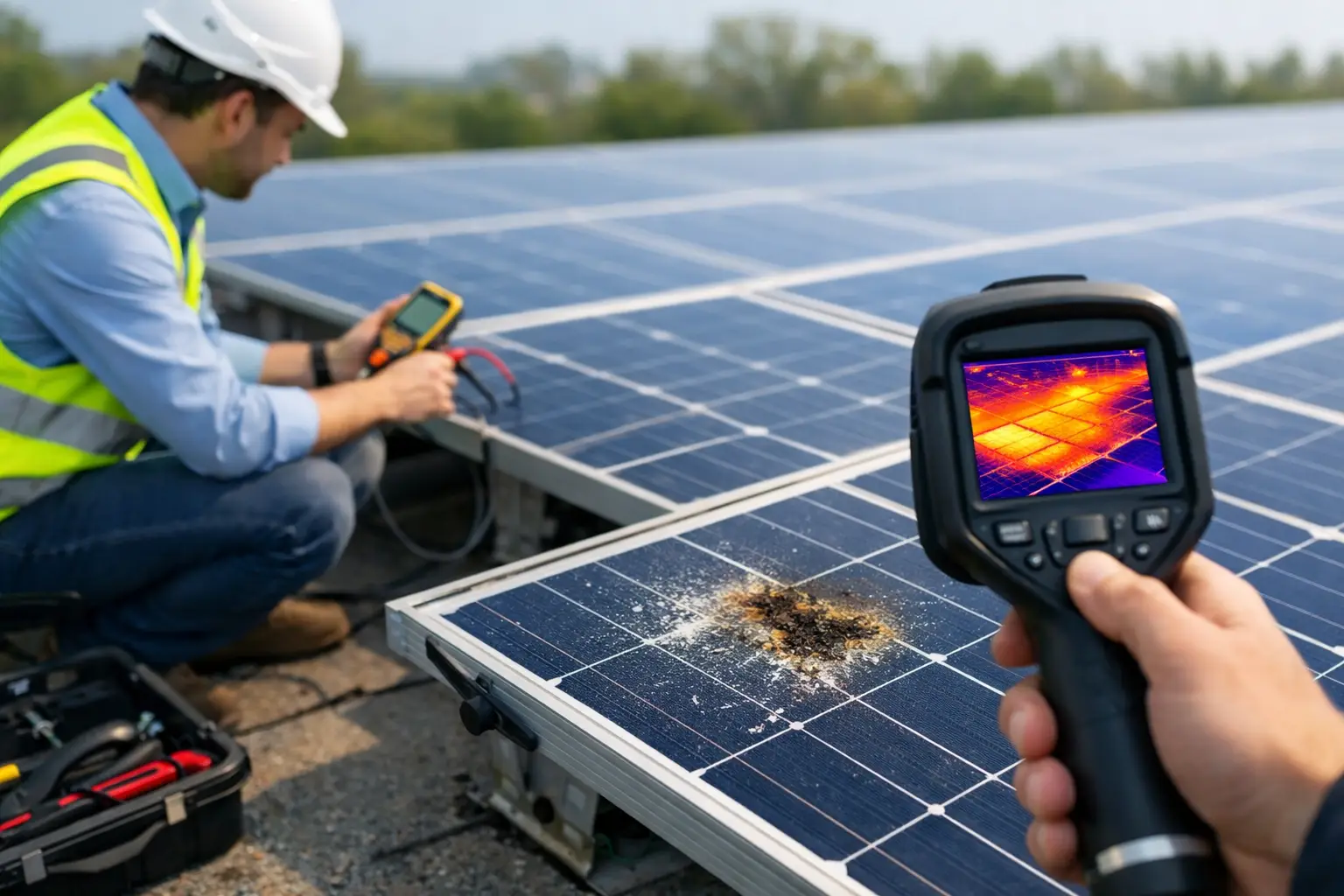
They can. Hail damage is a good example because it is not always a shattered panel. Small cracks in glass, damage beneath the surface, loosened mounting hardware or compromised junction boxes may not be clear from ground level. Output can initially remain close to normal, then decline as moisture and heat cycles worsen the damage.
Water ingress is another common concern. Canberra’s cold winters, summer heat and heavy rain put repeated stress on seals, glands, isolators and rooftop cable runs. A small gap in an enclosure can allow corrosion to develop over time. By the time a fault becomes obvious, the repair may be more involved than an early inspection would have required.
Wind and storm debris can also move wiring or damage a panel frame without taking the whole system offline. This is why a visual check from the ground is useful after severe weather, but it is not enough to confirm the electrical condition of the installation.
The warning signs worth checking
A drop in production does not always mean there is a fault. Cloud cover, seasonal sun angle, new shading from tree growth and household usage patterns can make solar performance seem different. The key is to compare like with like: similar weather, similar months and similar system conditions.
Arrange a proper inspection if you notice several of the following signs:
- Production is consistently lower than the same period in previous years, with no clear change in weather or shade.
- The inverter regularly shows warnings, grid faults, insulation faults or repeated restarts.
- Your monitoring app reports a missing panel, optimiser or string, or data has stopped updating altogether.
- An isolator looks discoloured, cracked, loose or affected by water, or you can see damaged conduit or exposed cabling.
- The system has been through hail, major wind, roof work or pest activity.
- Your electricity bill has risen despite similar power use and a normal-looking solar app.
Do not rely on a single low-production day. Solar output naturally changes. A pattern over weeks or months, particularly compared with prior years, is more useful. Equally, do not ignore a warning that disappears after a restart. Intermittent faults often return under heat, moisture or higher generation conditions.
Why panel faults are not the only issue
When people ask whether solar panels can fail silently, they often mean the panels themselves. In practice, a solar system has several potential failure points. The inverter, DC isolators, AC protection, cabling, connectors, mounting system and monitoring equipment all need to work together.
Panel degradation is normal. Most panels lose a small amount of output over time, and the rate varies by panel quality, installation conditions and age. Slow, even degradation across a system may be expected. A sharp decline, a difference between strings or an isolated weak section is not something to dismiss as normal ageing.
Inverters also have a limited service life compared with panels. They manage heat, grid voltage changes and constant electrical conversion. An inverter may still turn on and export power while operating inefficiently, curtailing output or experiencing recurring faults. Reading the display alone does not confirm that it is producing what it should.
DC isolators and connections deserve particular attention because they are exposed to heat and weather. Loose terminals, degraded seals and corroded contacts can create resistance and heat. These issues affect performance and may become a safety concern, which is why electrical testing should be completed by a qualified professional rather than treated as a DIY job.
What a professional solar health check can find
A proper system health check is designed to look beyond the app. It starts with the system’s expected performance, age, configuration and any history of alarms or storm damage. The technician can then inspect accessible rooftop equipment, panel condition, mounting, cabling, isolators, labels and switchboard components.
Electrical testing provides the evidence that a visual inspection cannot. Depending on the system and the work required, this may include checking inverter operation and fault history, string voltage and current, insulation resistance, polarity, earthing, protective devices and the condition of DC and AC connections. Thermal checks can also help identify abnormal hot spots in connections or equipment when conditions suit the test.
The result should be clear, not vague. You need to know whether the system is safe, whether it is meeting expected performance, what is causing any fault, and which repairs are urgent versus sensible maintenance to plan for. A good report also creates a useful record for insurance discussions after storm damage and for future comparison.
Compliance testing can reveal hidden problems
Some ACT solar owners receive notice that their inverter requires anti-islanding testing. This is a grid safety requirement. Anti-islanding protection is designed to stop the inverter from continuing to supply power during a grid outage, helping protect network workers and preventing unsafe back-feed.
It is not simply an administrative task. Testing confirms that the inverter responds correctly to grid conditions and that relevant settings are operating as required. During this work, an electrician may identify inverter errors, communication issues, damaged isolators or other conditions that deserve attention.
If you have received a notification, do not assume the system is faulty, but do not put it aside either. Required testing needs to be completed within the stated timeframe. It is a practical opportunity to check the wider condition of a system that may otherwise have had little professional attention since installation.
How often should a solar system be checked?
There is no single interval that suits every rooftop system. A newer system with reliable monitoring and no exposure to storms may only need attention when performance changes or a required test is due. Older systems, properties with frequent shade or pest issues, and systems affected by hail or water ingress benefit from more regular inspection.
As a sensible approach, review production each month and compare annual figures against previous years. Check visible equipment after significant weather, without climbing on the roof or opening electrical enclosures. Book a professional assessment promptly when the numbers do not add up, warnings recur or physical damage is suspected.
The aim is not to service a solar system for the sake of it. It is to find faults while they are contained, maintain required safety functions and protect the return your system was installed to deliver. A short investigation now can prevent years of unnoticed underperformance.
Leave a Reply