

A rooftop solar system can look fine from the ground while corrosion is developing around its frames, fixings, connectors or isolators. Knowing how to detect solar panel corrosion early helps protect generation, electrical safety and the return you expect from your system. The key is to look for changes that do not belong, then have any electrical or roof-level concerns checked by a qualified solar electrician.
Corrosion is not always a panel failure. In many cases, the glass and solar cells remain sound while the surrounding hardware begins to deteriorate. Left alone, however, corrosion can contribute to water ingress, loose connections, reduced system performance and expensive repair work.
What solar panel corrosion looks like
Corrosion is the gradual breakdown of metal caused by moisture, oxygen, contaminants and dissimilar metals interacting. Canberra systems contend with strong UV exposure, seasonal temperature swings, frost, wind-driven rain and occasional hail. These conditions can expose weaknesses in ageing components or installations with damaged seals and fittings.
On a solar array, corrosion may affect aluminium module frames, mounting rails, roof hooks, bolts, cable supports, DC connectors, earthing points and weatherproof electrical enclosures. It is often most noticeable at joints, cut edges, scratches, penetrations and places where water can sit rather than drain away.
A small amount of surface weathering does not automatically mean a system is unsafe or failing. Aluminium, for example, can develop a stable oxide layer that protects the metal beneath. The concern is pitting, flaking, swelling, deep discolouration, loose hardware or corrosion around electrical parts. Those signs call for a closer inspection.
How to detect solar panel corrosion safely
Start from the ground. Do not climb onto the roof, walk on modules or open electrical equipment yourself. Solar panels produce DC electricity whenever exposed to daylight, and rooftop work brings real fall and electrical risks.
Use binoculars or your mobile camera zoom after a clear day, ideally when the array is dry. Compare the appearance of each panel and the mounting hardware. You are looking for irregularity: one frame that looks heavily stained, a bracket that appears rusty, or a section of the array where debris and moisture collect.
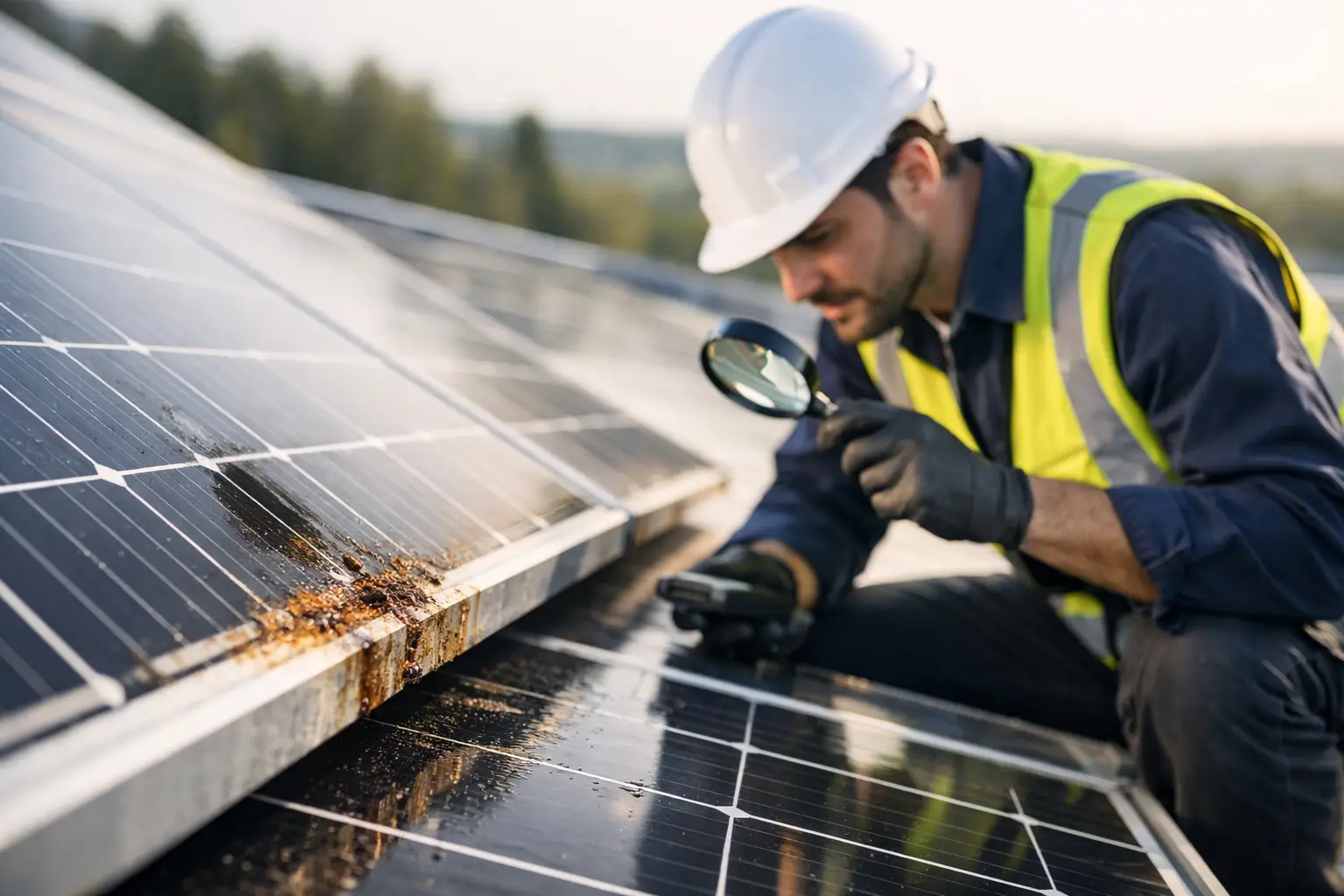
Check the visible edges of the panels for white, chalky residue, staining, bubbling, pitting or roughened metal. Brown or orange staining around bolts, roof brackets and rails usually points to rusting steel hardware. Green or blue deposits near wiring or terminals can indicate copper corrosion. White powder around aluminium components can be oxidation, particularly where water has been trapped or the protective finish has been damaged.
Pay attention to panel frames near the lower edge of the array. Dirt, leaf litter and fine sediment can hold moisture against frames and mounting points. Also inspect areas below plumbing vents, overhanging trees or roof sections where runoff regularly crosses the panels. These spots are more likely to remain damp and accumulate contaminants.
If your system has a ground-accessible inverter, isolator or switchboard enclosure, look at the outside only. Cracked covers, rust around screws, faded or brittle seals, water marks and insect entry are reasons to arrange a professional check. Do not remove covers or touch wiring.
Check your monitoring before assuming corrosion
Corrosion sometimes shows up as a performance issue, but reduced production has many possible causes. Seasonal sunlight, cloud, shade growth, soiling, inverter faults, grid interruptions and panel degradation can all affect output.
Review your monitoring app against the same period in previous years, allowing for weather differences. A sustained and unexplained drop, a string producing less than another comparable string, repeated inverter faults or intermittent generation warrants diagnostic testing. If physical corrosion is also visible, it becomes more urgent.
Monitoring cannot confirm the location or severity of corrosion. It can, however, help an electrician narrow down whether the concern sits with a panel string, connection, inverter, isolator or another part of the installation.
Signs that need prompt attention
Some issues should not wait for the next routine clean or visual check. Arrange an electrician-led inspection promptly if you notice a burning smell near the inverter, discoloured or melted plastic, repeated tripping, exposed cable, loose panels, water entering an enclosure or a persistent inverter fault.
The same applies after significant hail, storm damage or a roof leak. Hail can damage module glass and frames, while wind can loosen fittings and allow water into places it should not reach. Corrosion may then develop over months, particularly if seals, cable glands or protective coatings have been compromised.
Never try to treat corrosion with household cleaners, paint, lubricants or a wire brush. Abrasive work can remove protective coatings, damage anodised aluminium, compromise earthing connections or introduce moisture into electrical equipment. A repair needs to address the cause, not simply improve the appearance.
Where a professional inspection adds value
A proper solar health check goes beyond spotting rusty hardware. A qualified electrician can inspect accessible roof components, module frames, mounting integrity, cable management, connectors, isolators, inverter condition and earthing. They can also test the system’s electrical performance and identify faults that are not visible from the ground.
This matters because corrosion in electrical connections may increase resistance before it causes an obvious shutdown. Higher resistance creates heat, and heat can damage connectors and insulation. On the other hand, a light stain on an aluminium frame may have no practical effect at all. Testing separates cosmetic weathering from a defect that needs repair planning.
For ACT solar owners who have received an anti-islanding testing notification, it makes sense to combine required inverter compliance testing with a broader condition check where appropriate. This gives you a clearer picture of both grid safety and system condition without guessing which issue is affecting output.
A technician may recommend cleaning drainage areas, replacing corroded fixings, repairing a damaged enclosure, securing cables, replacing failed connectors or monitoring a component that is not yet at end of life. The right response depends on the component, the degree of deterioration and whether safety, weatherproofing or generation has been affected.
Preventing corrosion from getting worse
Most corrosion prevention is about keeping water out, avoiding trapped debris and addressing damage early. A periodic visual check from the ground is worthwhile, particularly after storms. Keep nearby trees managed so branches do not rub on panels or drop excessive leaf matter across the array.
If roof work, gutter cleaning or pest control is carried out near the solar system, ask trades to avoid standing on modules, pulling cables or disturbing conduits and mounting hardware. A panel can remain operational after an accidental knock while a damaged frame, cable clip or seal slowly develops into a larger problem.
Routine professional maintenance is especially sensible for older systems, systems with known roof leaks, installations exposed to heavy debris, and arrays that have experienced hail. It is also a practical choice when monitoring indicates lower output but the cause is unclear.
Do not confuse dirt with corrosion
Dust, pollen, bird droppings and traffic film can make panels and frames look discoloured. In many cases, a dry, even layer of dirt affects appearance more than it signals damage. Corrosion tends to be localised around metal edges, fasteners, joints or damaged coatings, and it may look rough, blistered, powdery or pitted rather than simply dirty.
If you are unsure, take clear photographs from a safe position and note whether the marks are changing over time. Photos taken after rainfall can also show where water pools or where staining begins. This gives a solar technician useful context before attending site.
A solar system is a long-term asset, not a fit-and-forget appliance. Early attention to corrosion, weather damage and declining performance gives you the best chance of keeping it safe, compliant and earning as it should. If something on the array does not look right, arrange a qualified inspection before a small visible defect becomes a costly electrical or roof issue.
Leave a Reply