

A solar system can appear to be working perfectly while the figures on your electricity bill tell a different story. If your inverter is producing power but your feed-in credit has fallen sharply, or your import data no longer makes sense, solar meter failures may be part of the problem. The key is to separate a metering issue from a genuine solar production fault before valuable time and generation are lost.
For Canberra and ACT solar owners, this matters because a meter is not simply a display on the side of the house. It records the electricity imported from and exported to the grid. When its readings are wrong, delayed or unavailable, billing can be affected and a system fault can be harder to identify.
What a solar meter actually does
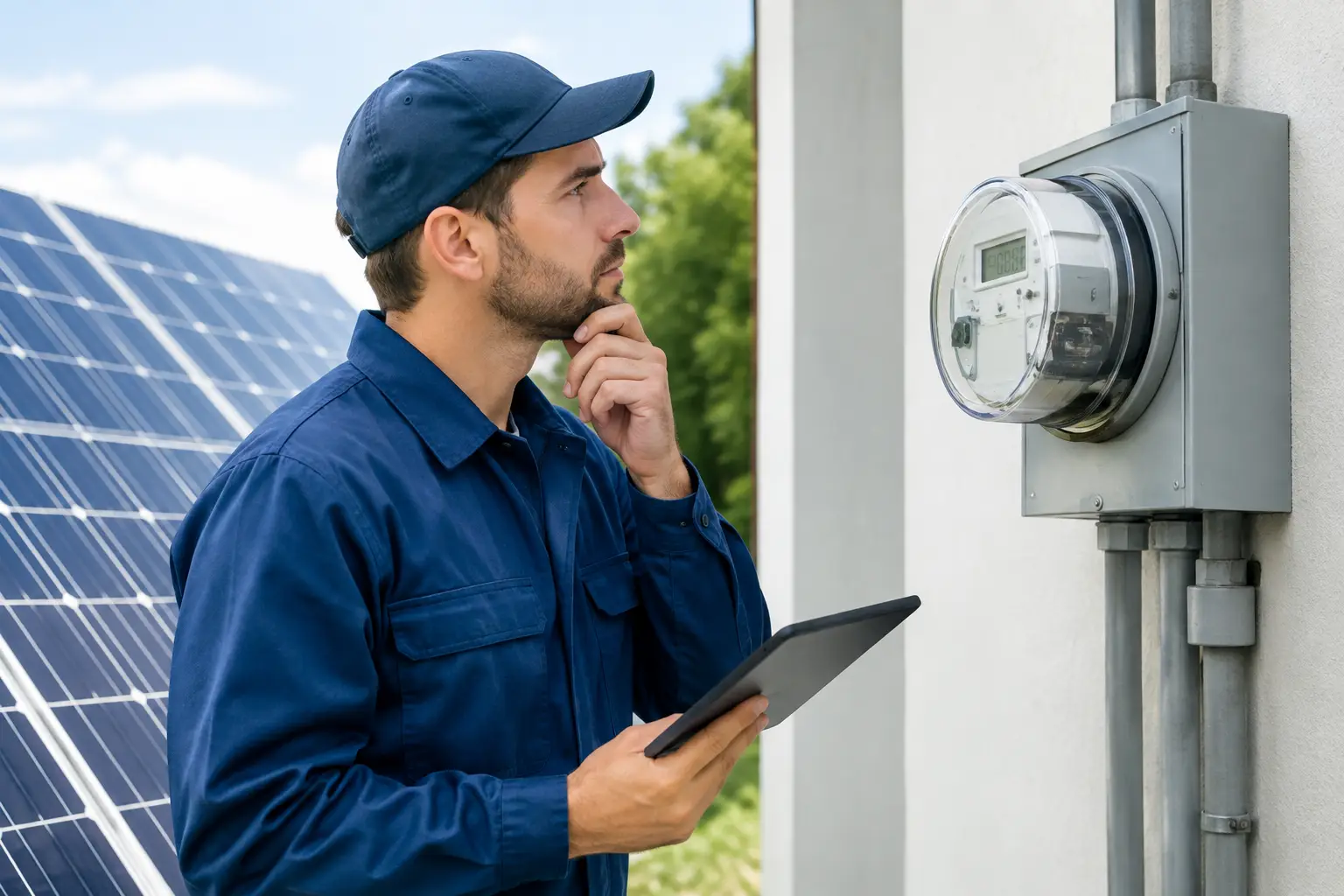
Most homes with rooftop solar have a bi-directional or smart electricity meter. It measures power flowing from the grid into the property and surplus solar electricity flowing back out to the grid. Your electricity retailer uses this information to calculate import charges and feed-in credits.
The meter is different from the inverter monitoring app. An inverter app estimates or records what the solar system has generated. The meter records what crossed the grid connection point. A system may generate 25 kWh in a day, for example, but much of that energy could be used directly in the home. Only the unused surplus should appear as exported electricity on the meter.
That distinction prevents a common mistake: assuming a lower feed-in credit proves the panels or inverter have failed. Higher daytime consumption, a battery charging, changed retailer plans or a seasonal drop in solar output can all reduce exports without a meter fault.
Signs of solar meter failures
A single unusual bill is worth checking, but it is not always a fault. Look for a pattern, particularly where the meter data and the system’s known operation do not line up.
Warning signs can include a feed-in tariff that has disappeared despite regular daytime solar production, estimated reads continuing after a smart meter has been installed, or export figures that remain unusually low across several billing periods. An unexplained increase in grid imports can also warrant investigation, especially if household habits have not changed.
A blank meter screen, error code, intermittent display or physical damage to the meter enclosure should be treated seriously. Water entry, insect activity, corrosion and storm damage can affect electrical equipment around the switchboard. Do not remove covers or attempt to reset metering equipment yourself. The meter and its seals may be controlled by the metering provider or electricity distributor, and live electrical parts must only be handled by authorised people.
Compare the right numbers
Start with the inverter or monitoring portal. Check whether daily production is broadly consistent with the season, weather and system size. Then compare that with your electricity bill’s import and export data.
If production has dropped significantly, the issue may sit with the solar system rather than the meter. Inverter faults, tripped AC or DC isolators, panel damage, shading, failed optimisers, cable faults and degraded connections can all reduce output. If generation looks normal but exported energy has changed without an obvious reason, metering, configuration or billing data deserves closer attention.
It also helps to check your own daytime use. A new pool pump, electric hot-water timer, air conditioner, EV charger or battery can consume energy that was previously exported. Your solar is still producing value, but less of it is being credited as feed-in energy.
Common causes behind apparent meter problems
Not every suspected meter issue is a failed meter. In practice, the cause may sit in one of several places: the meter itself, the metering configuration, communications to the retailer, the switchboard, or the solar installation.
A meter may fail electronically or stop communicating properly. Smart meters can also have data transmission issues, leading to estimated bills or delayed interval information. Incorrect meter configuration can be another cause, particularly after a solar installation, retailer change, switchboard upgrade or battery installation. If the meter is not set up to register exports correctly, the billing outcome may not reflect the energy being sent to the grid.
There are also electrical issues that need qualified diagnosis. Problems with wiring, terminals, isolators or protective devices can affect how a solar system connects to the home and grid. Heat, age, water ingress and previous workmanship can all play a part. A damaged switchboard component is not something to leave until the next bill arrives.
In some cases, the meter is operating correctly but the inverter has disconnected from the grid. This is where anti-islanding protection is relevant. Solar inverters are required to stop exporting during a grid outage and reconnect only when conditions are safe. Required anti-islanding testing checks that this protection is functioning as intended. It is not a meter test, but it forms part of responsible solar system compliance and can identify concerns that affect connection and performance.
A practical way to investigate the issue
Keep the first checks simple and safe. Photograph the meter display, noting the date and time. Record any error messages shown by the inverter and take a screenshot of recent generation data. Keep a copy of the relevant bill, including the meter read type and import/export totals.
Next, consider recent changes. Has a retailer changed? Was a battery, EV charger or controlled-load appliance added? Has the system been through hail, heavy rain or a significant electrical event? These details help narrow the fault-finding process and avoid replacing parts based on guesswork.
If the meter display is damaged, the screen is blank, readings appear implausible, or bills are based on estimates, contact your electricity retailer. The retailer is generally the starting point for billing and metering-data concerns and can arrange investigation through the appropriate metering pathway. Keep clear records of dates, bills and correspondence in case a billing adjustment is needed.
Where solar production itself is uncertain, arrange a qualified solar inspection. A proper inspection should assess inverter operation, visible panel condition, wiring and isolators, protection devices, system output and any signs of water or weather damage. For older systems, a system health check can be more valuable than a narrow fault call-out because it identifies issues that may not yet have caused a complete shutdown.
When the fault is not the meter
A modest reduction in solar generation through winter is normal in the ACT. Shorter days, lower sun angles and cloud cover all affect output. Dirt can contribute, although severe production losses are more often linked to shading, failed equipment or electrical faults than a light layer of dust.
Hail damage can be difficult to spot from the ground. Cracked glass, damaged cells and moisture pathways may not immediately trigger an inverter error, yet they can affect output and create longer-term reliability concerns. Likewise, ageing isolators and deteriorated cable components may operate intermittently before failing outright.
This is why the diagnostic question should not be, “Is my meter broken?” It should be, “Where has the expected energy value gone?” The answer may be billing, metering, household consumption, export configuration or solar performance. Testing each part methodically is the quickest path to a defensible repair plan.
Protecting your system’s financial return
Solar maintenance is often delayed because the system still turns on each morning. But a working display does not prove a system is producing what it should, exporting correctly or remaining compliant. Periodic checks are particularly sensible after severe weather, before an insurance claim, when an inverter warning appears, or after receiving a notice for anti-islanding testing.
Solar Testing and Maintenance provides electrician-led inspections, testing and fault finding for existing systems, with clear recommendations on what needs attention and what can be monitored. The aim is not to sell unnecessary upgrades. It is to establish the condition of the system, address safety or compliance issues, and help owners make practical decisions based on evidence.
If your bills and solar monitoring no longer agree, act while you still have useful comparison data. A few dated photos, recent production records and a qualified assessment can turn an unclear meter concern into a clear next step – and help keep your solar investment earning its place on the roof.
Leave a Reply