


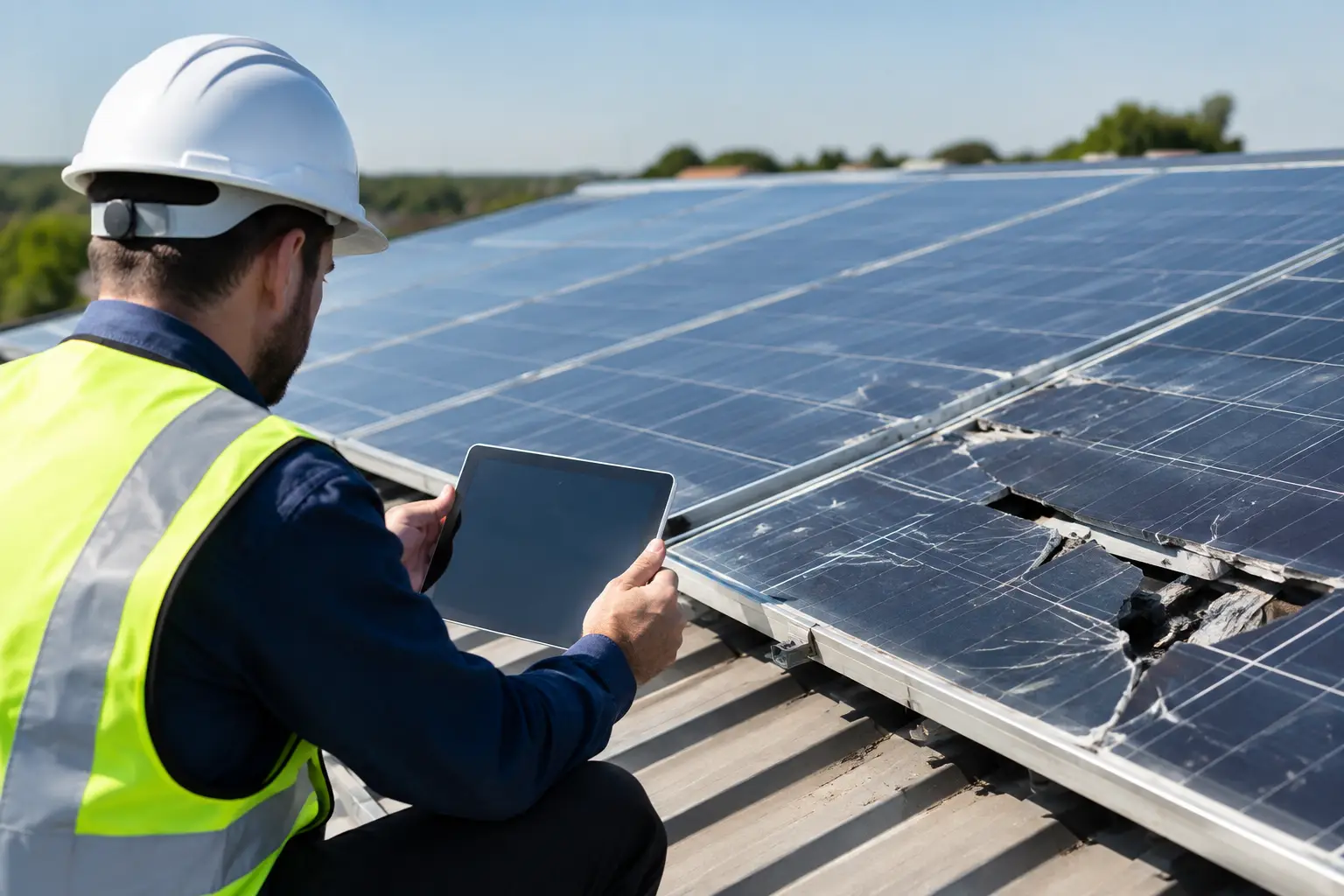
A hailstorm can leave a solar system looking normal from the ground while cracked cells, damaged mounting hardware or water entry points sit out of sight. Knowing how to document rooftop solar damage gives you a clear record for an insurer, helps a technician diagnose the fault efficiently, and reduces the risk of losing generation while the issue is left unresolved.
The priority is safety. Do not climb onto the roof, remove panels, open electrical enclosures or touch damaged cables. Solar panels can continue producing electricity whenever there is daylight, and storm-damaged roofs introduce a separate fall risk. Start from ground level, record what you can see, and arrange a qualified solar electrician to assess anything that may affect the electrical system.
Document rooftop solar damage before anything changes
Damage is easiest to assess when there is a record of the system’s condition immediately after an event. If it is safe to do so, begin documenting as soon as practical after hail, high wind, a fallen branch, heavy rain or another incident. Avoid cleaning panels or moving debris before you have taken photos, unless leaving it in place creates an immediate safety risk.
Record the date and approximate time of the event, your property address, and the weather conditions you observed. If hail fell, note its approximate size and duration. These details help establish the likely cause of damage and can be useful where the panel damage is subtle but the event was widespread.
Use your mobile to take wide photographs of the roof from several positions around the property. Then take closer images of any visible issues, such as shattered glass, displaced panels, loose brackets, debris impact, bent conduit, dangling cable, damaged roof tiles or signs of water staining below the array. Keep the original files rather than relying only on screenshots, as their time and date information may be useful later.
If a photo cannot clearly show the issue, add a short written note explaining where it is. For example: “Two panels on the upper western row appear to have surface cracking near the lower edge.” You do not need to diagnose the problem. A clear observation is more useful than a guess.
Capture the system’s performance evidence
Physical photos tell only part of the story. A system may have no obvious broken panel but still be producing less power because of a damaged connector, failed optimiser, inverter fault or water ingress. Your inverter display, monitoring app and electricity data can show whether output changed after the event.
Take screenshots of current alerts, fault codes, daily generation and recent production history. If possible, capture data for the week before the event and each day afterwards. A sudden drop in output, repeated inverter shutdowns or missing production from one string can help a technician focus the inspection.
Also photograph the inverter and any visible isolators from a safe distance. Note warning lights, error messages, unusual noises or a display that is blank during daylight. Do not reset an inverter repeatedly to clear an error. Doing so can remove useful fault information and may allow a damaged system to reconnect before it has been checked.
Your documentation folder should include the original installation paperwork if you have it, including panel and inverter model details, warranty documents, previous inspection reports and any repair invoices. These records allow the assessor to identify the equipment, compare known history and determine whether age-related wear may be contributing to the issue.
What damage should be treated as urgent?
Some faults require prompt action rather than a wait-and-see approach. If you see exposed wiring, a panel that has shifted or lifted, broken glass, scorch marks, damaged conduit, water entering electrical equipment, or an inverter that smells hot or burnt, keep people away from the area and contact a qualified electrician or emergency service where appropriate.
A damaged panel is not simply a reduced-generation issue. Cracked glass can allow moisture into the laminate, leading to corrosion, insulation faults and progressive loss of output. Loose panels or mounting components can become a hazard in further wind. Water ingress at isolators, connectors and roof penetrations can affect both the solar system and the building.
If the inverter is displaying a fault, do not assume it is safe merely because the system has stopped generating. The cause may be on the DC side of the installation. A licensed solar electrician can advise whether shutdown is required and inspect the system using appropriate test equipment.
Keep insurance evidence clear and complete
Insurers generally need a straightforward account of what happened, what was damaged and what evidence supports the claim. Provide factual information rather than estimating repair costs yourself. Your photos, weather notes, monitoring screenshots and installation records form the starting point.
It is sensible to save copies in more than one place, such as your mobile, computer and cloud storage. Use simple file names that include the date and location, particularly if you are documenting several areas of damage. Keep a short timeline as well: the storm occurred, you noticed the fault, you contacted the insurer, and a qualified inspection was arranged.
Do not authorise replacement work solely on the basis of what is visible from the ground if an insurer needs to assess the claim. However, necessary temporary safety work should not be delayed. Take photographs before and after any urgent make-safe work, retain invoices and ask the electrician to document what was found.
There can be a trade-off between acting quickly and preserving evidence. The practical approach is to photograph first where safe, then address hazards without delay. A detailed professional report can support both repair planning and an insurance claim by identifying damage that is not apparent in homeowner photos.
Why a visual check is not enough
Rooftop solar is an electrical system, not just a group of panels. A proper post-damage assessment may include checks of panel condition, mounting, cabling, connectors, DC isolators, earthing, inverter operation and generation performance. It may also identify pre-existing deterioration that was accelerated or exposed by the event.
Testing matters because some issues are hidden. A connector can be loose but look intact. An insulation weakness can appear only under test. Water may enter an enclosure without being visible externally. Inverter logs may reveal intermittent grid or string faults that explain why a system is underperforming.
For ACT solar owners, testing can also be a chance to confirm that required anti-islanding protection is operating correctly. This function disconnects the inverter from the grid during an outage, protecting network workers and supporting compliance. Storm damage, ageing equipment and changes to an electrical installation are all good reasons to ensure the system has been properly checked rather than relying on an app that says it is online.
Solar Testing and Maintenance can inspect existing systems, investigate faults and provide clear repair recommendations from an electrician-led assessment. The value is not in producing a long technical report for its own sake. It is in identifying what is damaged, what needs urgent attention, what can be monitored, and what work will protect the system’s return over time.
A practical record to keep after repairs
Once repairs or maintenance are complete, add the report, invoices, test results and new photographs to your solar records. Capture a screenshot of normal generation after the work, then check monitoring over the following weeks for consistent output. This creates a useful baseline if another storm or fault occurs later.
A well-documented issue is easier to insure, diagnose and repair. More importantly, it turns a worrying rooftop problem into a controlled maintenance decision, based on evidence rather than assumptions.
Leave a Reply