

A solar system rarely fails all at once. More often, output slips gradually, one string underperforms, or a panel starts ageing faster than the rest. That is why knowing the main solar panel degradation signs matters. If you catch the problem early, you have a much better chance of protecting production, avoiding larger repair costs, and keeping the system financially worthwhile.
For most property owners, the challenge is that degradation does not always look dramatic from the ground. A system can still be producing power while losing enough performance to hurt your return over time. Some signs are visible, some show up in inverter data, and some only become clear during proper inspection and electrical testing.
What panel degradation actually means
All solar panels degrade with age. That part is normal. Manufacturers generally expect a gradual reduction in output over many years, and a small annual drop does not automatically mean there is a fault. The issue is when degradation is uneven, accelerated, or linked to physical damage, moisture, heat stress, or electrical defects.
In practical terms, panel degradation means the modules are no longer converting sunlight as effectively as they should. Sometimes that is due to normal ageing of the cells and materials. Sometimes it points to a problem such as microcracking, delamination, hot spots, failed bypass diodes, water ingress, or storm damage.
The difference matters because normal ageing is something you plan around. Fault-related degradation is something you test, diagnose and manage before it spreads into bigger losses.
1. A noticeable drop in solar output
The clearest warning sign is a drop in generation that cannot be explained by weather, seasonal change, or increased shading. If your bills are creeping up and your system is not offsetting usage the way it used to, that is worth attention.
This does not always mean the panels themselves are degrading. Inverter issues, isolator faults, dirty panels, cabling problems and string faults can all produce the same result. But from the owner’s point of view, reduced output is often the first sign that something in the system needs checking.
The key is to compare like with like. Look at the same month this year against the same month in previous years, rather than comparing summer to winter. If the drop is consistent and larger than expected, there may be underlying panel deterioration or another fault contributing to poor performance.
2. Hot spots or panels heating unevenly
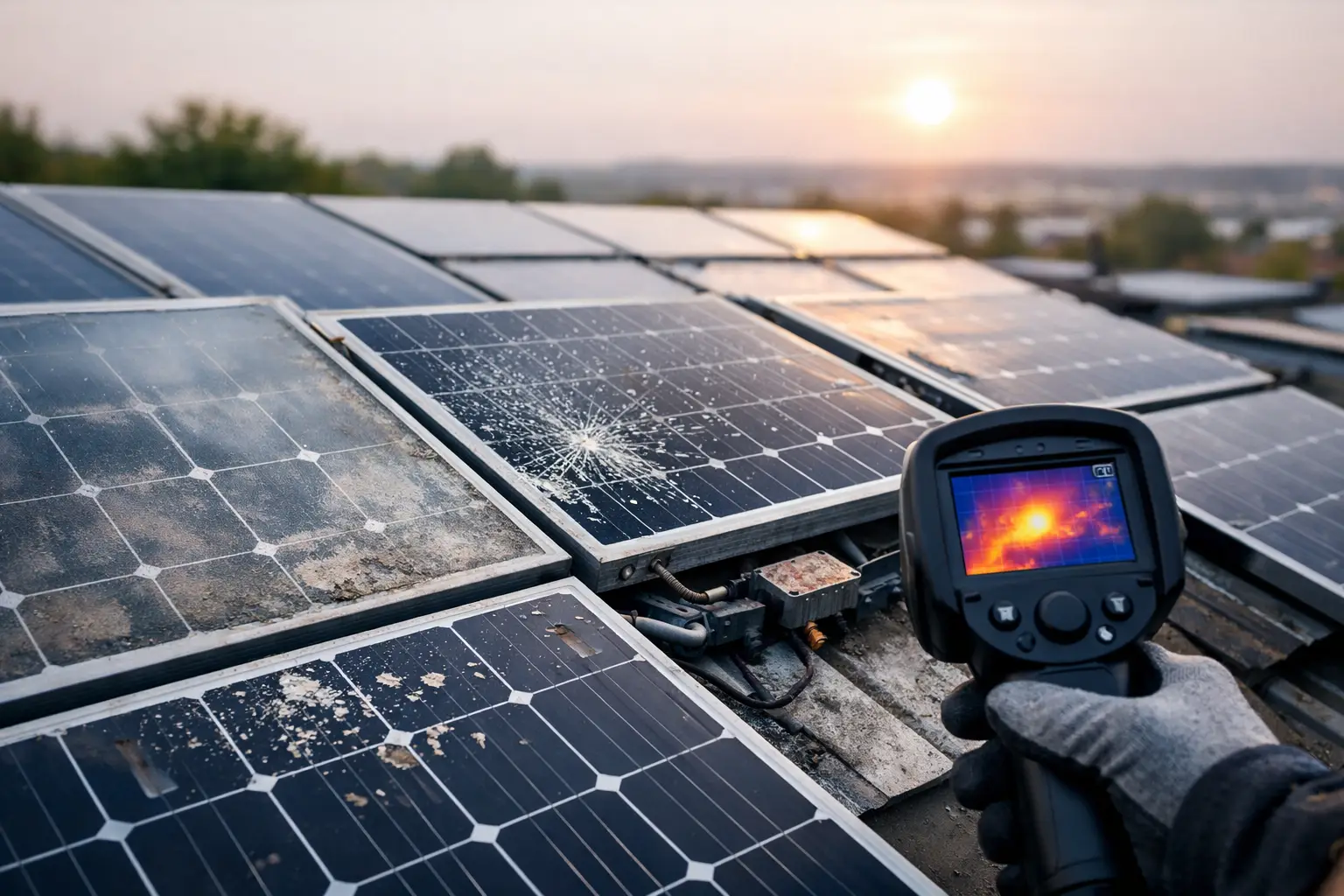
Hot spots occur when part of a panel runs significantly hotter than the surrounding cells. That can happen because of damaged cells, internal resistance issues, shading, or defects that force one area to work harder than it should.
You usually will not spot this from the ground without thermal imaging, but the consequences can show up elsewhere. Panels with hot spots may produce less power, age faster, and in some cases become a safety concern. Heat stress can also accelerate damage to backsheets, connectors and nearby components.
This is one of those situations where it depends on the cause. A temporary shading issue is different from a damaged module. Either way, uneven heating is not something to ignore, particularly on older systems or systems exposed to harsh weather.
3. Visible cracking, discolouration or delamination
Some solar panel degradation signs are visible during a close inspection. Cracked glass is the obvious one, especially after hail or impact. Less obvious are cell cracks beneath the glass, yellowing, burn marks, bubbling, or delamination where layers of the panel begin separating.
These issues can reduce output directly, but they can also let moisture in and lead to further internal damage. Delamination, for example, may start as a materials failure and then progress into broader performance loss. Discolouration can point to heat stress or ageing that is no longer just cosmetic.
Not every mark means the panel is finished. Surface grime, minor cosmetic wear and manufacturer label fading are not in the same category as structural damage. The point is that visible changes should be assessed properly rather than guessed at from the ground.
4. Moisture ingress and signs of water damage
Water and electricity are a poor combination, and rooftop systems spend years exposed to heat, cold, storms and UV. If moisture gets into a panel or associated connections, performance and safety can both be affected.
Signs can include fogging under the glass, corrosion around frames or junction boxes, staining, or inconsistent generation after wet weather. Water ingress does not always stay confined to the panel itself. It can also affect connectors, isolators and cabling, which is why a full system inspection is often more useful than focusing on one visible symptom.
In Canberra and across the ACT, weather exposure matters. A roof system that has handled years of heat, frost and storms may not present one obvious failure, but cumulative weather stress can show up in subtle ways that deserve testing.
5. One section of the system underperforming
If your monitoring shows one string or one inverter lagging behind the rest, that can point to localised panel degradation. This is especially relevant on systems where only part of the array has been affected by hail, shade growth, debris build-up or age-related wear.
Uneven performance often helps narrow the fault. If the whole system is down, the cause may sit elsewhere. If one section is consistently weaker, the issue may be isolated to a group of panels, connectors or a single string.
That said, monitoring data has limits. Some systems provide good detail, while others give only broad generation figures. A proper diagnosis may still require on-site electrical testing, visual inspection and thermal checks to work out whether the root cause is panel degradation or another component problem.
6. Burn marks, damaged backsheets or brittle materials
As panels age, the materials around the cells can harden, crack or break down. Backsheets may become brittle. Junction boxes can deteriorate. Connectors and cable insulation may show signs of UV damage or heat stress.
These are not just cosmetic concerns. Material breakdown can affect insulation resistance, allow moisture entry, and create fault conditions that reduce performance or create safety risks. Burn marks are particularly serious because they may indicate overheating, arcing, or connection failure.
Older systems deserve extra attention here. A panel may still be generating, but if surrounding materials are deteriorating, the question is not only how much power it produces today. It is also whether it remains safe and reliable on the roof.
7. The system looks fine, but the numbers no longer stack up
Sometimes the most important of the solar panel degradation signs is financial rather than visual. If your solar payback has quietly worsened, exports have fallen, or self-consumption savings are not where they should be, the system may be underperforming without obvious external damage.
This is common with gradual faults. Owners often assume the system is working because the inverter is still on and there are no major alarms. Meanwhile, a degraded panel, weak string or intermittent fault chips away at production month after month.
When the numbers stop making sense, it is worth treating that as a genuine warning sign. Solar is an asset. If it is not returning what it should, the cause needs to be identified rather than left to drift.
When degradation is normal and when it needs action
Not every loss of performance means immediate replacement. Panels naturally lose a bit of output over time, and on an older system there may be a point where modest degradation is simply part of the asset ageing.
What needs action is accelerated decline, visible damage, uneven string performance, evidence of overheating, or signs of moisture and insulation issues. The practical decision often comes down to three questions: is the system safe, is it compliant, and is it still delivering acceptable value?
That is where proper testing earns its keep. A qualified solar electrician can separate normal ageing from faults, identify whether the panels are the real problem, and advise whether repair, monitoring, isolation of a faulty section, or broader maintenance makes the most financial sense.
Why guessing usually costs more
Owners often put off testing because the system is still producing something. The risk is that hidden issues rarely improve on their own. A single degraded panel can drag down a string. Water ingress can spread. Heat-related faults can worsen under load.
The longer performance problems are left alone, the harder it becomes to recover lost generation or prevent secondary damage. Guessing also leads to the wrong fixes. Replacing an inverter will not solve damaged modules, and cleaning panels will not fix a bypass diode fault.
A hands-on inspection backed by electrical and performance testing gives you a clearer basis for action. That is usually faster and cheaper than trial-and-error repairs.
If your system has taken a hit from weather, is getting older, or simply is not producing as it once did, the sensible next step is not to wait for complete failure. It is to have the system checked while there is still time to protect what is working well.
Leave a Reply