


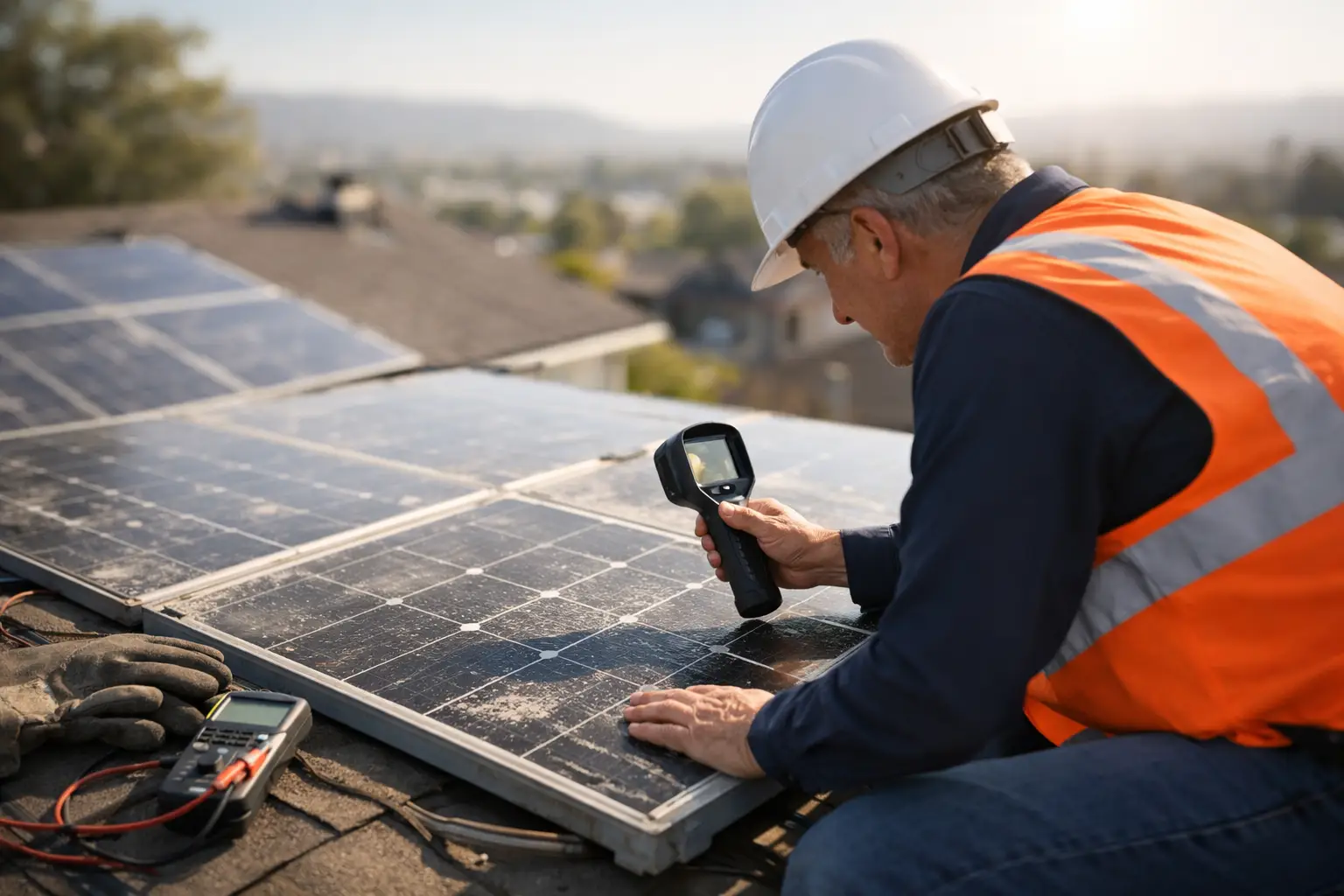
A solar system can look fine from the ground and still be losing money on the roof. That is usually the problem with an older solar system inspection – the issues that matter most are often the ones you cannot see until output drops, a component fails, or a compliance test is due.
Older rooftop systems do not suddenly stop working all at once. More often, they fade. A connector starts running hot, an isolator begins to deteriorate, moisture gets where it should not, or an inverter keeps operating but no longer performs the way it did when the system was new. If your system has been on the roof for years, a proper inspection is less about curiosity and more about protecting the return on the investment you already made.
Why an older solar system inspection matters
Age changes the risk profile of a solar installation. Panels, wiring, isolators, mounting hardware and inverters all live outside in heat, cold, UV, wind and storms. Canberra conditions can be particularly hard on rooftop equipment, especially after hail, heavy rain and large temperature swings.
The key point is that older does not always mean bad. Plenty of systems continue to produce well after a decade. But older systems are more likely to have wear-related faults, early-generation components, outdated protection arrangements, or deferred maintenance. A system that was installed to the standards of the day may still need attention now, not because it was done poorly, but because parts age and standards evolve.
That is why inspection should not be treated as a box-ticking exercise. The goal is to find the difference between a system that is still doing its job safely and efficiently, and one that is quietly underperforming or carrying avoidable risk.
What a proper older solar system inspection should cover
A useful inspection goes beyond a quick look at the panels. It should assess the condition, safety and function of the complete system.
Panel condition and weather damage
Panels are usually the most visible part of the system, but visual appearance only tells part of the story. An inspection should check for cracked glass, impact damage, delamination, hot spots, discolouration and signs of water ingress. Hail damage is a major concern in the ACT. Some damage is obvious, while other faults only become clear when testing shows a string is not performing as expected.
Soiling and leaf build-up may also be relevant, but they are rarely the main issue on an older system. The bigger concern is whether the panels are still electrically sound and producing in line with the rest of the array.
Isolators, switches and enclosures
This is one of the most important areas on ageing systems. DC isolators and rooftop enclosures can deteriorate over time due to UV exposure, heat and moisture. Brittle plastic, failed seals, corrosion and signs of overheating should be treated seriously.
A damaged or poorly sealing isolator is not just a maintenance issue. It can become a safety issue. If an enclosure has allowed water in, the problem may extend to terminals and cabling inside, even if the outside looks acceptable at first glance.
Cabling and connectors
Cable condition matters more than most owners realise. Clips break, insulation degrades, conduits weather, and connectors can loosen or overheat. Cables that sag onto the roof or sit in water are worth attention. So are mismatched or poorly terminated connectors, which can create resistance and heat over time.
A good inspection checks that the cable routes are still protected, secured and in suitable condition for continued service.
Inverter performance and compliance testing
Inverters often become the weak point as systems age. They work hard every day, and electronic components do not last forever. An inverter can still be operating while carrying faults, showing irregular production, or nearing failure.
This is also where compliance comes into play. Some system owners receive notification that anti-islanding testing is required. In that case, inspection is not optional if you want to remain compliant with grid requirements. Even where mandatory testing has not been triggered, older inverters deserve close attention for fault codes, thermal stress, ventilation issues and shutdown behaviour.
Mounting system and roof interface
The panels may be generating power, but the mounting system still needs to be sound. An inspection should consider brackets, rails, clamps and visible corrosion. Loose hardware, movement, degraded roof penetrations or signs of water entry around mounting points can create expensive building issues if ignored.
This part of the inspection is especially relevant after severe weather or where the roof itself has aged since the system was installed.
The common faults found on older systems
Most older systems do not need full replacement. They need targeted maintenance. That is an important distinction, because many faults are repairable if they are found early enough.
Common findings include failed or weathered isolators, inverter faults, damaged panel backsheets, degraded cable ties and cable support, connector issues, string imbalance, water ingress, and storm-related panel damage. Sometimes the system is electrically safe but no longer producing what it should. Other times the performance looks acceptable, but the inspection reveals a component that should be replaced before it becomes a larger problem.
There is also the issue of partial failure. One string can drop off, one MPPT can misbehave, or one section of the array can be compromised without the owner noticing straight away. Unless you are actively tracking detailed performance data, those losses can continue for months.
When should you book an older solar system inspection?
There is no single rule that fits every site, but there are clear situations where inspection makes sense. If your system is more than several years old and has never had a proper health check, that is reason enough. If your inverter has started showing faults, if production seems down, or if your electricity bills have crept up without a clear reason, an inspection is a sensible next step.
Storms are another trigger. Hail and water exposure can affect panels, isolators and rooftop components even when there is no obvious breakage from ground level. If you are buying or selling a property with existing solar, inspection can also remove guesswork.
And if you have received an anti-islanding testing notice, timing matters. Compliance deadlines are easier to manage when testing and any follow-up repairs are organised before the due date becomes urgent.
What you should expect from the inspection report
The value of an inspection is not just in the test itself. It is in getting clear, usable information afterwards. A good report should tell you what condition the system is in, what defects were found, whether any issues affect safety or compliance, and what should be repaired now versus monitored over time.
This is where practical advice matters. Not every system fault needs an immediate major spend. Sometimes the right approach is to replace a failed component and keep the rest of the system in service. Sometimes multiple age-related issues make a broader upgrade more cost-effective. It depends on the condition of the equipment, the age of the inverter, parts availability and the value of preserving the existing system.
For most owners, the best outcome is clarity. You want to know whether the system is safe, whether it is compliant, whether it is earning properly, and what the next sensible step is.
Why specialist solar aftercare matters
New solar sales and older solar service are not the same job. An ageing system needs someone who is used to fault finding, testing and practical repair planning. That means understanding not just how the system should work in theory, but how real systems fail after years on a roof.
That is why electrician-led inspection is important. It brings a compliance mindset, a safety focus and the ability to identify issues that can affect both performance and risk. For owners in the ACT, that is particularly useful when systems are subject to required inverter testing or have been exposed to severe weather.
A business focused on post-installation care, such as Solar Testing and Maintenance, approaches the job differently from a company that mainly sells new systems. The priority is to assess what is there, test it properly, and give you a realistic path forward.
An older solar system does not need blind optimism or scare tactics. It needs a proper inspection, clear findings and honest advice about what is worth fixing. If your system has been on the roof long enough to raise questions, that is usually the right time to stop guessing and get it checked.
Leave a Reply