


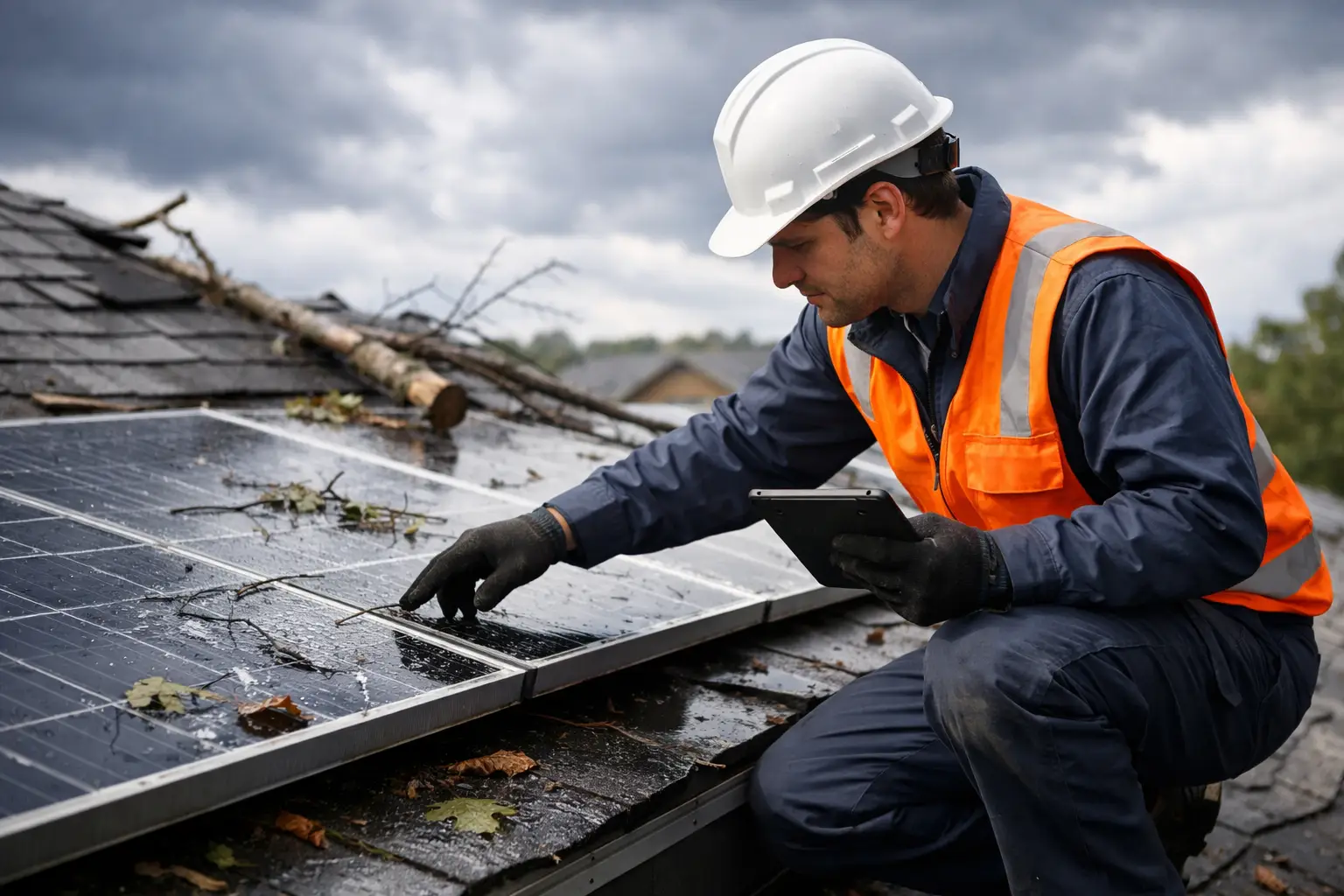
A storm can pass in twenty minutes and leave your solar system underperforming for months. If you have had hail, heavy rain, strong wind or a nearby lightning event, a solar inspection after storm damage is not just about spotting broken panels. It is about checking whether the system is still safe, compliant and producing what it should.
For most owners, the real problem is not obvious damage. It is the fault you cannot see from the ground – moisture getting into an isolator, a cracked panel backsheet, a loosened connector, or an inverter that looks normal but has started throwing intermittent errors. Left alone, those issues can reduce output, create safety risks and turn a repairable problem into a more expensive one.
Why a solar inspection after storm matters
Storm damage does not always mean shattered glass. In many cases, the system keeps running, just not properly. A panel with microcracks may still generate power, but less efficiently. Water ingress may not trip the system straight away. Wind can shift mounting components or strain cabling without anything looking dramatically wrong from the street.
That is why post-storm inspection needs to be more than a quick visual glance. The goal is to confirm three things: the array is physically sound, the electrical components are safe, and the system is still performing as expected.
For Canberra and ACT solar owners, this matters for practical reasons. Weather exposure, ageing rooftop components and insurance requirements all come into play. If you wait until your next power bill or your inverter finally shuts down, you may miss the best window to document damage properly and limit lost generation.
What storms commonly damage on a solar system
Hail gets the most attention, but it is only one part of the picture. Different storm conditions affect different parts of the system.
Hail impact on panels
Hail can crack front glass, mark panel frames and damage cells beneath the surface. Some impact damage is obvious. Some is not. A panel may look intact from ground level but have internal cell damage that reduces output over time.
Heavy rain and water ingress
Rain can expose weaknesses in isolators, junction boxes, conduit entries and roof penetrations. If seals have aged or components were already deteriorating, a major rain event can push moisture into places it should never reach.
Wind loading and movement
Strong wind can stress mounting rails, clamps and panel frames. It can also shift cabling, loosen fixings or create ongoing vibration issues. Even if nothing has blown off the roof, movement can still affect system integrity.
Lightning and electrical disturbance
A nearby strike can affect inverters, monitoring equipment and protective devices. The system may restart afterwards, but hidden damage can remain. That is particularly relevant where faults become intermittent rather than immediate.
What you can check safely from the ground
There is a sensible first step for owners, and it does not involve climbing onto the roof. Start with a visual check from the ground and a look at your inverter or monitoring app.
If you can see obvious broken glass, detached panels, hanging cable, scorch marks or roof debris around the array, keep clear and arrange professional inspection. If your inverter is displaying faults, repeatedly restarting, or showing lower-than-usual generation on clear days after the storm, that also points to a system check.
It is also worth noting any unusual sounds or smells near the inverter or switchgear. A burnt smell, buzzing, water staining or condensation around electrical components should not be ignored.
What you should not do is open isolators, remove covers, hose debris off the system, or get onto the roof to inspect panels up close. Storm-damaged solar equipment can present electric shock risks, especially where water is involved.
What a proper inspection should include
A useful inspection is not just someone looking at the roof and saying it seems fine. It needs to combine visual assessment with electrical testing and performance checks.
Visual condition and storm damage review
This includes checking panel surfaces, frames, mounting hardware, cable routing, isolators, conduit, roof penetrations and obvious signs of impact or water entry. On older systems, the inspection should also account for age-related wear that may have been made worse by the storm.
Inverter and system diagnostics
An inverter can tell you a lot if you know what to look for. Error history, shutdown events, insulation faults, arc faults and irregular operating patterns can help identify whether the storm has affected performance or safety.
Electrical safety testing
This is where specialist post-installation solar care matters. Testing should confirm that insulation resistance, polarity, continuity and protective components are all within acceptable limits. If the system is due for anti-islanding inverter testing or compliance checks, that should be considered at the same time.
Performance assessment
If there has been a noticeable drop in output, the inspection should not stop at finding visible damage. A proper assessment compares expected performance against actual production and looks for panel mismatch, string issues or partial failure.
When to book an inspection straight away
Sometimes the answer is simple – book it now. If the storm involved hail, flooding rain, severe wind, lightning nearby, a power surge, or visible roof impact, there is a strong case for immediate inspection.
The same applies if your system is older, has not been professionally checked in years, or was already showing signs of reduced output before the storm. Weather often exposes pre-existing weakness rather than creating a brand-new issue.
Insurance is another practical reason not to delay. If you may need to make a claim, early inspection helps document the condition of the system before faults worsen or evidence is lost.
Why hidden faults cost more than visible ones
A smashed panel gets attention because it is obvious. The more expensive issue is often the hidden one that quietly drags the system down.
A single damaged panel can affect string performance. A wet isolator can become a safety issue later rather than immediately. A connector problem can create heat and intermittent faults that are hard to trace once the system starts behaving inconsistently. Inverter stress after a storm may shorten service life even if it keeps operating in the short term.
From a financial point of view, every week of underperformance matters. Solar is an investment, and storm damage is not only about replacement cost. It is also about lost generation, reduced savings and preventable wear on the rest of the system.
Choosing the right type of service
Not every solar contractor is set up for post-storm fault finding. If the system may have electrical damage, compliance issues or inverter-related faults, you need more than a sales-driven inspection.
Look for electrician-led testing, clear reporting and a service that deals with existing systems rather than just new installs. That matters when the job involves isolator checks, diagnostic work, anti-islanding requirements, and deciding whether a repair is necessary now or can be planned properly.
There is also a trade-off between speed and depth. A fast visual assessment may be enough to identify obvious insurance damage, but it may not tell you why output has fallen. A more thorough inspection takes longer, but it gives you a clearer basis for repair decisions.
What to have ready before the technician arrives
If you do book a post-storm inspection, a few details will help move things along. Note the date of the storm, what type of weather occurred, any inverter fault messages, and whether generation changed noticeably afterwards. If you have monitoring data, keep that available.
Photos from the ground can also help, especially if there was visible debris, impact or roof movement. If you have previous service records or have received notice for inverter compliance testing, mention that as well. Sometimes one visit can address multiple needs.
For ACT homeowners, this practical approach often saves time. It allows the technician to focus quickly on likely fault areas instead of starting blind.
After the inspection, what comes next
A good inspection should leave you with a clear outcome. That may be confirmation that the system is safe and operating normally. It may be a repair plan with priorities, such as replacing damaged isolators, testing suspect strings further, or dealing with panel damage under insurance.
What you want to avoid is vague advice. If a component is deteriorated, you should know whether it is an urgent safety issue, a performance issue, or something to monitor. If the system has passed key checks, that should be stated clearly too.
At Solar Testing and Maintenance, that practical, electrician-led approach is the point. Owners do not need theory after a storm. They need to know whether the system is safe, whether it is still earning properly, and what should happen next.
If your solar has been through rough weather and something feels off, trust that instinct. A timely inspection is often the cheapest part of fixing a storm problem well.
Leave a Reply