

A solar system can look perfectly normal from the ground while losing production every day. Canberra solar fault inspections are designed to find the faults that monitoring apps, clean-looking panels and a working inverter display can miss – before a small issue becomes a costly repair, safety concern or compliance problem.
For most property owners, the question is not whether solar panels are producing some power. It is whether the whole system is producing what it should, operating safely and remaining suitable for connection to the grid. That requires a proper inspection by a licensed electrician with experience in solar fault finding, not a quick visual check.
What a solar fault inspection actually checks
A fault inspection looks at the condition and operation of the complete solar installation. Panels are only one part of the system. Power also travels through rooftop cabling, isolators, connectors, mounting equipment, the inverter and the switchboard before it is used in your property or exported to the grid.
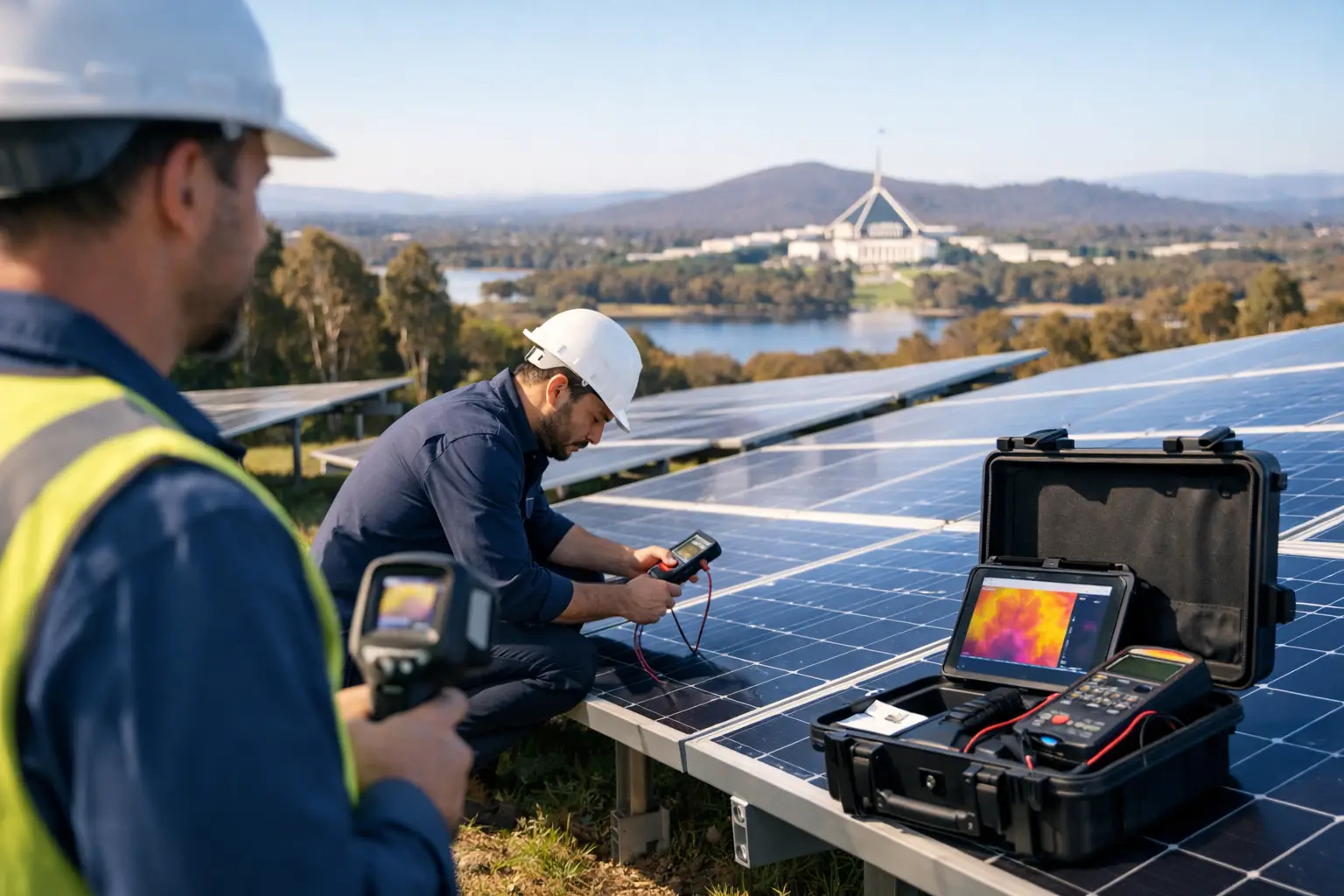
An electrician-led inspection starts by assessing system performance and visible condition, then tests the electrical components that cannot be safely assessed from the ground. This can include inverter status and fault history, DC and AC isolators, cable routes, panel connections, earthing, safety labels and signs of water ingress or heat damage.
The purpose is to identify both active faults and developing problems. A burnt connector, for example, may not have stopped the system completely yet. But leaving it in service can reduce output, damage other equipment and create a serious electrical risk.
For systems subject to grid requirements, anti-islanding inverter testing may also be required. This verifies that the inverter disconnects correctly during a grid outage, preventing solar power from feeding back into the network while line workers may be carrying out repairs. Where notification is required, the testing process should be handled accurately and recorded properly.
Common faults found in Canberra solar systems
Canberra conditions can be hard on rooftop equipment. Strong sun, cold winters, summer storms, wind, hail and repeated temperature changes all place pressure on solar components over time. The fault itself may be simple, but locating its source often requires targeted testing.
Isolator and enclosure problems
DC isolators have been a common failure point in older installations, particularly where seals have deteriorated or moisture has entered the enclosure. Water ingress can lead to corrosion, arcing and heat damage. A cracked cover or discoloured isolator should not be ignored simply because the system is still generating.
AC isolators, switchboard connections and circuit protection also need checking. Loose terminations and overheating can develop gradually, especially as equipment ages. These are not faults to investigate yourself. Solar systems contain high-voltage DC components that can remain live whenever panels are exposed to daylight.
Damaged cables, connectors and panel connections
Solar cable should be securely supported and protected from sharp edges, UV exposure, pests and water paths. Over time, clips can fail, cables can sag or rub against roofing, and connections can loosen. Poorly matched or damaged connectors are another potential source of resistance and heat.
A fault in one string of panels may reduce production without making the entire system appear dead. Depending on the inverter and monitoring setup, an owner may see lower-than-expected output but receive no useful fault message. Inspection and electrical testing help narrow down whether the issue is with the panels, cabling, connections or inverter inputs.
Hail, storm and weather-related damage
After severe weather, panel damage is not always obvious. Hail can cause cracks, chips or micro-damage to the panel surface, while wind-driven rain can expose weaknesses in roof penetrations, conduits and enclosures. A panel may continue working after an impact but degrade over time.
If your system has been through a significant hailstorm, a formal condition assessment provides useful evidence for repair planning and, where relevant, insurance discussions. The same applies after roof works, tree damage or any event that may have disturbed solar cabling or mounting hardware.
Inverter faults and declining performance
Inverters work hard and do not last forever. Error codes, repeated shutdowns, unusual fan noise, discoloured casings and intermittent generation are all reasons to arrange an inspection. But a system can underperform even when the inverter screen says it is operating normally.
Production changes with season, cloud cover and household usage, so a single low-production day is not necessarily a fault. The concern is a sustained change from your system’s usual pattern, particularly if it cannot be explained by shading, weather or increased self-consumption. Comparing output data with the condition of the equipment gives a clearer answer than relying on an app alone.
When to arrange Canberra solar fault inspections
You do not need to wait for a complete shutdown. Early investigation usually gives more repair options and can limit damage to connected components.
Arrange an inspection if your inverter displays a persistent fault, production has dropped noticeably, the system trips a switch, or you see water in an isolator or visible damage to panels and cabling. It is also sensible after a major hail or wind event, before selling a property, following roof repairs, or when an older system has not been professionally checked for several years.
A notice about mandatory anti-islanding testing should be acted on promptly. This is not merely paperwork. It is a grid-safety test that confirms your inverter responds correctly if network supply is interrupted. Delaying required testing can create compliance issues and leave an important safety function unverified.
What happens during a fault inspection
A useful inspection should give you more than a verbal assurance that the panels look fine. The electrician should assess the installation safely, perform the relevant electrical and operational tests, and document faults or concerns in clear terms.
The scope depends on the age, size and symptoms of the system. A straightforward inverter test may be enough for a newer installation with a specific compliance requirement. A system with poor production, storm exposure or intermittent faults may need a fuller health check, including closer assessment of rooftop equipment and cabling.
At the end, you should understand three things: what is working properly, what needs attention now, and what should be monitored or planned for. If repairs are recommended, the advice should separate urgent electrical safety work from sensible preventative maintenance. Not every ageing component needs immediate replacement, but known faults should never be left vague.
The cost of leaving faults unchecked
The financial impact of a solar fault is often quieter than owners expect. A system may keep producing some power while losing a meaningful portion of its output over months. That means higher grid purchases and a slower return from the investment already sitting on your roof.
There is also a difference between a repairable fault and a fault that has been allowed to spread. Moisture in an enclosure can affect terminals and isolators. A heat-damaged connector can compromise nearby cable. An inverter that repeatedly disconnects may be signalling a supply, wiring or internal equipment issue that needs a proper diagnosis.
Regular inspection is not about replacing equipment for the sake of it. It is about making informed decisions while the repair is still manageable. For older systems especially, targeted maintenance can be a practical way to extend service life and avoid unnecessary loss of generation.
Choosing the right solar fault specialist
For fault inspections, electrical qualifications and solar-specific experience matter. The person assessing your system needs to understand how rooftop DC circuits, inverters, protection devices and grid connection requirements work together. A general roof inspection or a panel clean cannot verify electrical safety or inverter compliance.
Look for clear scope, fixed and transparent pricing where possible, and written findings that explain the issue without unnecessary jargon. The best outcome is not a long list of alarming possibilities. It is a clear diagnosis, evidence-based repair plan and confidence that the work has been completed to the appropriate standard.
Solar Testing and Maintenance focuses on post-installation solar care: inspection, compliance testing, fault finding and practical repair planning for existing systems. That approach keeps the focus where it belongs – on protecting the system you already own.
If your production has changed, your inverter is showing faults, or your system has been exposed to severe weather, booking an inspection now can turn uncertainty into a clear, safe plan of action.
Leave a Reply