


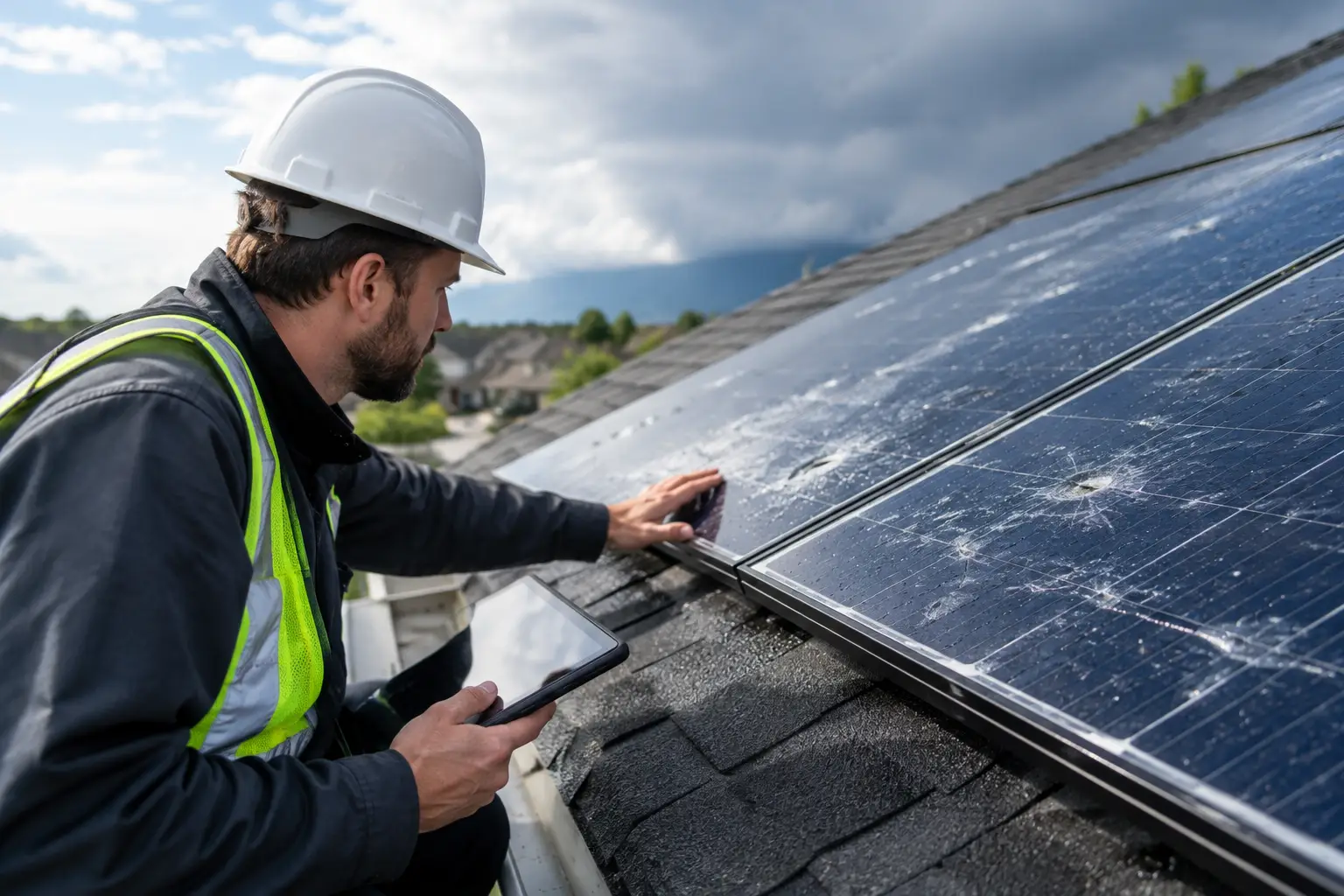
A storm can leave a roof looking largely untouched while a solar system has sustained damage that reduces generation, creates a safety risk or worsens with the next period of rain. A professional roof solar damage assessment checks more than the visible face of the panels. It looks for the faults that are easy to miss from ground level, including cracked glass, water ingress, damaged cabling, loose mounting hardware and inverter issues.
For Canberra and ACT solar owners, this is especially relevant after hail, high winds, heavy rain or a branch strike. Acting early gives you a clearer picture of the system’s condition, supports an insurance claim where required and helps prevent a small fault becoming a costly repair.
When a roof solar damage assessment is needed
Hail is the obvious trigger, but it is not the only one. Solar panels are built to withstand normal weather exposure, yet their performance depends on every part of the installation remaining sound: panels, frames, roof penetrations, mounting rails, DC isolators, cables and inverter equipment.
Arrange an assessment promptly if your system has been through a significant weather event, particularly if there are roof leaks or a sudden drop in solar production. You should also organise an inspection when the inverter displays a fault code, repeatedly disconnects, or shows markedly different output from its usual pattern in similar weather.
Other warning signs include:
- visible cracks, chips, discolouration or shattered glass on a panel
- loose panels, shifted clamps or debris caught beneath the array
- water staining in the ceiling space or around roof penetrations
- damaged conduits, exposed cables, corrosion or a burnt smell near electrical equipment
Do not climb onto the roof to inspect a solar system yourself. Damaged modules and wet roof surfaces can be hazardous, and the electrical side of a solar installation needs to be assessed by a suitably qualified professional.
What damage can hide in a working solar system?
A system can still generate electricity after a storm and still be damaged. That is why a quick look at the inverter screen is not enough to rule out a problem.
Panel damage and microcracks
Severe hail can crack panel glass, but smaller impacts may cause cell-level damage that is difficult to see from the ground. Microcracks can interrupt electrical pathways inside the module. The panel may continue producing power, although at a reduced level, and the damage can deteriorate through heat cycles and moisture exposure.
Discolouration, hot spots and reduced string performance may point to an affected panel. Whether replacement is necessary depends on the extent of damage, the panel’s output, electrical test results and the age of the array. Replacing one module is not always straightforward where older models are no longer available or electrical characteristics do not match the existing string.
Water ingress and roof issues
Solar panels do not usually cause roof leaks when installed correctly, but storm damage, ageing seals, shifted hardware or damaged flashing can allow water into the roof space. Water can also affect rooftop isolators, junction boxes and cable connections.
This needs prompt attention. Moisture and DC electrical equipment are a poor combination, and water ingress can create corrosion that continues after the roof has dried. An assessment should consider both the solar installation and the roof areas around penetrations and cable runs, rather than treating them as separate problems.
Mounting, cabling and isolator faults
Strong wind can place extra load on rails, clamps and roof fixings. A panel that has moved slightly may not be obvious, but loose mounting components can compromise the array over time. Branches and airborne debris may also damage conduits or pinch cables beneath the panels.
DC isolators deserve close attention on older systems. UV exposure, heat, weathering and water can affect their enclosures and connections. A damaged or deteriorated isolator is not simply an output issue. It can be a safety issue that requires electrician-led repair planning.
Inverter and grid connection problems
A storm-related outage, surge or water exposure can affect inverter operation. Some faults are intermittent, occurring only when the system is under load or attempting to reconnect to the grid. Checking inverter history, production data and error messages helps identify patterns that a single live reading may miss.
Where appropriate, testing may also include the system’s anti-islanding operation. This confirms the inverter disconnects as required during a grid outage, helping protect network workers and maintain grid compliance. Anti-islanding testing is not a substitute for physical damage inspection, but it is a valuable part of a broader system health check when required.
What a proper solar damage inspection should cover
The right scope depends on the event and the system’s age. A light hailstorm with no production change may call for a targeted visual and electrical inspection. A major storm, roof leak or clear production loss usually warrants a more detailed check.
A practical assessment begins with the customer’s account of what happened, when production changed and whether the inverter has shown any messages. Pre-storm and post-storm generation figures can be useful, but they must be read carefully. Cloud cover, seasonal sun angle, dirt and household export limits can all affect output.
The site inspection should then examine visible module condition, mounting hardware, roof interfaces, cable pathways, isolators and inverter equipment. Electrical testing helps establish whether strings are operating as expected and whether there are indications of connection, insulation or performance faults. The exact tests used should suit the installation and be completed safely.
A clear report matters as much as the inspection itself. It should distinguish between confirmed damage, likely concerns that need monitoring and items unrelated to the storm. You need practical next steps, not vague advice to “keep an eye on it”. That may mean a repair quote, replacement planning, roof work by the appropriate trade, further diagnostics or confirmation that the system is safe to remain in service.
Protecting an insurance claim without delaying repairs
If you believe weather has damaged your solar system, take photographs from a safe location before debris is removed or repairs begin. Capture the panels where possible, the inverter display, visible roof damage and any water staining. Keep screenshots of production data and make a note of the date and time of the weather event.
Insurers have different policies and evidence requirements. Some may request a report from a qualified solar professional; others may arrange their own assessor. A technical inspection can document the condition of the system and separate weather damage from pre-existing wear, but it does not guarantee claim approval.
Avoid authorising major work until you understand your insurer’s process, unless urgent safety work is needed. If electrical equipment is damaged, wet, exposed or showing signs of overheating, the priority is making the system safe. An electrician may need to isolate affected equipment before an insurer has finalised the claim.
What to do after a storm
Start by checking the inverter from a safe, dry location. Note any fault code, warning light or unusual production reading, but do not remove covers or operate rooftop isolators if there is visible damage or water exposure. If there is a burning smell, damaged wiring, fallen panels or an electrical hazard, keep clear and arrange urgent qualified assistance.
For less obvious concerns, book a professional assessment rather than waiting for the next bill to reveal a loss of generation. Solar systems often fail gradually. A few underperforming panels, a corroding connection or recurring inverter trip can quietly reduce the return from an otherwise good installation.
Solar Testing and Maintenance provides electrician-led inspections, diagnostics and testing for existing systems, with clear findings and repair recommendations. The aim is not to sell a replacement system when a targeted repair will do. It is to establish what condition your solar system is in, what must be addressed now and what can be planned sensibly.
A timely assessment protects more than the panels on your roof. It protects the safety, compliance and long-term return of the system you have already paid for.
Leave a Reply