

A solar system can still look normal from the ground while an inverter protection setting, weather-damaged isolator or ageing connection is putting production and safety at risk. Solar inverter testing Canberra property owners arrange is not a sales inspection. It is a practical check of whether the inverter and associated equipment are operating as they should, including the safety functions that matter when your system is connected to the grid.
For many owners, testing is prompted by an Evoenergy notification for anti-islanding verification. Others book after a drop in generation, a storm, a fault code, or simply because the system has been on the roof for years without a proper health check. In each case, the aim is the same: identify issues early, confirm compliance where required and give you clear advice on any repairs or maintenance.
What solar inverter testing actually checks
The inverter is the working centre of a rooftop solar system. It converts the DC power produced by panels into AC power your home can use and the grid can accept. It also continuously monitors grid conditions and must respond correctly if there is an abnormal event or a loss of supply.
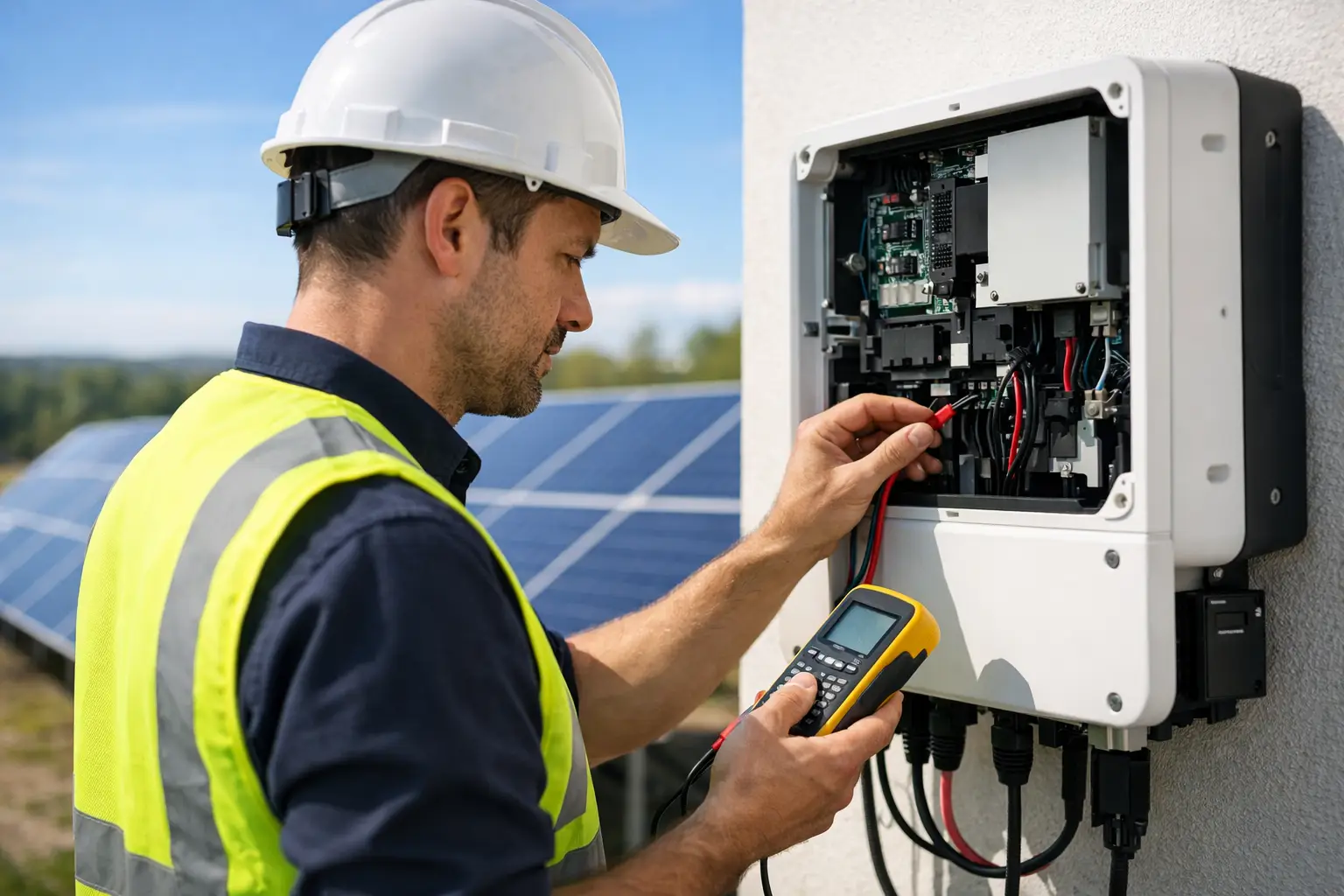
A professional test goes beyond confirming that the inverter screen is on or that an app shows production. The work typically includes visual inspection of accessible components, inverter operational checks, review of fault history where available, checks of AC and DC isolators, cabling and connections, and testing relevant safety functions.
The exact scope depends on the age, layout and condition of the system. A straightforward single-inverter system needs a different approach from a property with several inverters, battery equipment, older rooftop isolators or signs of water ingress. A qualified electrician should explain what has been checked and record any faults, risks or recommended next steps in plain language.
Anti-islanding testing and why it matters
Anti-islanding protection is one of the most important inverter safety functions. If the electricity grid loses power, a grid-connected solar inverter must stop exporting electricity within the required conditions. This prevents the solar system from creating an isolated, energised section of network known as an island.
That matters for the safety of network workers, emergency crews and anyone dealing with electrical equipment during an outage. It also protects the integrity of the network when normal grid supply is interrupted.
Anti-islanding testing verifies that the inverter responds appropriately to a simulated loss or change in grid conditions. It is not a guess based on the inverter model, nor is it the same as viewing production data on a mobile app. The test needs to be performed correctly, using suitable equipment and procedures, by a licensed professional familiar with solar compliance requirements.
Where notification to Evoenergy is required, automated notification can remove a common administrative headache for the system owner. You should still retain your test records and report. They provide a useful baseline for later maintenance and can be relevant if a fault, insurance matter or system change arises.
When to book solar inverter testing in Canberra
A notice requiring anti-islanding testing is a clear reason to act. There are also several situations where a system health check is sensible, even if no notice has arrived.
If your inverter has displayed repeated warnings, shut down during fine weather, or shows noticeably lower output than expected, testing can narrow down the cause. Lower generation is not always an inverter problem. It may relate to panel soiling, shading, failed optimisers, degraded panels, loose connections or a network issue. Proper diagnostics prevent money being spent on the wrong repair.
Storms deserve attention as well. Canberra conditions can expose rooftop solar to hail, wind-driven rain, temperature swings and UV over many years. Hail damage may be obvious, but fine cracking can be harder to spot. Water can enter poorly sealed cable entries or enclosures, while brittle conduit, damaged cabling and deteriorated rooftop isolators can develop gradually.
Older systems should not be left until they fail completely. Components age at different rates, and a system that has produced well for a decade may still need targeted maintenance to stay safe and financially worthwhile. Regular checks are usually less disruptive and less costly than dealing with an unexpected shutdown or a larger repair after damage has progressed.
What a useful system health check should include
A good inspection starts with the parts of the system most likely to affect safety and generation. The electrician should assess the inverter condition, mounting and ventilation, look for signs of overheating or corrosion, and inspect accessible wiring, isolators, conduits and electrical connections.
At the roof level, the condition of panels, mounting hardware and cabling should be considered where access and safety allow. Common concerns include cracked glass, delamination, damaged junction boxes, loose clips, exposed cable, animal damage and water ingress. The inspection also looks for issues that may not have stopped production yet but could create a fault later.
Electrical test results help distinguish between a minor maintenance item and a fault that needs repair planning. Depending on the system and service scope, this may include measurements and verification relevant to insulation, polarity, voltage, inverter operation and protective functions. The key is that the findings lead to an understandable outcome: the system is operating satisfactorily, it needs monitoring, or it needs specific corrective work.
A written report should not bury the owner in technical jargon. It should identify what was tested, what was found, whether the anti-islanding requirement was met where applicable, and what should be repaired or maintained first. Photographs of visible defects are particularly helpful when roof-level work is involved.
Testing is not the same as a cleaning visit
Panel cleaning can have a place where dirt is genuinely reducing output, but it does not test electrical safety or inverter protection. Equally, an inverter test does not automatically solve every low-generation issue. The right service is based on the symptoms, system age and any compliance requirement.
For example, a system with clean panels but regular inverter faults needs diagnostics, not a wash. A system that passed anti-islanding testing but has damaged DC cabling still needs repair work. Treating solar maintenance as a sequence of evidence-based checks is how owners avoid quick fixes that leave the underlying issue unresolved.
What happens if a fault is found
Not every finding requires urgent replacement. Some issues can be monitored, while others need timely attention to prevent an electrical hazard, water damage or further loss of generation. The priority should be based on risk, compliance and likely impact on your solar return.
A clear repair plan separates immediate safety concerns from recommended maintenance. If an inverter is nearing the end of its service life, replacement may be the sensible option, but only after the fault has been properly diagnosed. If the issue is a failed isolator, damaged cable, poor connection or water ingress, the repair may be more targeted.
Be cautious of anyone who jumps from a brief visual check straight to a full system replacement. Equally, do not ignore recurring faults because the system restarts on its own. Intermittent problems can become permanent failures, and electrical defects do not improve with time.
Preparing for your appointment
Make sure the electrician can access the inverter, switchboard and any relevant monitoring details. If you have received a network notice, keep it available. It is also useful to note recent fault messages, unusual shutdown times, changes in production, storm events and any work previously completed on the solar system.
You do not need to diagnose the problem before the visit. That is the purpose of the inspection. Providing a short history simply helps the electrician focus testing where it is most likely to produce an answer.
For Canberra homeowners, solar inverter testing is a practical way to protect an asset that should be reducing power bills year after year. Solar Testing and Maintenance provides electrician-led testing and health checks with clear findings, so you can make a repair decision based on the condition of your system rather than assumptions. A well-maintained solar system is easier to trust when the next hot day, storm or grid interruption arrives.
Leave a Reply