


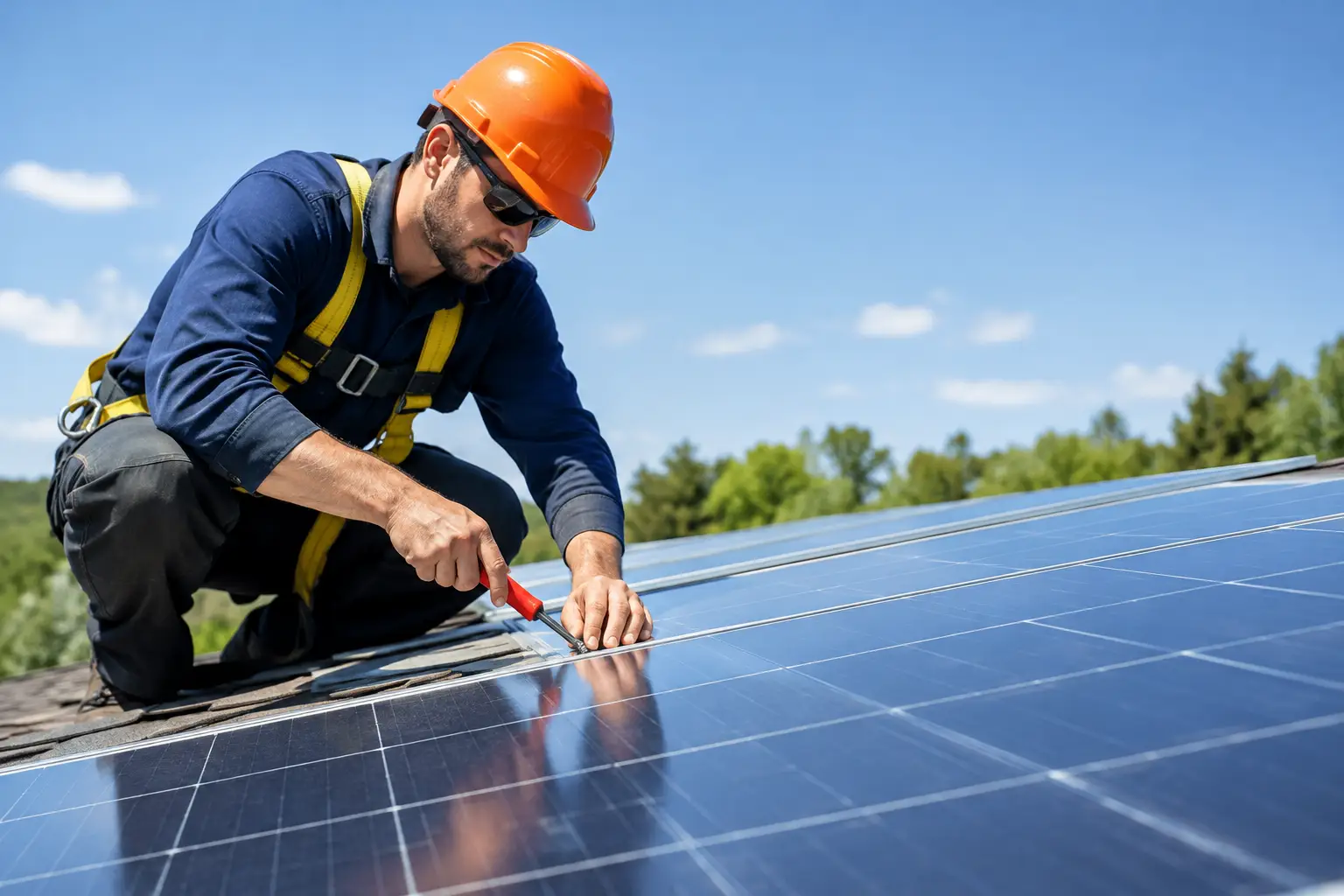
A solar system can look perfectly normal from the ground while producing far less electricity than it should. When a fault is found, repair replacement costs are often the first concern – and understandably so. The useful question is not simply, “What will it cost to replace this part?” It is whether the proposed work restores safe, compliant generation and prevents a smaller fault from becoming a much larger expense.
For ACT solar owners, the cost of repair depends on the component involved, how accessible it is, the age and condition of the system, and whether the fault has caused related damage. A proper inspection and diagnosis should identify the cause before parts are ordered. Replacing the visible failed component without finding the underlying issue can lead to repeat call-outs, lost generation and avoidable cost.
What affects solar repair replacement costs?
Solar systems are made up of panels, inverters, isolators, cabling, mounting hardware, monitoring equipment and protective devices. A problem in any one area can affect production, safety or grid compliance. The replacement cost therefore varies widely between a straightforward component change and a fault that requires tracing, access work and recommissioning.
The main cost factors are the component itself, labour required to diagnose and install it, site access, system size, and any compliance testing needed after the repair. A single inverter system on a single-storey home is generally simpler to assess than a multi-inverter installation, a system on a steep roof, or one with difficult cable routes.
Part availability also matters. Older systems may use discontinued inverter models, outdated isolators or components that no longer meet current requirements. In these cases, a direct like-for-like replacement may not be possible or may not be the best financial decision. An electrician should explain whether repair, replacement or a targeted system upgrade represents the sensible option.
Diagnosis comes before replacement
Low output does not automatically mean failed panels. It may be caused by inverter errors, a tripped protective device, water ingress, damaged DC cabling, failed optimisers, shading changes, degraded connections or a monitoring issue that makes a working system appear offline.
This is why fault finding is a valuable part of the process. Testing the system under the right conditions helps separate a genuine equipment failure from a communication fault or intermittent issue. It also helps establish whether one failed item has affected other components.
A clear diagnosis gives you a repair plan rather than a guess. It should outline what has failed, why it matters, what work is required, and whether there are any safety or compliance concerns that should be addressed at the same time.
Common repairs and how their costs differ
Inverter repair or replacement
The inverter is the working heart of a rooftop solar system. It converts DC electricity from the panels into usable AC electricity and manages the system’s connection to the grid. When an inverter fails, solar production may stop completely or operate intermittently.
Inverter replacement costs depend on capacity, phase type, brand compatibility, monitoring requirements and whether the replacement needs switchboard or cabling changes. If the inverter is still under manufacturer warranty, the part may be covered, but labour, freight, fault diagnosis and reinstalling equipment are not always included. Warranty terms should be checked before work begins.
A replacement inverter must also be correctly configured, tested and commissioned. For systems subject to anti-islanding requirements, testing is not an optional extra. It confirms the inverter disconnects correctly during a grid outage, protecting network workers and meeting connection obligations.
Isolators, breakers and cabling
DC isolators, AC isolators, circuit breakers and cabling are critical safety components. Heat, weather exposure, poor installation, UV damage and water ingress can all affect their condition over time. Faulty isolators may show signs such as discolouration, cracking, heat damage or unreliable operation, but problems are not always visible externally.
Replacement costs can increase where a damaged cable needs to be traced through roof spaces or conduit, or where multiple components have deteriorated together. It can be tempting to replace only the part that has failed, but an electrician may recommend addressing associated components if testing shows they are at risk. This is particularly relevant for older installations exposed to years of Canberra heat, frost, storms and hail.
Solar panel damage
Panels are durable, but they are not indestructible. Hail impact, cracked glass, failed junction boxes, damaged connectors and moisture entry can cause faults that reduce performance or create electrical risks. One visibly damaged panel may also affect the output of a whole string, depending on how the array is configured.
Panel replacement is not just the cost of a new panel. Matching the electrical characteristics of an older array, safely accessing the roof, removing the damaged module, checking connectors and confirming correct operation all form part of the work. If an identical panel is no longer available, a compatible alternative may be possible, but it needs to be assessed properly to avoid creating a mismatch that limits output.
Monitoring and communication faults
Sometimes the system is generating, but the app or monitoring portal has stopped reporting. This may be a Wi-Fi change, modem replacement, network settings issue, failed data logger or inverter communication fault. The repair can be relatively minor, but it still needs investigation.
Restoring monitoring is worthwhile because it provides early warning when production drops. Without it, an inverter or string fault can go unnoticed until the next electricity bill arrives.
When repair is better than replacement
Repair is usually the better option when the fault is isolated, the equipment is in sound condition overall, replacement parts are available, and the work will provide a sensible remaining service life. A loose connection, deteriorated isolator, failed breaker or communication problem may be resolved without major replacement work.
Replacement may make more sense where equipment is obsolete, repeatedly failing, damaged by water or heat, or no longer suitable for the system’s needs. For example, an ageing inverter near the end of its expected life may not justify repeated repair visits, particularly if a current replacement offers better monitoring and warranty support.
The lowest upfront quote is not always the lowest ownership cost. A cheaper repair that does not address the root cause can leave the system underperforming for months. Equally, replacing equipment too early is unnecessary if testing confirms the fault is minor and the system remains safe and compliant.
Why testing can reduce future costs
Scheduled system health checks can uncover faults before they become obvious. This includes checking inverter operation, isolators, cable condition, visible panel damage, fault history, generation performance and protective devices. Anti-islanding testing is especially important when notification has been received, as it confirms the inverter responds safely when grid supply is interrupted.
Early detection can prevent lost generation as well as repair expense. A system producing at half its normal output might not trigger immediate concern, yet the shortfall can add up over a summer or over several billing periods. Finding a poor connection or a failed string early protects the return you expected from the installation.
Testing also creates a clearer record of the system’s condition. This can assist when dealing with warranties, insurance claims after storm or hail damage, or future repair decisions. If water ingress or impact damage is identified, photographs and test results provide more useful evidence than a general report that the system is “not working”.
Questions to ask before approving solar repair work
Before accepting a repair quote, make sure you understand what has been tested and what is included. Ask whether the fault has been confirmed, whether the quoted part is new and suitable for your system, and whether labour, commissioning and compliance testing are included.
It is also sensible to ask if related components were inspected. If an inverter has failed due to water ingress, for example, the source of moisture needs attention. If a panel has been damaged by hail, the rest of the array should be checked for less obvious impact marks or electrical issues.
A good repair plan should not pressure you into replacing equipment without evidence. It should give you practical options, explain the risks of delaying work, and state whether the system can safely remain operational in the meantime.
For solar owners, the best way to manage repair replacement costs is to act on faults early, use electrician-led testing to confirm the cause, and make decisions based on the condition of the whole system. A well-targeted repair can restore generation quickly, while a well-justified replacement can protect safety, compliance and the value of your solar investment for years ahead.
Leave a Reply