


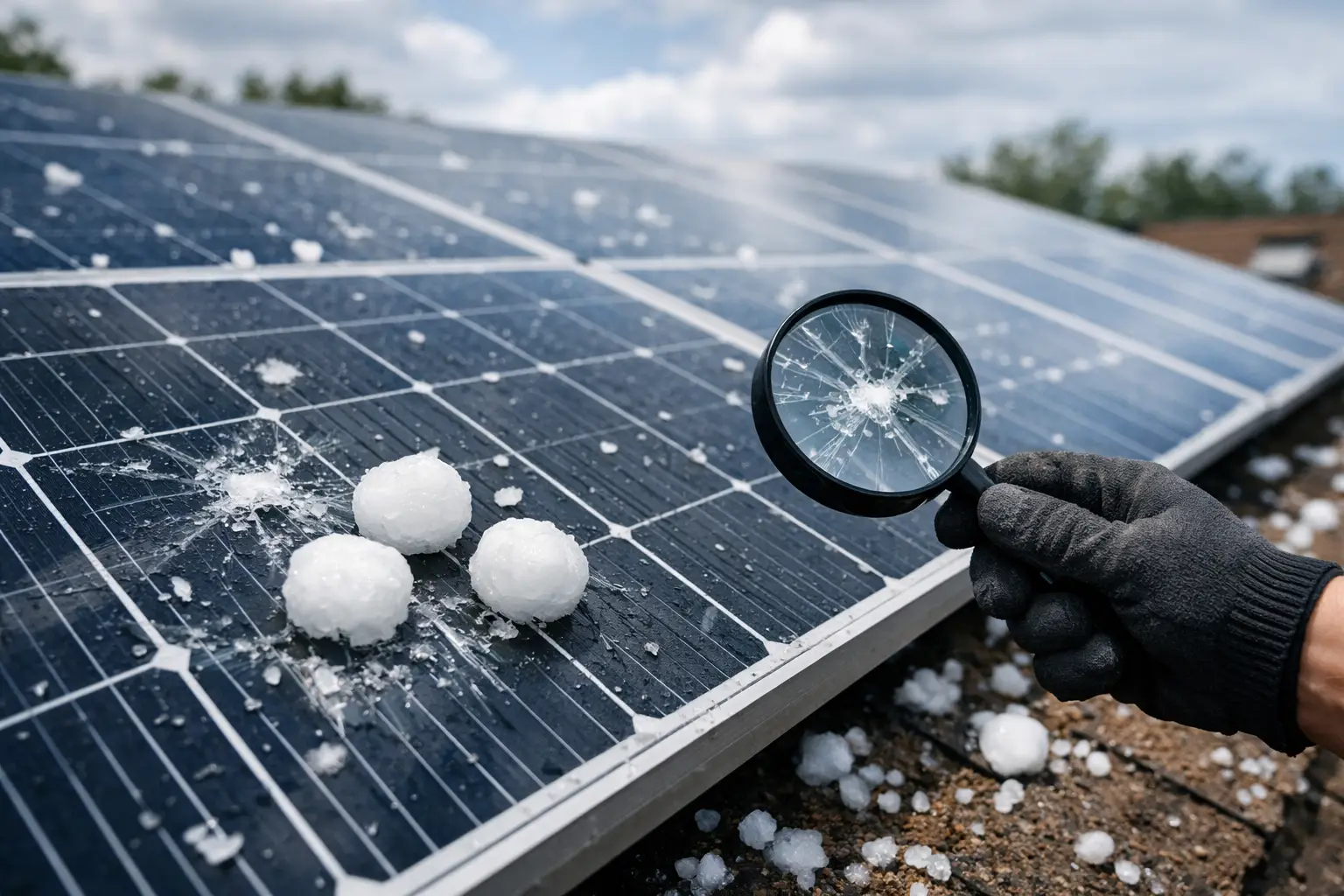
A storm can move through fast, and by the time the sky clears your solar system may look fine from the ground. That is the problem with hail damage solar panels – the obvious damage is only part of the story. A panel can keep producing power after a hail event and still have cracked cells, damaged glass, moisture risk or reduced output that shows up weeks later.
If your system has been through a severe hailstorm, the right response is not guesswork. It is a proper inspection and electrical test so you know whether the system is safe, compliant and still performing as it should.
How hail damages solar panels
Modern solar panels are built to handle weather, including a fair amount of impact. That does not mean they are hail-proof. Real storm conditions vary. Hail size, wind speed, impact angle, roof pitch and panel age all affect the result.
The most visible type of damage is shattered or chipped front glass. When that happens, the panel usually needs replacement. The less obvious cases are more common after moderate storms. Hail can create microcracks in the solar cells, stress the frame, damage seals around the laminate or loosen connectors and mounting hardware. From the ground, the array may still look normal.
That is where owners get caught out. A system that appears to be working can start losing production, develop insulation faults or let in moisture over time. In some cases, the issue is not the panel itself but nearby components such as isolators, cabling or rooftop junctions that also took a hit during the storm.
Signs of hail damage solar panels owners should watch for
After a storm, visible panel breakage is only one warning sign. A drop in generation, inverter fault messages, repeated shutdowns or unusual fluctuations in output can all point to storm-related damage.
You may also notice moisture under the glass, discolouration, new hot spots, or bent frames around the edges of modules. If your inverter reports string faults or low insulation resistance, that needs prompt attention. Sometimes there are no clear symptoms at all, especially if only one or two panels in a larger system are affected.
That is why a visual check from the yard is not enough. It tells you whether the damage is dramatic. It does not tell you whether the system remains electrically sound.
Why hidden damage matters
Solar owners usually ask the same practical question – if it is still producing power, do I really need to do anything? Often, yes.
A cracked cell may continue to generate, but not at its original level. Small losses across one section of the array can drag down the performance of a whole string. Moisture ingress is another concern. Once seals are compromised, water can slowly create corrosion, earth faults and intermittent shutdown issues that are harder and more expensive to sort out later.
There is also the safety side. Damaged panels or rooftop electrical components can increase the risk of insulation failure and arcing. That is not something to leave to chance, particularly on older systems where seals and plastics were already ageing before the storm arrived.
For investment-minded owners, the financial issue is straightforward. Undetected hail damage can reduce generation for months or years. If the system is underperforming and nobody tests it properly, you keep losing return without realising how much has been left on the table.
What a proper post-hail inspection should include
A worthwhile inspection goes beyond spotting broken glass. It should look at the system as a whole.
That starts with a close visual assessment of panels, frames, clamps, roof penetrations, isolators, cabling and connectors. The aim is to find impact points, frame distortion, cracked backsheets, loose components and signs of water entry.
After that, electrical testing matters. Depending on the system and the symptoms, this can include string voltage checks, insulation resistance testing, performance checks and inverter fault review. On systems due for compliance testing, anti-islanding requirements should also be considered so the owner is not paying for separate visits where one planned inspection could cover both needs.
Thermal inspection can also be useful in some cases. A hail-affected panel may develop localised heating from damaged cells or poor internal connections. That type of fault may not be obvious in ordinary daylight viewing.
The goal is simple – confirm whether the array is safe to keep operating, identify any damaged components and provide a clear repair path.
Can hail-damaged panels be repaired?
Sometimes, but not always. If the front glass is broken, replacement is generally the practical option. Panels are sealed units, and once the glass or laminate integrity is compromised, patch repairs are not a reliable long-term fix.
For less visible impact damage, the answer depends on what testing shows. A panel with measurable electrical problems, moisture risk or structural damage is usually better replaced than left in service. On the other hand, if testing confirms the panel and associated wiring remain sound, you may only need monitoring and a record of inspection for insurance or maintenance planning.
Balance matters here. Not every storm means a full array replacement, and not every panel with a small cosmetic mark is a write-off. But assuming everything is fine because the inverter is still on is just as unhelpful.
Insurance, documentation and timing
If you suspect storm damage, document it early. Take clear photos from a safe position, note the date of the hail event and keep any inverter error messages. That helps with both insurance claims and repair planning.
A professional report can be valuable where damage is not obvious but performance or safety concerns exist. Insurers often want more than a homeowner’s observation that the system is not working properly. Test results, defect notes and a practical recommendation carry more weight.
Timing also matters. Waiting too long can make it harder to separate hail damage from later deterioration. It can also allow moisture-related issues to worsen. If the storm was severe enough to raise concern, booking an inspection sooner is the sensible move.
Older systems need a closer look
Hail does not hit every solar system equally. Older arrays are more exposed to follow-on problems because age has already worked on seals, cable insulation, connectors and rooftop isolators.
In Canberra and across the ACT, many rooftop systems have now been operating for years and are due for closer maintenance attention anyway. A hail event is often the point where an underlying weakness becomes visible. The storm did not create every issue, but it may have accelerated one that was already there.
For that reason, post-storm checks are especially worthwhile on systems with ageing components, previous water ingress, known inverter faults or inconsistent generation history.
What to do after a hailstorm
Start with safety. Do not get on the roof yourself, and do not touch damaged solar components. If you can safely view the system from ground level, look for obvious breakage, displaced panels or any signs that parts of the array have shifted.
Then check your inverter for fault codes or unusual behaviour. If the system has clearly suffered major damage, shut-down advice should come from a qualified electrician or solar technician familiar with the system. The right next step is a professional inspection, not trial and error.
If your system already needs routine testing or inverter compliance work, combine that visit with a storm damage assessment where possible. It is an efficient way to get a complete picture of system condition rather than dealing with each issue in isolation.
The practical standard to aim for
After hail, the question is not just whether the panels survived. It is whether the whole system is still safe, electrically sound and financially worth trusting. That requires more than a quick look and a bit of hope.
For solar owners, the practical standard is clear enough: know what condition the system is in, know what needs repair, and have that advice backed by proper testing. That is the difference between carrying on with confidence and waiting for a hidden fault to become a bigger problem.
If your solar has been through a serious storm, treat it like the asset it is. A careful inspection now is usually far cheaper than months of lost generation or a preventable electrical fault later.
Leave a Reply