


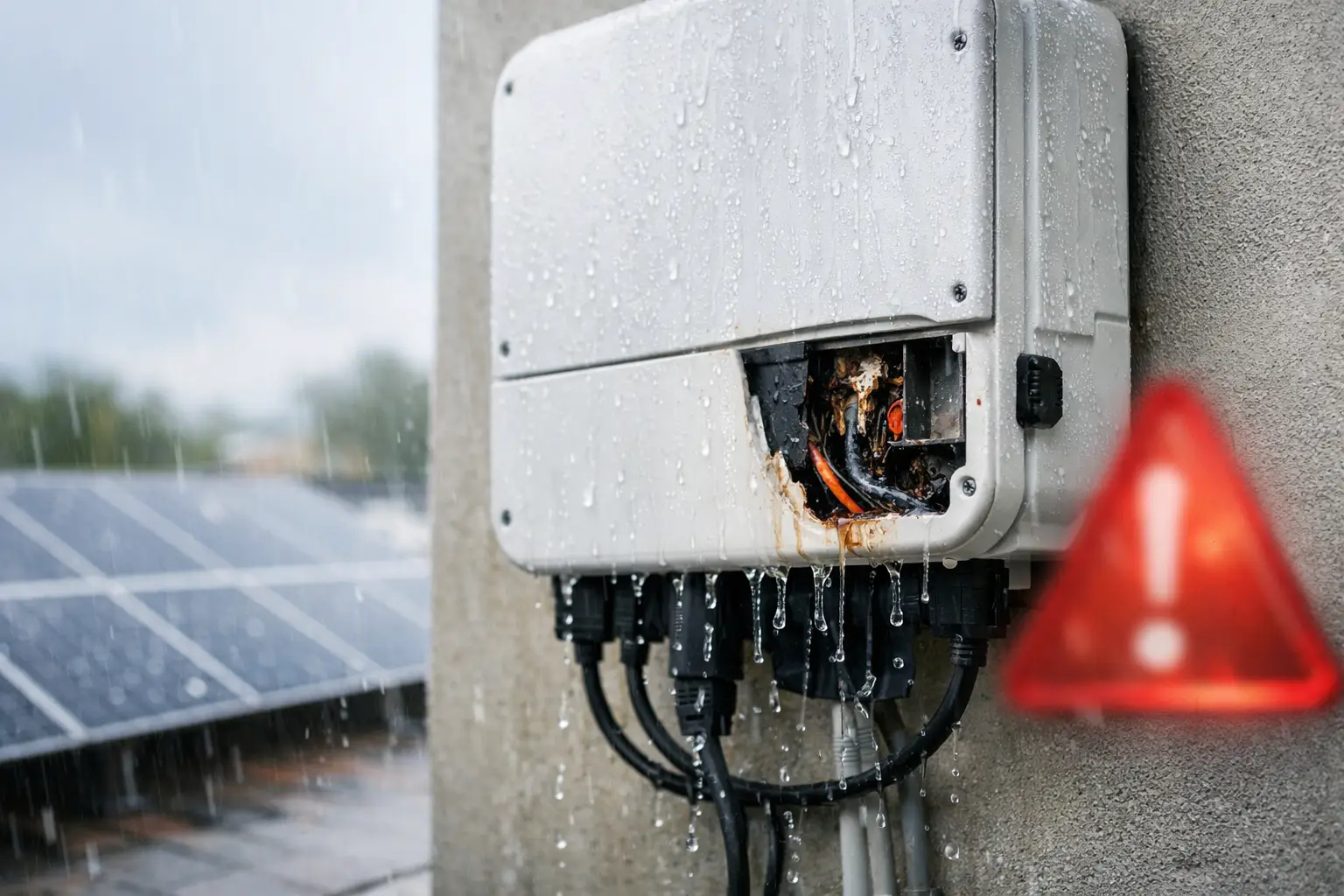
A solar system can look fine from the ground and still have a serious fault sitting inside the inverter. When a water ingress solar inverter issue develops, the damage is often hidden until production drops, faults start appearing, or the unit stops altogether. By that point, what began as moisture inside an enclosure can turn into corrosion, insulation breakdown, nuisance tripping, or a full inverter failure.
For solar owners, this is not just a technical problem. It affects safety, compliance and the return you expect from the system. If your inverter has been exposed to heavy rain, storm-driven water, ageing seals or poor installation detail, it is worth treating the issue early rather than waiting for a shutdown.
What water ingress does to a solar inverter
A solar inverter is designed to operate in outdoor conditions, but only within the limits of its enclosure rating and installation method. It is not meant to tolerate uncontrolled moisture getting past seals, cable entries, gland points or covers. Once water gets inside, it can settle on terminals, circuit boards, filters, relays and internal connections.
The damage does not always happen in one hit. Sometimes it starts with minor condensation, then develops into corrosion over months. In other cases, a storm event or failed seal allows direct water entry and the inverter trips immediately. Either way, moisture inside electrical equipment is bad news. It can create tracking across components, rust on metal parts, degraded insulation resistance and overheating at compromised connections.
That means a water ingress fault is rarely something to ignore and monitor casually. Even if the inverter starts up again, the internal condition may already be deteriorating.
Common signs of a water ingress solar inverter fault
The obvious sign is visible moisture inside the inverter screen window or enclosure, but many systems show less direct clues. Owners often notice reduced generation first, especially if only one MPPT or section of the inverter is affected. Fault codes, repeated restarts and unexplained shutdowns are also common.
You might also see staining around cable entries, brittle or lifted seals, rust on screws, discolouration near the bottom of the enclosure, or tripping after rain. A burnt smell, buzzing noise or intermittent communication loss can point to moisture damage as well. Not every one of these symptoms confirms water ingress, but they are enough to justify proper inspection and testing.
If your monitoring shows irregular production that seems weather-related in the wrong way – for example, the system underperforms after rain even when the panels are clean and conditions improve – the inverter deserves attention.
Problems that are easy to miss
Some of the most expensive inverter faults start quietly. A small amount of moisture can corrode terminals just enough to increase resistance without causing an immediate shutdown. The inverter may keep running, but with more heat at that connection point and a higher risk of eventual failure.
Older systems are especially vulnerable because plastics, gaskets and gland seals do not last forever under Australian sun and weather. A unit that has performed well for years can develop ingress simply because materials have aged.
Why water gets in
There is usually more than one contributing factor. Failed seals are a common cause, especially around covers and display sections. Poor cable gland installation is another. If cable entries are not tightened correctly, are mismatched to cable size, or are left unsupported, they can become easy points for water entry.
Mounting position matters as well. An inverter installed where it cops direct weather, roof runoff or repeated spray is under more stress than one mounted in a better protected location. Storm damage can create the problem suddenly, but gradual exposure is just as real. Cracked housings, UV-degraded plastics, missing blanks and previous repair work that was not properly resealed can all contribute.
There is also the installation quality factor. Even a good inverter with a decent IP rating can suffer if the original installation did not manage cable paths correctly. Water follows gravity, capillary action and the easiest opening available. If cables are routed in a way that allows water to track toward the enclosure, or if glands face exposure without proper sealing, the inverter can end up wearing the consequences.
Why DIY checks have limits
It is reasonable to look for obvious external issues from a safe position, especially after a storm. You can check whether the inverter shows fault lights, whether production has dropped, and whether there are visible signs of damage to the enclosure. Beyond that, caution matters.
Opening covers or attempting to dry out an inverter is not a simple maintenance task. Solar equipment can remain hazardous even when switched off, and moisture-related faults can affect isolation, earthing and insulation integrity. The real question is not just whether water got in, but what electrical damage it has already caused.
That is where proper fault finding becomes more valuable than guesswork. A visual check alone will not tell you whether terminals have corroded, whether insulation values are compromised, or whether the inverter remains safe to operate.
How a proper inspection should approach it
When investigating suspected water ingress, the goal is not only to confirm moisture but to assess the condition of the inverter and surrounding system. A useful inspection starts with external evidence, event history and fault behaviour. If the site has had hail, heavy rain, roof work or previous electrical repairs, that context matters.
From there, testing should focus on safety and function. That may include checking isolators and cable entries, inspecting the inverter enclosure and mount, reviewing fault logs, verifying output behaviour and assessing whether the fault is localised to the inverter or part of a broader system issue. Depending on the condition, the technician may also identify whether repair is realistic or whether replacement planning is the better financial choice.
This is where an electrician-led solar service makes a difference. Moisture faults are not just manufacturer warranty conversations. They are electrical safety issues, and they need a practical diagnosis rather than a vague assumption that the inverter has simply reached the end of its life.
Repair or replace – it depends on the damage
Not every water ingress case ends with immediate replacement, but many do. If moisture has only affected accessible entry points or external fittings and the inverter internals remain sound, targeted repair work may be possible. If corrosion has spread through boards, relays or power electronics, replacement is usually the safer and more economical path.
Age matters here. For an older inverter, spending heavily on a repair with uncertain longevity may not stack up financially. For a newer unit, especially one with isolated water entry and limited damage, a repair pathway may be worth considering. The right answer depends on test results, model support, parts availability and the broader condition of the solar system.
A good service outcome is a clear recommendation. You should know whether the inverter is safe, whether it can keep operating, what needs rectification, and what the likely costs and risks are if you delay.
Preventing water ingress in the future
Prevention is usually cheaper than recovering from a failed inverter. Regular inspection helps pick up ageing seals, loose glands, enclosure damage and weather exposure issues before they become a larger fault. This is particularly useful for systems that are several years old, systems mounted in exposed positions, or properties that have gone through major storms.
After severe weather, it is sensible to have the system checked if anything looks unusual. That includes low output, fault codes, isolator problems or visible wear around the inverter. Even if the unit is still operating, early intervention can prevent a partial fault from becoming a complete shutdown.
For some owners in the ACT, scheduled solar testing already makes practical sense because compliance requirements and ageing equipment tend to surface together. If the inverter is due for anti-islanding testing or a broader health check, that is a sensible time to assess for weather-related deterioration as well.
When to book testing
If your inverter has tripped after rain, shows signs of moisture, smells hot, produces erratic output or has visible enclosure damage, book an inspection sooner rather than later. The same applies if the system has been through hail or storm exposure and performance has changed since.
Waiting can cost more than the inspection. A small ingress problem can progress into board damage, connector failure or long-term corrosion that leaves fewer repair options. It can also mean more downtime and more lost generation while the issue worsens.
Solar owners usually want a simple answer: is the system safe, is it still worth running, and what needs to happen next? That is exactly how water ingress faults should be handled – with clear testing, practical recommendations and no guesswork.
Moisture inside an inverter is never a good sign, but it does not have to become a drawn-out problem. Catch it early, test it properly, and you give yourself the best chance of protecting both the system and the return it is meant to deliver.
Leave a Reply