


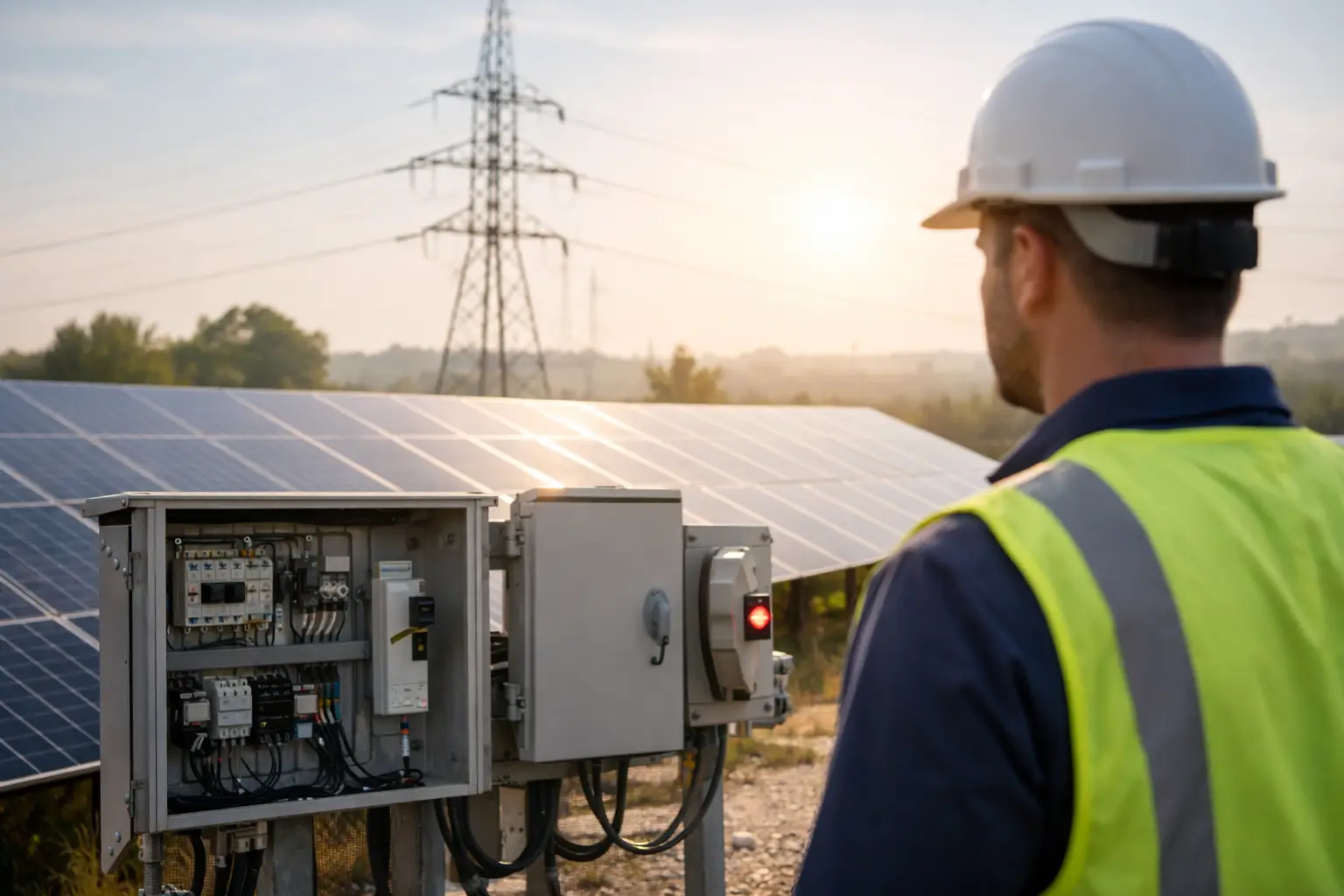
A notice requiring anti-islanding testing can be easy to put aside, particularly when your solar system appears to be generating normally. But this is a grid safety requirement, not a performance check you can safely ignore. This guide to anti-islanding obligations explains what the requirement means for ACT solar owners, what happens during testing, and how to respond without guessing.
What anti-islanding means for your solar system
Most rooftop solar systems are connected to the electricity grid. When the grid supply fails, your inverter must stop exporting power within the required time. This function is called anti-islanding protection.
An electrical “island” occurs when a section of the local network has lost grid supply but remains energised by a solar system or another distributed energy source. If an inverter continued to operate in that situation, electricity workers could be exposed to a live network they reasonably expect to be de-energised. It could also cause problems when the network supply is restored.
Your inverter monitors the grid for changes in voltage and frequency. When readings move outside its approved operating limits, it must disconnect from the grid. Once grid supply is stable again, the inverter waits for the required reconnection period before it resumes generating.
This is why a system can look healthy on an app and still require a compliance test. Generation monitoring tells you whether energy is being produced. It does not prove that the inverter protection settings will respond correctly during a grid event.
Why anti-islanding obligations apply
Anti-islanding obligations come from the connection conditions that allow your solar system to operate in parallel with the electricity network. They are part of maintaining a safe connection, alongside correctly installed isolators, cabling, earthing and compliant inverter settings.
In the ACT, Evoenergy may issue notifications to owners of eligible systems requiring anti-islanding testing. The requirement can apply at scheduled intervals or where the network needs confirmation that inverter protection remains correctly set and operational. If you have received a notification, treat the stated due date as a compliance deadline rather than a general maintenance suggestion.
Older systems deserve particular attention. Inverters, firmware, protective relays and settings can change over time. A replacement inverter may have been commissioned incorrectly, settings may not match current requirements, or a fault may have developed without producing an obvious error message. Previous work on switchboards, batteries or solar equipment can also affect the wider installation.
The practical obligation is straightforward: arrange for a suitably qualified, licensed electrician with the right solar and inverter testing experience to complete the required assessment, record the result and provide the required notification or documentation.
Your guide to anti-islanding obligations after a notice arrives
Start by reading the notice carefully. Confirm the system address, inverter details, due date and whether the notification specifies a particular test or submission process. Keep the notice available for the electrician. It helps match the test record to the correct installation and avoids delays caused by incomplete details.
Do not attempt to test anti-islanding operation yourself by switching off equipment or isolating supply. A proper test involves controlled verification of inverter protection functions and settings. Switching a main switch without the correct test method may not demonstrate compliance and can create unnecessary safety risks.
When booking, advise the tester if your system has more than one inverter, a battery, backup capability, a consumption monitor, or has had recent electrical work. These details affect access, isolation procedures and the time required on site. They are especially relevant for properties with several older string inverters or a mixture of solar and battery equipment.
Make sure there is clear access to the inverter, switchboard and any relevant solar isolators. If the inverter is in a locked garage, behind stored items or in a tenant-access area, organise entry beforehand. A technician may need to inspect equipment labels and verify the installation as well as conduct the protection test.
What a professional anti-islanding test should cover
The exact method depends on the inverter model, the connection arrangement and the network requirement. However, a proper visit is more than pressing buttons on an inverter screen.
The electrician first confirms the system configuration and checks that the equipment being tested matches the site records where possible. They inspect the inverter and accessible electrical components for signs of damage, corrosion, water ingress, loose covers, heat stress or unsafe deterioration. These observations matter because an inverter cannot be considered reliable in isolation from the condition of the equipment around it.
The anti-islanding protection settings are then checked against the applicable requirements. Controlled testing verifies that the inverter responds as required when voltage or frequency conditions move outside the permitted range. The tester also confirms its reconnection behaviour, where applicable, and records the outcome.
If the system passes, the result can be documented and submitted or supplied in line with the notice requirements. Keep a copy with your solar paperwork. It will be useful if you sell the property, make an insurance claim, arrange future electrical work or need to show that a network notice was addressed.
If the system does not pass, the right response depends on the fault. It may be a settings correction, a firmware issue, a communications problem, an inverter fault or a broader installation defect. A clear test report should identify what failed, what can be repaired, and whether replacement is the more sensible option.
Common issues found during testing
Testing often identifies problems that have nothing to do with panel output, but can still affect safety, compliance or future reliability. Weather exposure is a frequent factor in Canberra conditions. Hail can damage panels, while moisture and temperature changes can affect isolators, cable entries and enclosures over time.
Common findings include deteriorated DC isolators, cracked conduit, loose or poorly protected cabling, water ingress around rooftop components, inverter error histories, faded labels and settings that no longer suit the connection requirements. Not every issue requires urgent replacement, but each one needs a risk-based recommendation.
There is also a financial side to acting early. A small repair to an enclosure, isolator or cable route is often far less costly than waiting for an intermittent fault to cause extended downtime. If your solar system has quietly stopped producing or is clipping output because of an inverter issue, lost generation can add up well before the fault becomes obvious.
Testing is not the same as a full solar health check
Anti-islanding testing has a defined compliance purpose. It verifies that your inverter disconnects correctly from the grid under abnormal supply conditions. It does not automatically establish that every panel, cable, mounting component and electrical connection is in top condition.
For an older system, one that has been through hail or heavy weather, or one with lower-than-expected production, a broader inspection is often worthwhile at the same time. A full health check can look at panel condition, inverter performance, isolators, electrical connections, visible roof cable routes and likely causes of underperformance.
The trade-off is simple. If the notice only requires anti-islanding testing and the system is relatively new with no warning signs, targeted testing may be enough. If the system is ageing, has a history of faults, or has not been inspected for years, combining the work can give a more useful picture and reduce the chance of paying for separate call-outs later.
Choosing the right person for the job
Use a licensed electrician who works specifically with existing solar systems and understands the relevant inverter test procedures. New solar installation and post-installation diagnostics are related, but they are not identical jobs. The work requires care around live DC equipment, grid connection requirements and accurate reporting.
Ask what the service includes before booking. You should know whether the price covers the anti-islanding test, a visual inspection, documentation, required notification handling, travel, and any additional charge for multiple inverters. If defects are found, the electrician should explain the issue in plain language before proceeding with repair work.
Solar Testing and Maintenance provides electrician-led anti-islanding testing and practical system checks for ACT solar owners. The focus is on clear findings, safe testing and repair planning where an issue is identified, rather than selling equipment you may not need.
Keep your solar investment ready
Your solar system earns its keep quietly, often from a wall-mounted inverter you may rarely look at. A network testing notice is a useful prompt to confirm that the safety function behind that generation is still doing its job. Book the test before the due date, keep the results with your system records, and use any findings to make sensible repairs before a minor defect becomes lost production or a larger electrical problem.
Leave a Reply