

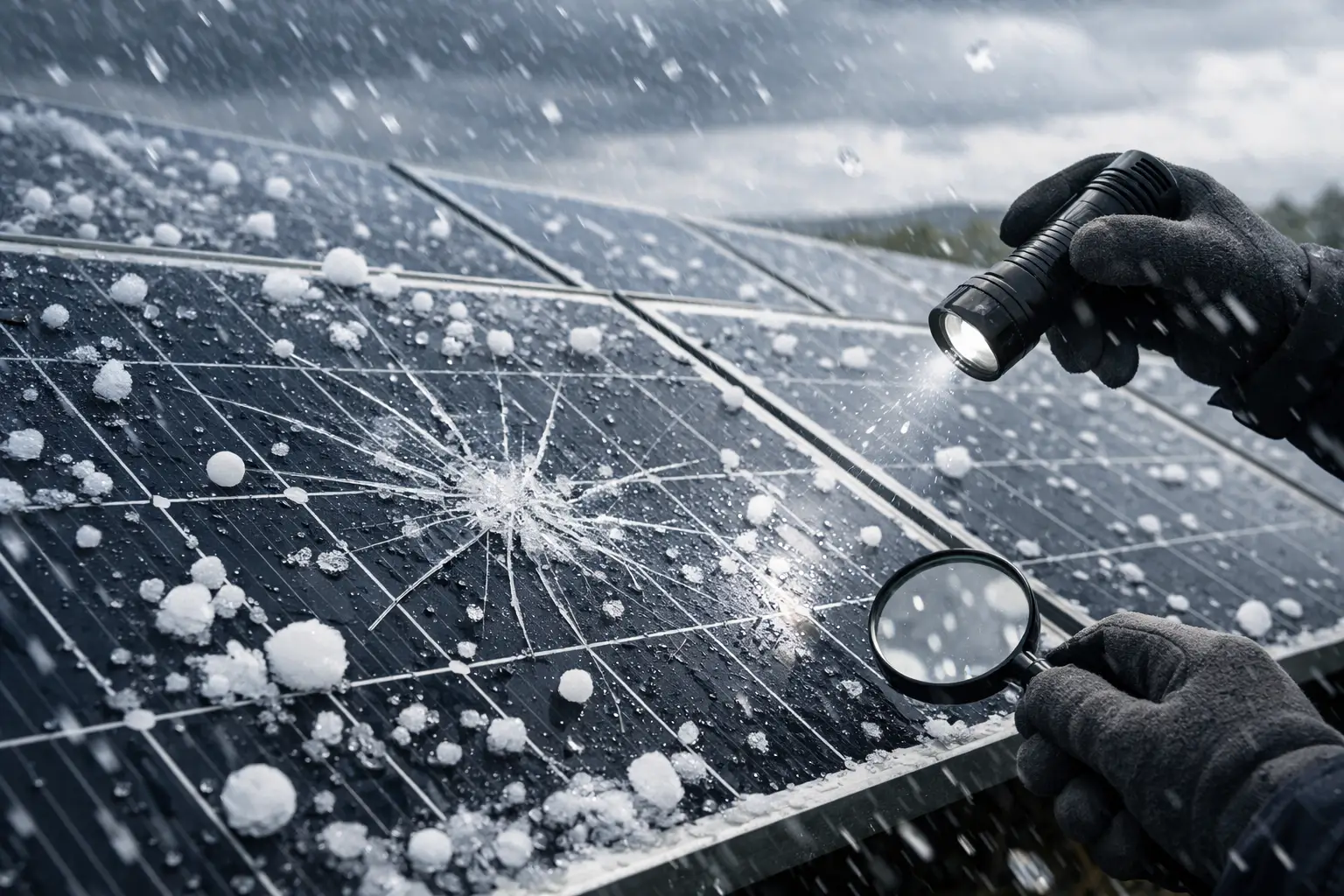
A hailstorm can be over in minutes, but the question it leaves behind can last much longer: can hail reduce solar output if the panels do not appear broken? Yes. Obvious shattered glass is only one type of hail damage. Small cracks, damaged cells, loosened connections and water entry can all affect production over time, sometimes without an immediate inverter fault.
For a solar owner, the practical issue is not simply whether the system survived the storm. It is whether it is still producing what it should, operating safely and remaining protected from further deterioration. A prompt, electrician-led inspection can identify the difference between superficial marks and damage that needs attention.
Can hail reduce solar output without visible panel damage?
Hail can reduce output in two ways. During the storm itself, hail and heavy cloud block sunlight, so generation will fall. That short-term reduction is normal and should recover once conditions clear.
The greater concern is lasting physical damage. Solar panels are built to withstand demanding weather, and many panels have been tested against specified hail impacts. However, real storms vary in stone size, wind speed, impact angle and duration. A panel may have no shattered front glass yet still sustain stress within the solar cells or around its edges.
Microcracks are a common example. These are fine fractures in the silicon cells that may not be visible from the ground or even from the roof. A cracked cell can interrupt the flow of electricity through part of the panel. Initially, the production loss may be modest. Over time, heat cycles, wind movement and moisture can worsen the crack and reduce output further.
Hail can also damage the panel frame, junction box, cabling, roof penetrations or mounting hardware. If the storm has compromised seals or cable insulation, water ingress and electrical faults may develop later rather than on the day of the event.
What hail damage can do to a solar system
A hail impact does not always produce one clear fault. It can create several smaller issues that affect the system differently.
Cell cracking and reduced generation
Solar cells are thin and brittle. The tempered glass above them provides substantial protection, but a hard impact can still transfer force into the cells below. Where cells crack, the affected panel may produce less power than neighbouring panels.
Because panels are connected in strings, one underperforming module can affect the output of other panels in that string. The result may be a production drop that is noticeable on monitoring, but not dramatic enough to trigger an immediate shutdown.
Glass damage and moisture entry
A chipped edge, cracked glass surface or damaged seal can allow moisture into the panel. Moisture can lead to corrosion, insulation problems and longer-term failure. It may also create an electrical safety concern, particularly where damage reaches the junction box or DC connections.
Do not assume a small mark is cosmetic. The location and depth of the damage matter. A qualified inspection can determine whether the panel remains safe and serviceable.
Hot spots and accelerated wear
Damage to cells or internal connections can increase electrical resistance. That area may run hotter than the rest of the panel, creating a hot spot. Hot spots can speed up degradation and, in serious cases, damage the panel backing or electrical components.
Thermal imaging, performed under suitable operating conditions, can help identify heat patterns that are not visible in a standard visual inspection.
Damage beyond the panels
Panels are not the only part of the system exposed to hail. Check for loose mounting components, cracked conduit, displaced cable clips and damage around roof penetrations. On older systems, a storm can expose pre-existing wear in isolators, cable glands or rooftop connections.
The inverter may continue to operate normally while a rooftop issue develops. That is why a production figure on the inverter screen is useful, but not a complete health check.
Signs your solar output may have been affected
The clearest sign is a sustained drop in daily generation after the storm, once clear weather has returned. Compare the system’s output with similar sunny days from before the event, allowing for seasonal differences in daylight hours and sun angle. A single cloudy day does not tell you much. A repeated reduction over several clear days is worth investigating.
Your monitoring portal may show a panel, string or inverter producing less than expected. Systems without panel-level monitoring can be harder to assess because the inverter may only show the combined output of an entire string.
Other warning signs include inverter fault messages, repeated shutdowns, earth or insulation warnings, visible panel cracks, discolouration, loose components, or water marks around electrical equipment. If you can safely see damage from the ground, arrange an inspection rather than climbing onto the roof.
In Canberra and the ACT, hail can be intense and localised. If nearby properties have roof or vehicle damage, it is sensible to check solar performance even where your panels look unaffected from ground level.
What to do after a hailstorm
Start by keeping people clear of any visibly damaged solar equipment. Do not touch exposed wiring, damaged panels or rooftop isolators. Solar panels can generate DC electricity whenever they are exposed to light, even if the inverter has shut down.
From ground level, take clear photographs of any visible damage and note the date and approximate time of the storm. Keep screenshots of inverter alerts and generation data from before and after the event. This information is useful for diagnosis and may assist an insurance claim.
Next, check that the inverter display or monitoring app shows normal operation. A fault code does not automatically identify hail damage, but it gives a technician a valuable starting point. If the inverter reports an insulation, earth fault or DC issue, arrange assessment promptly and avoid repeatedly resetting the system.
It is also wise to contact your insurer before arranging major repairs or replacement, particularly if there is obvious panel damage. Insurers may require photographs, a damage report or approval before work proceeds. A professional inspection can document the condition of the system and provide a clear repair plan.
How a professional inspection identifies hail-related faults
A proper post-storm solar assessment is more than a quick look at the panels. It should consider safety, performance and the condition of the full DC and AC system.
An electrician-led inspection generally begins with a visual review of panels, frames, mounting, isolators, conduits and accessible cabling. The technician checks for cracked glass, damaged backsheets, compromised seals, loose fittings and signs of water entry.
Electrical testing can then identify faults that cannot be seen. Depending on the system and suspected issue, this may include checks of string voltage and current, insulation resistance, polarity, earthing, inverter error history and system performance. Thermal imaging can assist where hot spots or poor connections are suspected.
Where appropriate, a detailed health check also confirms whether the inverter and protective equipment are operating correctly. Mandatory anti-islanding testing is a separate grid compliance requirement, but keeping inverter protection tested and the system in sound condition is part of protecting a solar investment after severe weather.
The findings should be practical. A homeowner needs to know whether the system is safe to keep operating, which components require repair or replacement, how the damage is likely to affect production, and what evidence is available for insurance purposes.
When monitoring is enough, and when it is not
If a light hail event has passed, there is no visible damage, the inverter has no faults and generation remains consistent across several comparable clear days, ongoing monitoring may be reasonable. Keep an eye on the figures for the following weeks, particularly after rain, as moisture-related faults can take time to appear.
An inspection is the better option after large hail, visible impact marks, a sudden sustained production drop, inverter alarms or any concern about roof-mounted wiring and isolators. It is also worthwhile for older systems where ordinary age-related deterioration may have been accelerated by the storm.
Solar Testing and Maintenance provides practical system health checks and fault finding for ACT solar owners who need a clear answer after weather damage. The aim is not to replace equipment unnecessarily. It is to identify faults early, keep the installation safe and help the system return the generation it was designed to deliver.
After a hailstorm, trust the data but do not rely on it alone. A system can continue generating while hidden damage quietly reduces its performance. Checking it early is often the simplest way to protect both your roof and your solar return.
Leave a Reply