


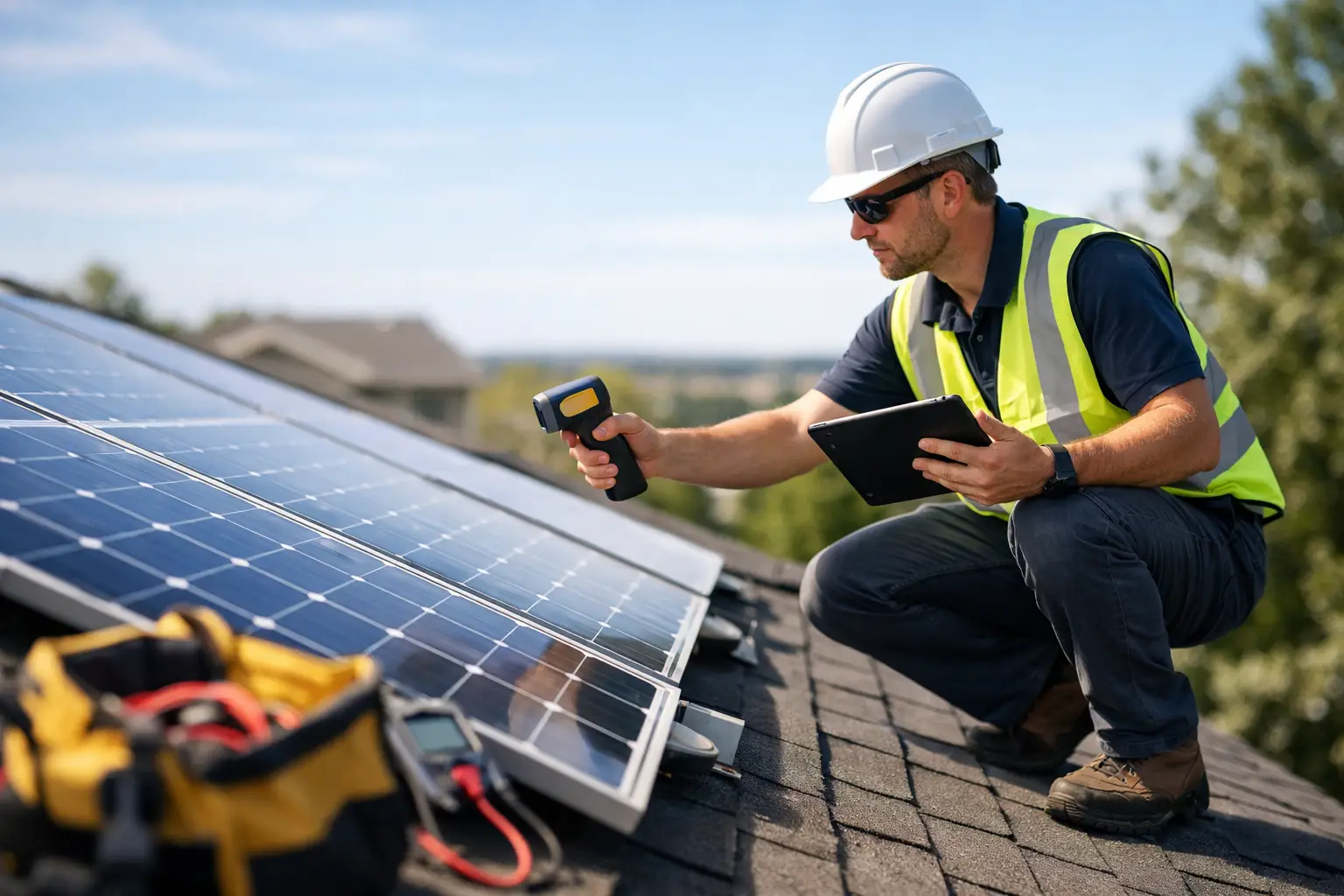
Your solar system rarely fails all at once. More often, it slowly slips. Output drops a little. One string underperforms. An isolator starts to age. Moisture gets where it should not. By the time the problem is obvious on your bill, you may have already lost months of generation. That is where a solar health check service earns its keep.
For most solar owners, the question is not whether the system needs attention at some point. It is when to book it, what should be checked, and how to tell the difference between a basic look-over and a proper electrician-led inspection. If your system is older, has been through severe weather, or you have received notice for inverter compliance testing, timing matters.
What a solar health check service is really for
A proper solar health check service is not just about finding something broken. It is about confirming that the system is still safe, still compliant, and still producing what it should for its age and design.
That matters because rooftop solar keeps working in the background, so problems can stay hidden. Panels can suffer hail damage or gradual degradation. DC isolators can deteriorate with heat and weather exposure. Cabling can loosen, age or show signs of water ingress. Inverters can remain operational while still carrying faults, history codes or performance issues that reduce return on investment.
For homeowners, that means lost production and repair costs that tend to grow when faults are left alone. For systems subject to anti-islanding requirements, it can also mean compliance issues that need to be addressed by a qualified specialist rather than guessed at.
When booking a solar health check service makes sense
The most obvious trigger is an actual problem. Your inverter may be showing warnings, your monitoring may look inconsistent, or your electricity bills may no longer reflect the savings you used to see. Even then, there is a difference between a system that has stopped and a system that is just not performing properly. Underperformance is often missed because the system still appears to be on.
Age is another practical reason to book a check. Once a system has been up there for several years, wear becomes part of the picture. That does not mean older systems are unreliable by default, but it does mean connectors, isolators, rooftop fittings and exposed components deserve closer attention. If your system was installed years ago and has never had a structured inspection, there is a good chance no one has looked at its real condition since commissioning.
Weather is another common trigger in the ACT. After hail, heavy rain, high wind or long periods of heat, a visual glance from the ground is not enough. Panels may have impact marks, frames may have shifted, seals may have been compromised, and electrical components can suffer damage that is not obvious without testing. In these cases, a health check is as much about documenting condition and planning repairs as it is about immediate fault finding.
Then there are grid compliance notifications. If you have been advised that anti-islanding inverter testing is required, that is not something to leave until the last minute. This testing has a specific compliance purpose and should be handled by a business that works in this area routinely. A general electrician or installer focused mainly on new systems may not offer the same depth of post-installation testing and reporting.
What should actually be included
A useful service goes beyond a quick panel count and a glance at the inverter screen. If you are paying for a solar health check service, you want the parts that age, fail or drift out of spec to be properly assessed.
That usually starts with a full inspection of the system components. Panels should be checked for visible damage, signs of delamination, cracking, hot spot concerns, debris build-up and obvious weather impact. Mounting hardware and general installation condition should also be reviewed, especially on older arrays.
The electrical side matters just as much. Isolators, cabling, terminations and inverter operation all need attention. A qualified technician should be looking for signs of overheating, water ingress, UV damage, loose connections and other defects that can affect both safety and performance. Depending on the service scope, testing may include string performance checks, insulation resistance testing, shutdown operation checks and inverter diagnostics.
If anti-islanding testing is required, that should be treated as a defined compliance task, not an add-on done casually. The point is to verify the inverter responds correctly under required conditions. It is specialised work, and it needs to be carried out methodically.
The last part is just as important as the inspection itself. You should come away with clear findings and a practical repair plan if faults are found. That means knowing what is urgent, what can be monitored, and what is worth fixing based on safety, compliance and financial return.
Why a specialist approach matters
Solar maintenance is its own trade niche. The skills used to install a brand-new system are not exactly the same as the skills used to diagnose one that is ten years old, partially degraded, weather-affected, or showing intermittent faults.
That is why specialist aftercare work tends to be more efficient. A technician who regularly handles inverter compliance testing, fault finding and existing-system inspections is usually quicker at identifying where the real problem sits. That saves time, reduces guesswork and helps avoid spending money on the wrong repair.
There is also a practical trust factor. Most owners are not interested in technical theatre. They want to know whether the system is safe, whether it is meeting requirements, whether it is producing properly, and what it will cost to put right if it is not. A straightforward, electrician-led service tends to answer those questions better than a sales-led inspection designed to push replacement hardware.
The trade-off between routine checks and waiting for a fault
Some owners prefer to wait until something clearly goes wrong. That approach can be reasonable for newer systems with solid monitoring and no signs of trouble. Not every system needs constant attention, and there is no point inventing maintenance for the sake of it.
But waiting has a cost when faults are subtle. A worn isolator, degraded panel section or underperforming string may not trigger a dramatic shutdown. It can simply chip away at production over time. In that situation, the money lost through reduced output can outweigh the cost of a structured check.
The right timing depends on the age of the system, whether it has proper monitoring, its exposure to weather, and whether there are any compliance obligations in play. If your system has gone years without inspection, has been through hail, or has started behaving differently, delay usually does not pay.
What Canberra-area owners should watch for
Local conditions matter. In and around Canberra, rooftop systems can be exposed to sharp temperature swings, storm events and hail risk. Those conditions make periodic checking more than a box-ticking exercise, particularly for older systems.
If you notice sudden drops in feed-in performance, repeated inverter restarts, visible panel damage, tripped components or unexplained changes in savings, treat them as reasons to investigate rather than annoyances to keep an eye on. Small issues on solar systems have a habit of becoming more expensive once heat, moisture and time get involved.
For owners who have received EvoEnergy notification for required testing, prompt action is the sensible option. It keeps compliance on track and avoids unnecessary pressure as deadlines approach.
What good service looks like from first contact
Good service is usually obvious early. You should get a clear explanation of what is included, what testing is being done, and what happens if faults are found. Pricing should be transparent. Findings should be practical. If repairs are needed, they should be prioritised in plain language rather than buried in jargon.
That is the standard Solar Testing and Maintenance is built around because solar owners do not need a sales pitch. They need a competent inspection, accurate testing and a realistic path forward.
If your system has not been professionally assessed in years, or you suspect it is no longer performing as it should, booking a proper check now is often the cheapest way to avoid paying for neglect later.
Leave a Reply